
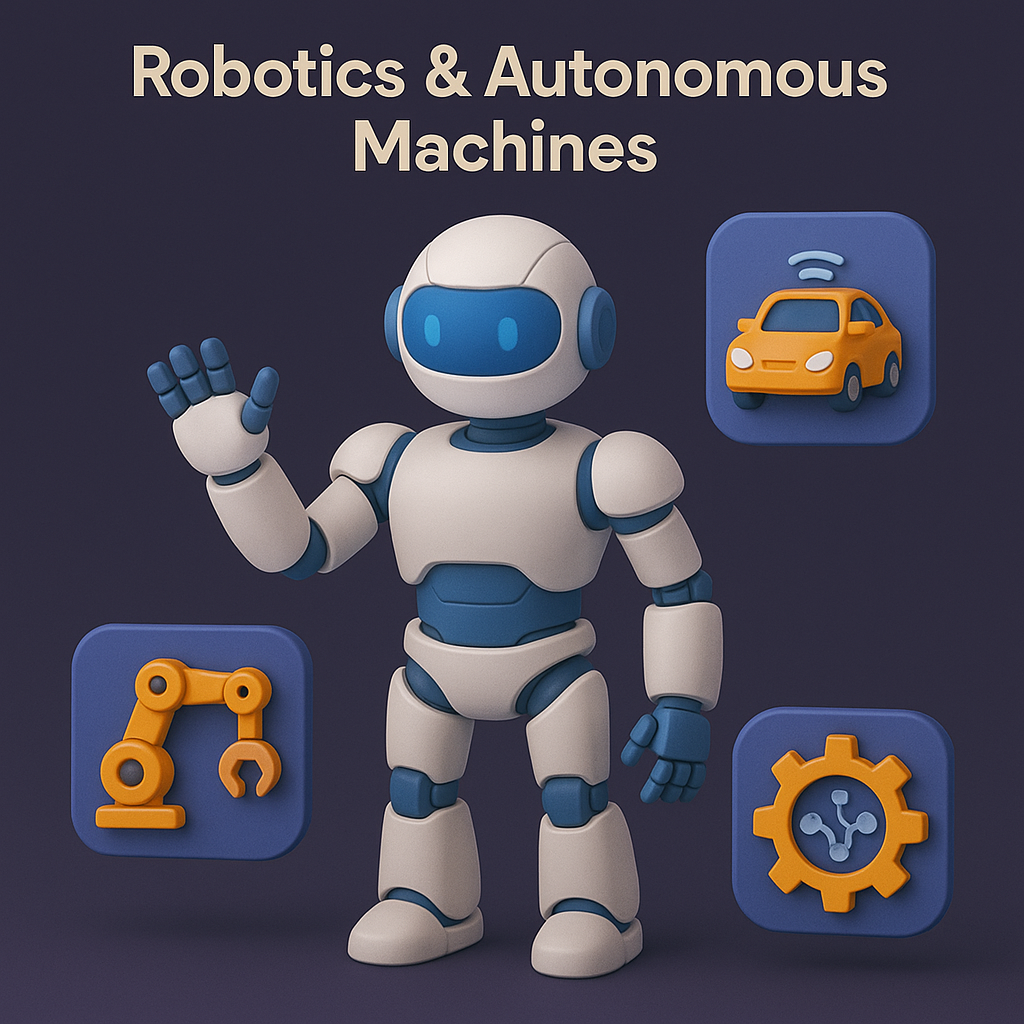
Robotics and autonomous machines have rapidly evolved from industrial tools into some of the most transformative technologies of the 21st century. What started as mechanical arms in factories has now expanded into self-driving cars, delivery drones, warehouse robots, surgical machines, and intelligent assistants capable of complex interactions. The combination of robotics, artificial intelligence (AI), machine learning, sensors, and automation has allowed machines to perform tasks that once required human intelligence. This shift is reshaping industries such as manufacturing, logistics, healthcare, construction, retail, and even home automation. Understanding this evolution helps us see how robots are becoming integral to everyday life and global progress.
Modern robotics integrates multiple advanced technologies. Sensors such as LiDAR, cameras, ultrasonic detectors, and inertial units provide machines with environmental awareness. AI and machine learning enable perception, decision-making, and problem-solving. Actuators and motors allow precise mechanical movement, while cloud computing supports large-scale data processing. Real-time operating systems and robotic frameworks like ROS (Robot Operating System) simplify development and coordination. The convergence of these technologies enables robots to move, sense, learn, collaborate, and act autonomously—pushing robotics far beyond simple programmed behaviors.
Autonomous transportation is one of the most visible advancements in robotics. Self-driving cars use AI to detect obstacles, understand traffic signals, and navigate with minimal human intervention. Companies like Tesla, Waymo, and Baidu are pushing the boundaries of autonomy. Drones and autonomous delivery robots are transforming logistics—conducting last-mile delivery, mapping terrains, and assisting emergency services. Autonomous ships and aircraft are now being tested for long-distance cargo movement. These machines promise safer, faster, and more efficient transportation systems, though regulatory and ethical challenges remain key considerations.
Robotics has long been a pillar of industrial automation, but Industry 4.0 has taken this to the next level. Collaborative robots, or cobots, now work alongside human workers, enhancing productivity without eliminating the human element. Advanced robots handle welding, packaging, assembly, inspection, and hazardous tasks with precision. Smart factories use AI-powered robots that self-optimize, predict system failures, and adapt to different production requirements. This increases efficiency, reduces errors, and cuts downtime. Autonomous mobile robots (AMRs) navigate factory floors independently, transporting materials and improving workflow automation.
Healthcare robotics is revolutionizing surgery, diagnostics, therapy, and patient care. Robotic surgical systems like the Da Vinci robot enable minimally invasive procedures with higher precision. Autonomous machines assist doctors by analyzing medical images, monitoring patient vitals, and supporting rehabilitation therapy. Robotic prosthetics with AI-driven movement provide enhanced mobility for differently-abled individuals. Hospital robots handle sanitation, medicine delivery, and patient assistance—reducing human workload and minimizing infection risk. The future may include fully autonomous diagnostic robots and AI medical assistants that operate round the clock.
As robotics becomes more accessible, consumer-level robots are entering homes and businesses. Smart vacuum cleaners, lawn-mowing robots, cooking assistants, and home security robots are gaining popularity. Retail robots manage inventory, assist customers, and streamline checkout processes. Hospitality robots deliver room service, guide guests, or prepare food. These service robots are built with user-friendly interfaces, natural language processing, and cloud connectivity, making them effective companions in daily tasks. They also enhance convenience, accessibility, and safety in homes and commercial environments.
Robotics is transforming heavy industries as well. Construction robots can lay bricks, 3D-print buildings, and perform dangerous tasks like demolition. Agricultural robots monitor crops, plant seeds, harvest produce, and manage soil quality using AI precision farming techniques. In defence, autonomous drones and ground robots assist with surveillance, explosive disposal, and tactical support. These machines reduce risk to human lives and enable operations in challenging or hazardous environments. Their use continues to grow as industries address labor shortages, safety challenges, and demand for higher efficiency.
The future of robotics lies in collaboration rather than replacement. Human–robot teams will combine creativity, emotional intelligence, and complex judgement with machine precision, speed, and endurance. However, ethical concerns arise—such as the impact on employment, privacy risks, and autonomous decision-making accountability. Developing safe AI systems, transparent algorithms, and regulations is essential to ensure responsible adoption. The goal is to build autonomous machines that empower humans, not compete with them. With continuous innovation and proper governance, robotics will shape a future built on efficiency, safety, and shared intelligence.
Robotics and autonomous machines are redefining the world by enhancing capabilities across industries, improving productivity, and enabling new forms of innovation. From self-driving cars to medical robots and smart home assistants, autonomous machines represent the future of human progress. As technology evolves, robots will become more intuitive, adaptable, and seamlessly integrated into everyday life. Success in this era will depend on embracing automation responsibly, developing new skills, and fostering collaboration between humans and intelligent machines. The future is not just robotic—it is a blended world where robotics and human intelligence grow together.
Modern robotics integrates multiple advanced technologies. Sensors such as LiDAR, cameras, ultrasonic detectors, and inertial units provide machines with environmental awareness. AI and machine learning enable perception, decision-making, and problem-solving. Actuators and motors allow precise mechanical movement, while cloud computing supports large-scale data processing. Real-time operating systems and robotic frameworks like ROS (Robot Operating System) simplify development and coordination. The convergence of these technologies enables robots to move, sense, learn, collaborate, and act autonomously—pushing robotics far beyond simple programmed behaviors.
Autonomous transportation is one of the most visible advancements in robotics. Self-driving cars use AI to detect obstacles, understand traffic signals, and navigate with minimal human intervention. Companies like Tesla, Waymo, and Baidu are pushing the boundaries of autonomy. Drones and autonomous delivery robots are transforming logistics—conducting last-mile delivery, mapping terrains, and assisting emergency services. Autonomous ships and aircraft are now being tested for long-distance cargo movement. These machines promise safer, faster, and more efficient transportation systems, though regulatory and ethical challenges remain key considerations.
Robotics has long been a pillar of industrial automation, but Industry 4.0 has taken this to the next level. Collaborative robots, or cobots, now work alongside human workers, enhancing productivity without eliminating the human element. Advanced robots handle welding, packaging, assembly, inspection, and hazardous tasks with precision. Smart factories use AI-powered robots that self-optimize, predict system failures, and adapt to different production requirements. This increases efficiency, reduces errors, and cuts downtime. Autonomous mobile robots (AMRs) navigate factory floors independently, transporting materials and improving workflow automation.
Healthcare robotics is revolutionizing surgery, diagnostics, therapy, and patient care. Robotic surgical systems like the Da Vinci robot enable minimally invasive procedures with higher precision. Autonomous machines assist doctors by analyzing medical images, monitoring patient vitals, and supporting rehabilitation therapy. Robotic prosthetics with AI-driven movement provide enhanced mobility for differently-abled individuals. Hospital robots handle sanitation, medicine delivery, and patient assistance—reducing human workload and minimizing infection risk. The future may include fully autonomous diagnostic robots and AI medical assistants that operate round the clock.
As robotics becomes more accessible, consumer-level robots are entering homes and businesses. Smart vacuum cleaners, lawn-mowing robots, cooking assistants, and home security robots are gaining popularity. Retail robots manage inventory, assist customers, and streamline checkout processes. Hospitality robots deliver room service, guide guests, or prepare food. These service robots are built with user-friendly interfaces, natural language processing, and cloud connectivity, making them effective companions in daily tasks. They also enhance convenience, accessibility, and safety in homes and commercial environments.
Robotics is transforming heavy industries as well. Construction robots can lay bricks, 3D-print buildings, and perform dangerous tasks like demolition. Agricultural robots monitor crops, plant seeds, harvest produce, and manage soil quality using AI precision farming techniques. In defence, autonomous drones and ground robots assist with surveillance, explosive disposal, and tactical support. These machines reduce risk to human lives and enable operations in challenging or hazardous environments. Their use continues to grow as industries address labor shortages, safety challenges, and demand for higher efficiency.
The future of robotics lies in collaboration rather than replacement. Human–robot teams will combine creativity, emotional intelligence, and complex judgement with machine precision, speed, and endurance. However, ethical concerns arise—such as the impact on employment, privacy risks, and autonomous decision-making accountability. Developing safe AI systems, transparent algorithms, and regulations is essential to ensure responsible adoption. The goal is to build autonomous machines that empower humans, not compete with them. With continuous innovation and proper governance, robotics will shape a future built on efficiency, safety, and shared intelligence.
Robotics and autonomous machines are redefining the world by enhancing capabilities across industries, improving productivity, and enabling new forms of innovation. From self-driving cars to medical robots and smart home assistants, autonomous machines represent the future of human progress. As technology evolves, robots will become more intuitive, adaptable, and seamlessly integrated into everyday life. Success in this era will depend on embracing automation responsibly, developing new skills, and fostering collaboration between humans and intelligent machines. The future is not just robotic—it is a blended world where robotics and human intelligence grow together.