
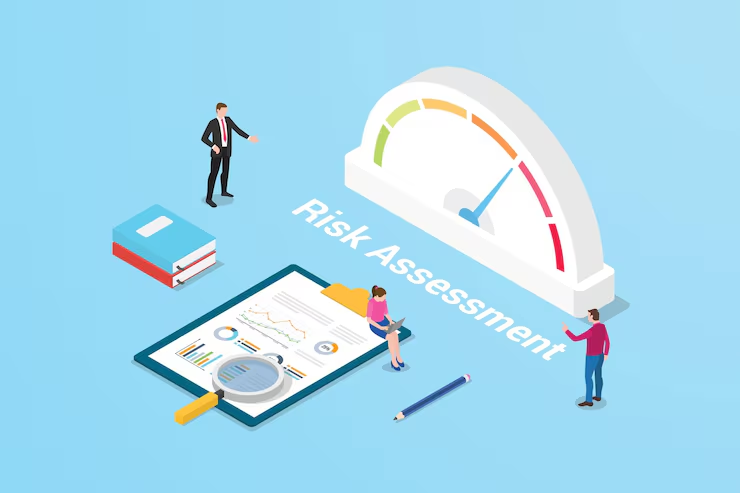
Risk Analytics involves the systematic identification, assessment, and management of risks using data-driven techniques. Rather than relying solely on intuition or historical precedent, organizations use analytics to quantify uncertainty, anticipate potential threats, and reduce the impact of adverse events. This approach enables more informed and proactive decision-making.
Risk analytics is widely applied across industries such as finance, insurance, cybersecurity, healthcare, and operations management. In finance, it supports credit and market risk assessment. In insurance, it helps evaluate policy risk and pricing. In cybersecurity and healthcare, it aids in detecting threats and preventing critical incidents.
At its core, risk analytics leverages historical data, statistical models, and machine learning algorithms to estimate the likelihood and potential impact of risks. By analyzing past events and patterns, organizations can identify vulnerabilities and predict future risk scenarios more accurately.
Predictive models play a key role by identifying early warning signals before risks fully materialize. These signals may include unusual transaction patterns, system anomalies, or behavioral changes. Early detection allows organizations to intervene sooner and reduce potential damage.
Scenario analysis and stress testing are essential tools within risk analytics. These techniques simulate extreme or unlikely conditions—such as economic downturns, system failures, or large-scale disruptions—to evaluate how resilient systems and processes are under pressure. This insight helps organizations prepare contingency plans.
Risk scoring mechanisms translate complex risk data into actionable priorities. By assigning risk scores based on severity and probability, organizations can focus mitigation efforts where they matter most. This structured prioritization supports efficient resource allocation.
Real-time risk monitoring enhances responsiveness in fast-changing environments. Continuous data streams and dashboards allow organizations to track risk indicators as they evolve, enabling rapid decisions and timely interventions when conditions change unexpectedly.
Effective risk analytics balances caution with opportunity. Rather than avoiding all risk, organizations use insights to understand acceptable risk levels and pursue strategic opportunities with confidence. This balance supports sustainable growth and innovation.
In conclusion, risk analytics transforms uncertainty into actionable insights. By combining data, analytics, and strategic thinking, organizations can anticipate threats, reduce losses, and make smarter decisions in an increasingly complex and uncertain world.
Risk analytics is widely applied across industries such as finance, insurance, cybersecurity, healthcare, and operations management. In finance, it supports credit and market risk assessment. In insurance, it helps evaluate policy risk and pricing. In cybersecurity and healthcare, it aids in detecting threats and preventing critical incidents.
At its core, risk analytics leverages historical data, statistical models, and machine learning algorithms to estimate the likelihood and potential impact of risks. By analyzing past events and patterns, organizations can identify vulnerabilities and predict future risk scenarios more accurately.
Predictive models play a key role by identifying early warning signals before risks fully materialize. These signals may include unusual transaction patterns, system anomalies, or behavioral changes. Early detection allows organizations to intervene sooner and reduce potential damage.
Scenario analysis and stress testing are essential tools within risk analytics. These techniques simulate extreme or unlikely conditions—such as economic downturns, system failures, or large-scale disruptions—to evaluate how resilient systems and processes are under pressure. This insight helps organizations prepare contingency plans.
Risk scoring mechanisms translate complex risk data into actionable priorities. By assigning risk scores based on severity and probability, organizations can focus mitigation efforts where they matter most. This structured prioritization supports efficient resource allocation.
Real-time risk monitoring enhances responsiveness in fast-changing environments. Continuous data streams and dashboards allow organizations to track risk indicators as they evolve, enabling rapid decisions and timely interventions when conditions change unexpectedly.
Effective risk analytics balances caution with opportunity. Rather than avoiding all risk, organizations use insights to understand acceptable risk levels and pursue strategic opportunities with confidence. This balance supports sustainable growth and innovation.
In conclusion, risk analytics transforms uncertainty into actionable insights. By combining data, analytics, and strategic thinking, organizations can anticipate threats, reduce losses, and make smarter decisions in an increasingly complex and uncertain world.