
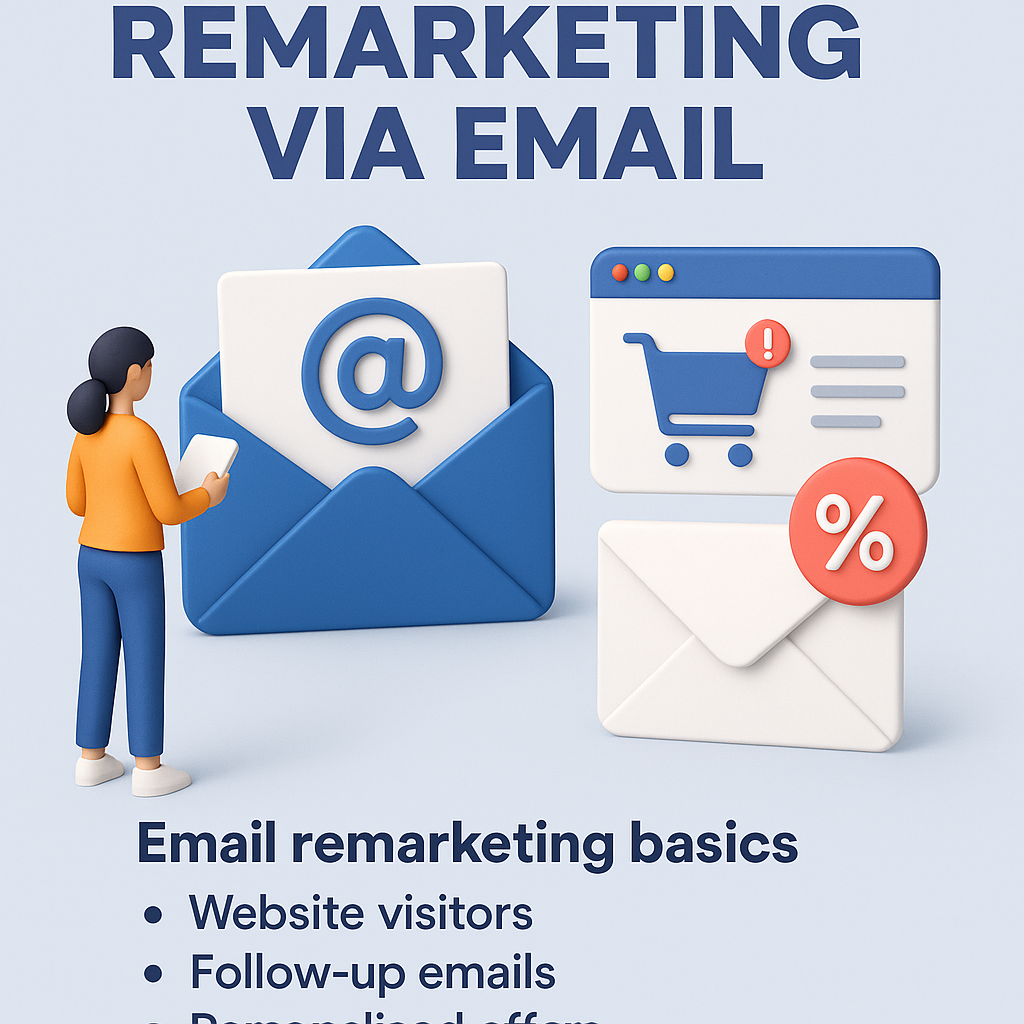
Remarketing via email is one of the most effective digital marketing techniques used to re-engage users who have previously interacted with a brand but did not complete a desired action, such as making a purchase or filling out a form. In the world of digital marketing, customer retention is just as important as customer acquisition, and email remarketing plays a powerful role in bridging the gap between the two. It allows businesses to bring back potential customers by sending timely, personalized, and strategically targeted emails. With billions of active email users worldwide, email remains one of the strongest marketing channels with high open rates and strong return on investment. Remarketing ensures that customers who showed interest are reminded, informed, and encouraged to take action.
Email remarketing is the process of sending follow-up emails to users who previously engaged with your website, product, or service but did not complete the expected conversion. Examples include abandoned cart emails, product reminder emails, re-engagement emails, or personalized offers. Unlike mass promotional emails, remarketing emails are behavior-based—they are triggered by user activity. When someone adds products to a cart and leaves without completing checkout, the system automatically sends a reminder email. When someone reads a blog topic multiple times, a personalized article or product recommendation may be sent. This targeted approach increases relevance, improves user experience, and significantly boosts conversion rates.
Email remarketing depends on tracking user actions using cookies, tags, or CRM data. When a user visits a website, their behavior—such as browsing, clicking, and adding items to a cart—is recorded. This data is then used to segment the user into a specific remarketing flow. Tools like Mailchimp, HubSpot, Klaviyo, Sendinblue, and ActiveCampaign automate this process. Once the trigger event occurs, the remarketing workflow sends a tailored email sequence designed to guide users back into the purchase journey. For example, an abandoned cart workflow may send three emails: a reminder email after one hour, a discount offer after 24 hours, and a final call-to-action after 48 hours. This automation ensures consistency and increases the chances of conversion without manual intervention.
There are several types of remarketing emails, each serving a specific purpose. Abandoned cart emails are the most common, reminding users of items left in their cart and encouraging them to complete the purchase. Browse abandonment emails target users who visited product pages but did not add anything to the cart. Re-engagement emails focus on inactive subscribers, offering updates or incentives to bring them back. Post-purchase remarketing is used to upsell or cross-sell related products. Win-back campaigns target customers who purchased long ago but haven’t returned. Each remarketing type contributes to nurturing users through different stages of the customer journey, ensuring they stay connected with the brand.
Email remarketing comes with numerous advantages. It significantly improves conversion rates because it targets users who already showed interest. These users have a higher intent to buy compared to cold audiences. Remarketing emails also enhance brand recall—customers are reminded of their interest, making them more likely to return. Email remarketing is cost-effective since automation tools allow campaigns to run continuously with minimal effort. It also strengthens customer relationships, as personalized messages show users that the brand understands their needs. Finally, remarketing reduces lost revenue by recovering abandoned purchases and reactivating dormant customers.
One of the core strengths of email remarketing is personalization. The more relevant the message, the more likely a customer is to engage with it. Email segmentation allows marketers to divide users into groups based on behavior, demographics, purchase history, or engagement level. Industries such as e-commerce, online education, SaaS, and travel use segmentation to create targeted remarketing sequences. Personalized elements like the user’s name, recommended products, reminders of items they viewed, or exclusive offers make the emails more compelling. Research shows that personalized emails enjoy higher open rates, click-through rates, and overall conversions compared to generic broadcasts.
To maximize the impact of email remarketing, marketers must follow a set of best practices. The timing of the email is crucial—sending the first reminder within an hour of abandonment increases the chances of conversion. Emails must also have a strong call-to-action, clear messaging, and mobile-friendly design. Adding urgency, such as showing low stock or limited-time offers, encourages faster action. A/B testing subject lines, content, and designs helps identify what resonates most. Ensuring compliance with privacy laws like GDPR and CAN-SPAM is also essential. Finally, tracking metrics like open rate, click-through rate, and recovery rate helps optimize future campaigns.
Despite being highly effective, email remarketing also has challenges. Not all users respond positively to follow-up emails—some may consider them intrusive. Overuse or sending too many emails may lead to unsubscribes. Deliverability issues can arise if emails are poorly structured or flagged as spam. Another challenge is maintaining accurate data through cookies, especially with increasing privacy restrictions. Brands must balance automation with authenticity, ensuring emails feel helpful rather than aggressive. To overcome these challenges, marketers need strong strategies, clean mailing lists, and ethical practices.
Remarketing via email remains one of the most powerful techniques in digital marketing for recovering lost customers, increasing conversions, and building long-term customer relationships. By combining smart automation, meaningful personalization, and data-driven segmentation, businesses can significantly improve their marketing ROI. Understanding how to craft effective remarketing emails and optimizing them over time allows marketers to maximize engagement and reduce abandonment. As digital marketing continues to evolve, email remarketing will remain a cornerstone strategy for customer retention and revenue growth.
Email remarketing is the process of sending follow-up emails to users who previously engaged with your website, product, or service but did not complete the expected conversion. Examples include abandoned cart emails, product reminder emails, re-engagement emails, or personalized offers. Unlike mass promotional emails, remarketing emails are behavior-based—they are triggered by user activity. When someone adds products to a cart and leaves without completing checkout, the system automatically sends a reminder email. When someone reads a blog topic multiple times, a personalized article or product recommendation may be sent. This targeted approach increases relevance, improves user experience, and significantly boosts conversion rates.
Email remarketing depends on tracking user actions using cookies, tags, or CRM data. When a user visits a website, their behavior—such as browsing, clicking, and adding items to a cart—is recorded. This data is then used to segment the user into a specific remarketing flow. Tools like Mailchimp, HubSpot, Klaviyo, Sendinblue, and ActiveCampaign automate this process. Once the trigger event occurs, the remarketing workflow sends a tailored email sequence designed to guide users back into the purchase journey. For example, an abandoned cart workflow may send three emails: a reminder email after one hour, a discount offer after 24 hours, and a final call-to-action after 48 hours. This automation ensures consistency and increases the chances of conversion without manual intervention.
There are several types of remarketing emails, each serving a specific purpose. Abandoned cart emails are the most common, reminding users of items left in their cart and encouraging them to complete the purchase. Browse abandonment emails target users who visited product pages but did not add anything to the cart. Re-engagement emails focus on inactive subscribers, offering updates or incentives to bring them back. Post-purchase remarketing is used to upsell or cross-sell related products. Win-back campaigns target customers who purchased long ago but haven’t returned. Each remarketing type contributes to nurturing users through different stages of the customer journey, ensuring they stay connected with the brand.
Email remarketing comes with numerous advantages. It significantly improves conversion rates because it targets users who already showed interest. These users have a higher intent to buy compared to cold audiences. Remarketing emails also enhance brand recall—customers are reminded of their interest, making them more likely to return. Email remarketing is cost-effective since automation tools allow campaigns to run continuously with minimal effort. It also strengthens customer relationships, as personalized messages show users that the brand understands their needs. Finally, remarketing reduces lost revenue by recovering abandoned purchases and reactivating dormant customers.
One of the core strengths of email remarketing is personalization. The more relevant the message, the more likely a customer is to engage with it. Email segmentation allows marketers to divide users into groups based on behavior, demographics, purchase history, or engagement level. Industries such as e-commerce, online education, SaaS, and travel use segmentation to create targeted remarketing sequences. Personalized elements like the user’s name, recommended products, reminders of items they viewed, or exclusive offers make the emails more compelling. Research shows that personalized emails enjoy higher open rates, click-through rates, and overall conversions compared to generic broadcasts.
To maximize the impact of email remarketing, marketers must follow a set of best practices. The timing of the email is crucial—sending the first reminder within an hour of abandonment increases the chances of conversion. Emails must also have a strong call-to-action, clear messaging, and mobile-friendly design. Adding urgency, such as showing low stock or limited-time offers, encourages faster action. A/B testing subject lines, content, and designs helps identify what resonates most. Ensuring compliance with privacy laws like GDPR and CAN-SPAM is also essential. Finally, tracking metrics like open rate, click-through rate, and recovery rate helps optimize future campaigns.
Despite being highly effective, email remarketing also has challenges. Not all users respond positively to follow-up emails—some may consider them intrusive. Overuse or sending too many emails may lead to unsubscribes. Deliverability issues can arise if emails are poorly structured or flagged as spam. Another challenge is maintaining accurate data through cookies, especially with increasing privacy restrictions. Brands must balance automation with authenticity, ensuring emails feel helpful rather than aggressive. To overcome these challenges, marketers need strong strategies, clean mailing lists, and ethical practices.
Remarketing via email remains one of the most powerful techniques in digital marketing for recovering lost customers, increasing conversions, and building long-term customer relationships. By combining smart automation, meaningful personalization, and data-driven segmentation, businesses can significantly improve their marketing ROI. Understanding how to craft effective remarketing emails and optimizing them over time allows marketers to maximize engagement and reduce abandonment. As digital marketing continues to evolve, email remarketing will remain a cornerstone strategy for customer retention and revenue growth.