
Real-time communication has transformed the modern web experience, making applications faster, more interactive, and deeply engaging. WebSockets sit at the heart of this evolution, enabling persistent, bidirectional communication between clients and servers. Unlike traditional HTTP, which requires a request–response cycle for every interaction, WebSockets establish a single long-lived connection through which data can flow freely in both directions. This revolutionary model allows instant updates without polling or delays, making WebSockets the backbone of real-time chat apps, trading platforms, multiplayer games, IoT dashboards, and collaborative tools. By eliminating the overhead of repeated HTTP requests, WebSockets significantly reduce latency and improve efficiency, ensuring users receive updates the moment they happen.
The need for real-time has expanded beyond messaging apps. Businesses now rely on dashboards that stream live data, users expect instant notifications, and gaming ecosystems demand millisecond-level communication. WebSockets offer a perfect solution for these cases because they maintain a continuous connection once established. The server can instantly push changes to the client, such as stock price fluctuations, location updates, or alerts from IoT devices. In industries where timing and accuracy are critical—finance, logistics, healthcare—WebSockets provide an unmatched advantage. They guarantee that the end-user is always in sync with the server, creating seamless, dynamic experiences that feel instantaneous.
A major benefit of WebSockets lies in their efficiency compared to traditional alternatives like long-polling, short-polling, or Server-Sent Events (SSE). While these technologies attempt to mimic real-time behavior, they still rely on periodic requests or one-directional data flow. WebSockets, in contrast, create a fully duplex channel where both sides can send data independently. Once the initial handshake—upgrading the HTTP connection to the WebSocket protocol—is completed, there is no repeated request overhead. This reduces bandwidth usage dramatically and ensures that applications scale more effectively when handling thousands or even millions of concurrent users. The protocol works over a single TCP connection, keeping communication fast and resource-friendly.
Developers appreciate WebSockets because they are supported across all major browsers and can be integrated into nearly any backend technology. Whether using Node.js with libraries like Socket.IO, Python with FastAPI or Django Channels, Java with Spring Boot, or Go’s native WebSocket library, building real-time systems has become accessible and flexible. Frontend implementation is equally straightforward. With just a few lines of JavaScript, a browser can connect to a WebSocket server and begin receiving messages instantly. This simplicity masks the powerful architecture underneath—event-driven communication, asynchronous data streams, and persistent connectivity all working in harmony to deliver an incredibly fluid user experience.
Security remains a major focus when building real-time applications, and WebSockets offer multiple layers of protection. Using the secure version of the protocol—wss://—ensures encryption similar to HTTPS, preventing data from being intercepted or tampered with. Authentication mechanisms such as tokens, cookies, or custom headers can be applied during the initial handshake, ensuring only valid users establish a connection. On the server side, rate-limiting and connection-throttling strategies help prevent misuse, while firewall configurations can be adjusted to monitor or restrict persistent connections. Although WebSockets introduce some unique challenges such as protection against cross-site WebSocket hijacking, following standard best practices keeps communication safe and reliable.
Scalability is another essential consideration, especially for applications expecting large traffic volumes. Real-time workloads can grow quickly—from a few dozen to thousands of simultaneous connections. Modern architectures use message brokers like Redis Pub/Sub, Kafka, or RabbitMQ to distribute events across multiple WebSocket servers. This enables horizontal scaling, allowing additional servers to join the cluster and handle more clients without breaking active sessions. Load balancers that support sticky sessions or session affinity ensure the same client remains connected to the same server instance. Cloud-native platforms such as AWS AppSync, Google Cloud Run, and Azure Web PubSub simplify this by providing fully managed WebSocket services.
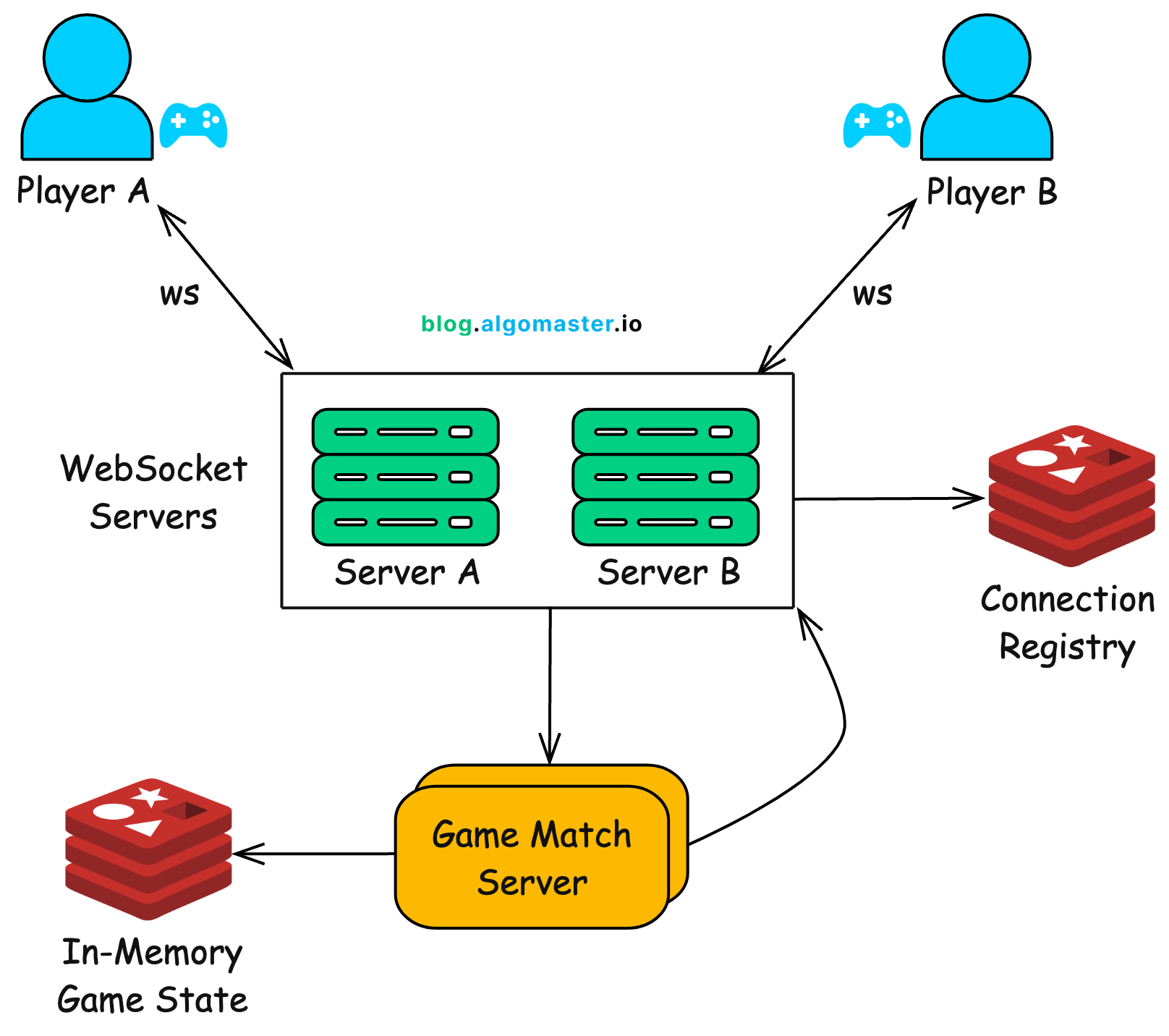
A major reason developers choose WebSockets is the dynamic user experiences they enable. Collaborative tools like Google Docs rely on real-time editing, where multiple users see changes instantly. Multiplayer gaming uses WebSockets for broadcasting player positions, game states, and actions without delay. Live streaming platforms push comments, reactions, or viewer analytics in real-time. Customer support systems deliver instant messaging between agents and clients. Even e-commerce applications now use real-time features to show stock availability, price changes, and active users browsing a product. These rich interactions create a sense of immediacy that significantly improves user satisfaction and engagement.
The future of WebSockets looks exceptionally promising as real-time becomes the new standard for web applications. Emerging technologies such as edge computing reduce latency even further by running WebSocket servers closer to users geographically. Integration with WebAssembly opens opportunities for faster data processing directly within the browser. Hybrid protocols like WebTransport and WebRTC also complement WebSockets, offering new capabilities such as peer-to-peer communication and low-latency media streaming. As real-time expectations continue to rise—from AR/VR environments to connected IoT systems—WebSockets will remain a core technology powering the next generation of interactive web applications.
In conclusion, WebSockets represent one of the most important advancements in web communication. Their ability to create persistent, bidirectional connections provides the foundation for truly real-time applications. Businesses benefit from instant updates, developers enjoy a flexible and efficient protocol, and users experience smooth and responsive interactions. The shift toward real-time is not a trend—it is the new baseline. WebSockets empower developers to build modern experiences that are fast, scalable, and immersive. As digital systems continue to grow more interconnected, the simplicity and power of WebSockets will shape the future of the web for years to come.
The need for real-time has expanded beyond messaging apps. Businesses now rely on dashboards that stream live data, users expect instant notifications, and gaming ecosystems demand millisecond-level communication. WebSockets offer a perfect solution for these cases because they maintain a continuous connection once established. The server can instantly push changes to the client, such as stock price fluctuations, location updates, or alerts from IoT devices. In industries where timing and accuracy are critical—finance, logistics, healthcare—WebSockets provide an unmatched advantage. They guarantee that the end-user is always in sync with the server, creating seamless, dynamic experiences that feel instantaneous.
A major benefit of WebSockets lies in their efficiency compared to traditional alternatives like long-polling, short-polling, or Server-Sent Events (SSE). While these technologies attempt to mimic real-time behavior, they still rely on periodic requests or one-directional data flow. WebSockets, in contrast, create a fully duplex channel where both sides can send data independently. Once the initial handshake—upgrading the HTTP connection to the WebSocket protocol—is completed, there is no repeated request overhead. This reduces bandwidth usage dramatically and ensures that applications scale more effectively when handling thousands or even millions of concurrent users. The protocol works over a single TCP connection, keeping communication fast and resource-friendly.
Developers appreciate WebSockets because they are supported across all major browsers and can be integrated into nearly any backend technology. Whether using Node.js with libraries like Socket.IO, Python with FastAPI or Django Channels, Java with Spring Boot, or Go’s native WebSocket library, building real-time systems has become accessible and flexible. Frontend implementation is equally straightforward. With just a few lines of JavaScript, a browser can connect to a WebSocket server and begin receiving messages instantly. This simplicity masks the powerful architecture underneath—event-driven communication, asynchronous data streams, and persistent connectivity all working in harmony to deliver an incredibly fluid user experience.
Security remains a major focus when building real-time applications, and WebSockets offer multiple layers of protection. Using the secure version of the protocol—wss://—ensures encryption similar to HTTPS, preventing data from being intercepted or tampered with. Authentication mechanisms such as tokens, cookies, or custom headers can be applied during the initial handshake, ensuring only valid users establish a connection. On the server side, rate-limiting and connection-throttling strategies help prevent misuse, while firewall configurations can be adjusted to monitor or restrict persistent connections. Although WebSockets introduce some unique challenges such as protection against cross-site WebSocket hijacking, following standard best practices keeps communication safe and reliable.
Scalability is another essential consideration, especially for applications expecting large traffic volumes. Real-time workloads can grow quickly—from a few dozen to thousands of simultaneous connections. Modern architectures use message brokers like Redis Pub/Sub, Kafka, or RabbitMQ to distribute events across multiple WebSocket servers. This enables horizontal scaling, allowing additional servers to join the cluster and handle more clients without breaking active sessions. Load balancers that support sticky sessions or session affinity ensure the same client remains connected to the same server instance. Cloud-native platforms such as AWS AppSync, Google Cloud Run, and Azure Web PubSub simplify this by providing fully managed WebSocket services.
A major reason developers choose WebSockets is the dynamic user experiences they enable. Collaborative tools like Google Docs rely on real-time editing, where multiple users see changes instantly. Multiplayer gaming uses WebSockets for broadcasting player positions, game states, and actions without delay. Live streaming platforms push comments, reactions, or viewer analytics in real-time. Customer support systems deliver instant messaging between agents and clients. Even e-commerce applications now use real-time features to show stock availability, price changes, and active users browsing a product. These rich interactions create a sense of immediacy that significantly improves user satisfaction and engagement.
The future of WebSockets looks exceptionally promising as real-time becomes the new standard for web applications. Emerging technologies such as edge computing reduce latency even further by running WebSocket servers closer to users geographically. Integration with WebAssembly opens opportunities for faster data processing directly within the browser. Hybrid protocols like WebTransport and WebRTC also complement WebSockets, offering new capabilities such as peer-to-peer communication and low-latency media streaming. As real-time expectations continue to rise—from AR/VR environments to connected IoT systems—WebSockets will remain a core technology powering the next generation of interactive web applications.
In conclusion, WebSockets represent one of the most important advancements in web communication. Their ability to create persistent, bidirectional connections provides the foundation for truly real-time applications. Businesses benefit from instant updates, developers enjoy a flexible and efficient protocol, and users experience smooth and responsive interactions. The shift toward real-time is not a trend—it is the new baseline. WebSockets empower developers to build modern experiences that are fast, scalable, and immersive. As digital systems continue to grow more interconnected, the simplicity and power of WebSockets will shape the future of the web for years to come.