
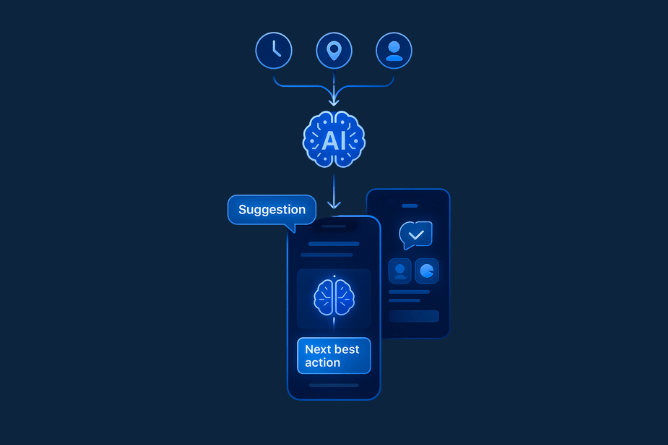
Predictive UX is an advanced design approach that uses data analytics and artificial intelligence to anticipate user needs before they explicitly take action. In mobile applications, predictive UX analyzes user behavior patterns, context, and historical interactions to deliver proactive and timely experiences. Instead of reacting to user commands, apps guide users by suggesting what they are likely to need next.
By learning from past interactions such as clicks, searches, time spent on features, and usage frequency, predictive UX systems can recommend relevant actions, content, or features. For example, a fitness app may suggest a workout based on past activity, or a productivity app may surface tasks typically performed at a certain time of day. These predictions help users complete tasks faster and with less effort.
One of the most important benefits of predictive UX is friction reduction. Traditional mobile interfaces often require users to navigate multiple screens or menus to find what they need. Predictive UX simplifies this process by presenting the right options at the right moment, allowing users to focus on achieving their goals rather than managing the interface.
Personalization is a core strength of predictive UX. Each user receives a tailored experience shaped by their habits, preferences, location, and usage patterns. Over time, the app becomes more aligned with individual behavior, making interactions feel natural and highly relevant rather than generic or repetitive.
Predictive UX also plays a significant role in improving user retention and engagement. When an app consistently anticipates needs and saves time, users perceive it as intelligent and helpful. This sense of intuitiveness builds trust and encourages long-term usage, reducing churn and increasing loyalty.
Machine learning models power predictive UX by continuously analyzing new data and refining their predictions. As more interactions occur, these models become more accurate, adaptive, and context-aware. Feedback loops ensure that predictions evolve alongside changing user behavior and preferences.
Despite its advantages, predictive UX must prioritize privacy and transparency. Users should be informed about what data is collected and how predictions are generated. Providing clear consent options, data controls, and explainable recommendations helps maintain trust and ensures ethical use of predictive technologies.
Predictive UX is already widely applied across many mobile app domains. E-commerce apps recommend products and offers, navigation apps predict destinations and routes, fitness apps suggest workouts, and productivity tools surface tasks and reminders at optimal times. These real-world implementations demonstrate the practical value of predictive experiences.
In conclusion, predictive user experiences transform mobile apps from static tools into smart companions. By anticipating needs, reducing effort, and delivering personalized interactions, predictive UX creates mobile applications that feel intuitive, intelligent, and deeply aligned with user intent.
By learning from past interactions such as clicks, searches, time spent on features, and usage frequency, predictive UX systems can recommend relevant actions, content, or features. For example, a fitness app may suggest a workout based on past activity, or a productivity app may surface tasks typically performed at a certain time of day. These predictions help users complete tasks faster and with less effort.
One of the most important benefits of predictive UX is friction reduction. Traditional mobile interfaces often require users to navigate multiple screens or menus to find what they need. Predictive UX simplifies this process by presenting the right options at the right moment, allowing users to focus on achieving their goals rather than managing the interface.
Personalization is a core strength of predictive UX. Each user receives a tailored experience shaped by their habits, preferences, location, and usage patterns. Over time, the app becomes more aligned with individual behavior, making interactions feel natural and highly relevant rather than generic or repetitive.
Predictive UX also plays a significant role in improving user retention and engagement. When an app consistently anticipates needs and saves time, users perceive it as intelligent and helpful. This sense of intuitiveness builds trust and encourages long-term usage, reducing churn and increasing loyalty.
Machine learning models power predictive UX by continuously analyzing new data and refining their predictions. As more interactions occur, these models become more accurate, adaptive, and context-aware. Feedback loops ensure that predictions evolve alongside changing user behavior and preferences.
Despite its advantages, predictive UX must prioritize privacy and transparency. Users should be informed about what data is collected and how predictions are generated. Providing clear consent options, data controls, and explainable recommendations helps maintain trust and ensures ethical use of predictive technologies.
Predictive UX is already widely applied across many mobile app domains. E-commerce apps recommend products and offers, navigation apps predict destinations and routes, fitness apps suggest workouts, and productivity tools surface tasks and reminders at optimal times. These real-world implementations demonstrate the practical value of predictive experiences.
In conclusion, predictive user experiences transform mobile apps from static tools into smart companions. By anticipating needs, reducing effort, and delivering personalized interactions, predictive UX creates mobile applications that feel intuitive, intelligent, and deeply aligned with user intent.