
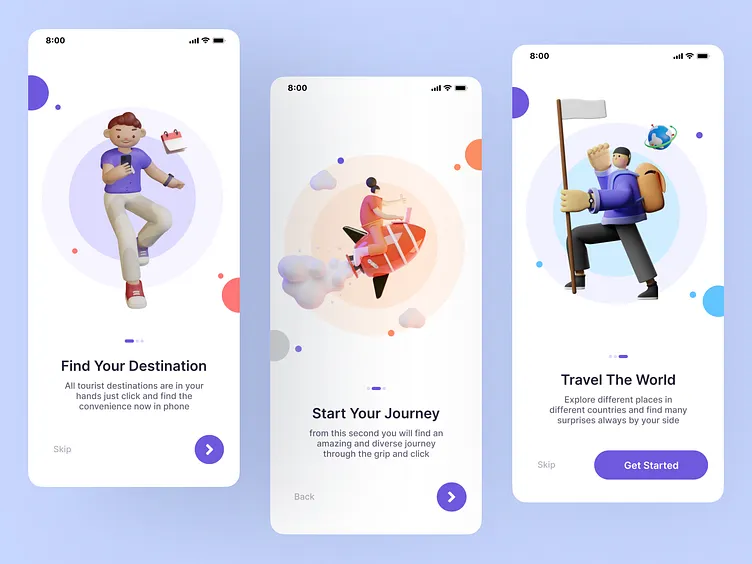
Onboarding experience design is one of the most crucial aspects of UI/UX because it defines how users form their first relationship with a product. The onboarding flow acts as a welcoming guide that helps users understand the product’s value, functionality, and purpose without overwhelming them. A well-crafted onboarding experience builds confidence and reduces abandonment rates, ensuring that users can quickly achieve their goals. Poor onboarding, however, creates confusion, friction, and doubt, making users feel lost or discouraged right from the start. As competition grows in every digital product category, onboarding has become a strategic advantage that can significantly shape user retention and long-term engagement.
At its core, onboarding is about reducing cognitive load and eliminating uncertainty. New users often arrive with little knowledge about how the product works, what benefits it provides, or where to begin. Onboarding offers direction and clarity by onboarding users through guided steps, tooltips, tutorials, or progressive disclosure. Effective onboarding anticipates user questions and answers them through simple, intuitive design. Instead of dumping information at once, onboarding smartly reveals features as users explore. This reduces mental strain and helps users learn by doing. The best onboarding flows focus on meaningful first actions—those that help users experience immediate value, often called the “aha moment.”
A major principle in onboarding design is setting clear expectations. Users need to understand what the product does and how it fits their needs. Visual narratives, short explainer screens, and concise microcopy help communicate the value proposition quickly. These first impressions must feel inviting and trustworthy. Screens that explain core benefits rather than deep features create stronger emotional resonance. When users know why they should care, they become more willing to continue. Expectation-setting also includes transparent communication about permissions, data usage, or account creation steps. This builds trust and prevents surprises that could discourage new users.
Personalization plays a transformative role in modern onboarding experiences. By understanding user behavior, preferences, demographics, or goals, onboarding flows can adapt to offer uniquely relevant instructions. Instead of generic onboarding, dynamic pathways help users feel understood. For example, a fitness app may ask users about their goals before showing them tailored routines. A finance app may adjust onboarding based on whether the user is saving, investing, or budgeting. Personalization minimizes irrelevant steps, shortens the learning curve, and increases engagement by aligning the product with user intentions. When onboarding feels personal, it strengthens emotional attachment and boosts retention.
Micro-interactions and subtle animations elevate onboarding by adding clarity and delight. Small movements, transitions, highlights, and playful cues help communicate meaning and reinforce comprehension. A form that gently shakes when an error occurs provides immediate feedback without needing text. A progress bar that fills during setup encourages completion. Animated pointers, hover effects, or zoom-ins can guide users toward the next action without feeling intrusive. Good motion design supports the flow, while excessive animation can distract. The goal is to create smooth, intuitive movement that reinforces hierarchy and reduces uncertainty during critical first steps.
Consistency and simplicity are indispensable in onboarding design. If the onboarding interface introduces a visual style, tone, or interaction pattern that differs from the rest of the product, users may feel disconnected. A cohesive experience ensures that onboarding blends naturally with the product instead of feeling like a separate layer. Simplicity ensures that every step, message, and element has purpose. Overloading users with too many fields, screens, or instructions often leads to abandonment. Designers must strip away unnecessary friction, keeping only the most essential steps. A well-designed onboarding flow is not measured by how much it teaches but by how effectively it removes barriers.
Accessibility must also be prioritized in onboarding experiences. Users should be able to navigate screens regardless of visual, cognitive, or mobility limitations. High color contrast, readable text, large tap targets, voiceover support, and clear labels are essential components of accessible onboarding. Simplifying language and offering multiple ways to understand information—visual cues, icons, short text, or voice instructions—ensures that onboarding welcomes every user. Accessibility not only complies with standards but enhances inclusivity, making onboarding more intuitive for all users, including those who may be overwhelmed by complex instructions.
Finally, onboarding should evolve based on user behavior and analytics. Continuous testing—A/B tests, heatmaps, funnel analysis, and user interviews—reveals where users drop off or feel confusion. Iterating with real data helps designers refine language, reduce steps, improve visuals, or reorder features. Onboarding is not a one-time creation; it is an ongoing process that adapts as product features grow and user expectations change. A dynamic onboarding strategy ensures that users always feel supported through their first experiences, increasing overall satisfaction and long-term loyalty.
In conclusion, onboarding experience design is a powerful tool that shapes the user's first impression and overall relationship with a digital product. It simplifies complex workflows, builds trust, communicates value, and guides users toward meaningful actions. By focusing on clarity, personalization, accessibility, emotional connection, and continuous improvement, designers create onboarding flows that feel effortless and memorable. In a world where users judge products within seconds, mastering onboarding design is essential for converting first-time visitors into long-term, engaged users who understand and appreciate the product’s full potential.
At its core, onboarding is about reducing cognitive load and eliminating uncertainty. New users often arrive with little knowledge about how the product works, what benefits it provides, or where to begin. Onboarding offers direction and clarity by onboarding users through guided steps, tooltips, tutorials, or progressive disclosure. Effective onboarding anticipates user questions and answers them through simple, intuitive design. Instead of dumping information at once, onboarding smartly reveals features as users explore. This reduces mental strain and helps users learn by doing. The best onboarding flows focus on meaningful first actions—those that help users experience immediate value, often called the “aha moment.”
A major principle in onboarding design is setting clear expectations. Users need to understand what the product does and how it fits their needs. Visual narratives, short explainer screens, and concise microcopy help communicate the value proposition quickly. These first impressions must feel inviting and trustworthy. Screens that explain core benefits rather than deep features create stronger emotional resonance. When users know why they should care, they become more willing to continue. Expectation-setting also includes transparent communication about permissions, data usage, or account creation steps. This builds trust and prevents surprises that could discourage new users.
Personalization plays a transformative role in modern onboarding experiences. By understanding user behavior, preferences, demographics, or goals, onboarding flows can adapt to offer uniquely relevant instructions. Instead of generic onboarding, dynamic pathways help users feel understood. For example, a fitness app may ask users about their goals before showing them tailored routines. A finance app may adjust onboarding based on whether the user is saving, investing, or budgeting. Personalization minimizes irrelevant steps, shortens the learning curve, and increases engagement by aligning the product with user intentions. When onboarding feels personal, it strengthens emotional attachment and boosts retention.
Micro-interactions and subtle animations elevate onboarding by adding clarity and delight. Small movements, transitions, highlights, and playful cues help communicate meaning and reinforce comprehension. A form that gently shakes when an error occurs provides immediate feedback without needing text. A progress bar that fills during setup encourages completion. Animated pointers, hover effects, or zoom-ins can guide users toward the next action without feeling intrusive. Good motion design supports the flow, while excessive animation can distract. The goal is to create smooth, intuitive movement that reinforces hierarchy and reduces uncertainty during critical first steps.
Consistency and simplicity are indispensable in onboarding design. If the onboarding interface introduces a visual style, tone, or interaction pattern that differs from the rest of the product, users may feel disconnected. A cohesive experience ensures that onboarding blends naturally with the product instead of feeling like a separate layer. Simplicity ensures that every step, message, and element has purpose. Overloading users with too many fields, screens, or instructions often leads to abandonment. Designers must strip away unnecessary friction, keeping only the most essential steps. A well-designed onboarding flow is not measured by how much it teaches but by how effectively it removes barriers.
Accessibility must also be prioritized in onboarding experiences. Users should be able to navigate screens regardless of visual, cognitive, or mobility limitations. High color contrast, readable text, large tap targets, voiceover support, and clear labels are essential components of accessible onboarding. Simplifying language and offering multiple ways to understand information—visual cues, icons, short text, or voice instructions—ensures that onboarding welcomes every user. Accessibility not only complies with standards but enhances inclusivity, making onboarding more intuitive for all users, including those who may be overwhelmed by complex instructions.
Finally, onboarding should evolve based on user behavior and analytics. Continuous testing—A/B tests, heatmaps, funnel analysis, and user interviews—reveals where users drop off or feel confusion. Iterating with real data helps designers refine language, reduce steps, improve visuals, or reorder features. Onboarding is not a one-time creation; it is an ongoing process that adapts as product features grow and user expectations change. A dynamic onboarding strategy ensures that users always feel supported through their first experiences, increasing overall satisfaction and long-term loyalty.
In conclusion, onboarding experience design is a powerful tool that shapes the user's first impression and overall relationship with a digital product. It simplifies complex workflows, builds trust, communicates value, and guides users toward meaningful actions. By focusing on clarity, personalization, accessibility, emotional connection, and continuous improvement, designers create onboarding flows that feel effortless and memorable. In a world where users judge products within seconds, mastering onboarding design is essential for converting first-time visitors into long-term, engaged users who understand and appreciate the product’s full potential.