
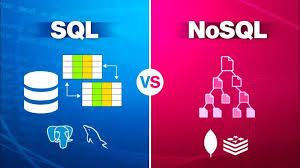
NoSQL databases are designed to handle large volumes of unstructured, semi-structured, or rapidly changing data. Unlike SQL systems that rely on rigid table structures and relationships, NoSQL provides flexible schemas, allowing developers to store and query data more efficiently in modern scalable applications. They are widely used in web-scale systems where horizontal scalability and fast response are critical.
There are different types of NoSQL databases, each optimized for specific usage patterns. Document databases like MongoDB store data in JSON-like structures ideal for dynamic content and APIs. Key-value stores like Redis provide extremely fast read/write operations suitable for caching and real-time applications. Column-family databases like Cassandra excel at handling massive distributed datasets. Graph databases like Neo4j represent complex relationships useful for social networks and recommendation systems.
NoSQL databases are designed for horizontal scaling, enabling data to be distributed across multiple servers without affecting performance. This allows organizations to handle growing user demand and massive incoming data streams while maintaining low latency. Traditional SQL databases typically scale vertically, which becomes costly and technically limited at high volumes.
Schema flexibility is a major advantage. With NoSQL, developers can add new fields to documents without migrations or downtime. This supports agile development, frequent feature changes, and evolving data models — especially important for startups and fast-moving projects.
Performance optimization is another key feature. NoSQL uses denormalized data models to avoid expensive joins, improving read performance significantly. Many databases support in-memory storage and partitioning techniques that enhance speed even under heavy workload.
NoSQL databases are well-suited for big data analytics and real-time applications. For example, IoT device data, livestream feeds, and user activity logs can be ingested and analyzed quickly. Businesses use NoSQL systems to power dashboards, fraud detection, and operational insights that require instant visibility into data.
However, NoSQL does not always guarantee strong consistency like traditional SQL systems. Many follow the BASE model (Basically Available, Soft-state, Eventually consistent), prioritizing performance and availability over strict transactional consistency. Developers must choose the right database based on requirements like accuracy, scalability, and speed.
Integration with cloud platforms makes NoSQL adoption easier. Managed services such as AWS DynamoDB, Google Firestore, and Azure Cosmos DB provide auto-scaling, backups, security, and global access — reducing operational overhead for organizations.
In summary, NoSQL databases are essential in modern distributed systems where flexibility, scalability, and high-speed data processing matter more than strict relational structure. They empower businesses to build real-time, data-intensive applications that serve millions of users efficiently and reliably.
There are different types of NoSQL databases, each optimized for specific usage patterns. Document databases like MongoDB store data in JSON-like structures ideal for dynamic content and APIs. Key-value stores like Redis provide extremely fast read/write operations suitable for caching and real-time applications. Column-family databases like Cassandra excel at handling massive distributed datasets. Graph databases like Neo4j represent complex relationships useful for social networks and recommendation systems.
NoSQL databases are designed for horizontal scaling, enabling data to be distributed across multiple servers without affecting performance. This allows organizations to handle growing user demand and massive incoming data streams while maintaining low latency. Traditional SQL databases typically scale vertically, which becomes costly and technically limited at high volumes.
Schema flexibility is a major advantage. With NoSQL, developers can add new fields to documents without migrations or downtime. This supports agile development, frequent feature changes, and evolving data models — especially important for startups and fast-moving projects.
Performance optimization is another key feature. NoSQL uses denormalized data models to avoid expensive joins, improving read performance significantly. Many databases support in-memory storage and partitioning techniques that enhance speed even under heavy workload.
NoSQL databases are well-suited for big data analytics and real-time applications. For example, IoT device data, livestream feeds, and user activity logs can be ingested and analyzed quickly. Businesses use NoSQL systems to power dashboards, fraud detection, and operational insights that require instant visibility into data.
However, NoSQL does not always guarantee strong consistency like traditional SQL systems. Many follow the BASE model (Basically Available, Soft-state, Eventually consistent), prioritizing performance and availability over strict transactional consistency. Developers must choose the right database based on requirements like accuracy, scalability, and speed.
Integration with cloud platforms makes NoSQL adoption easier. Managed services such as AWS DynamoDB, Google Firestore, and Azure Cosmos DB provide auto-scaling, backups, security, and global access — reducing operational overhead for organizations.
In summary, NoSQL databases are essential in modern distributed systems where flexibility, scalability, and high-speed data processing matter more than strict relational structure. They empower businesses to build real-time, data-intensive applications that serve millions of users efficiently and reliably.