
Neural networks are the core building blocks of modern artificial intelligence and deep learning. They are inspired by the structure and functioning of the human brain, where billions of interconnected neurons process information, learn patterns, and make decisions. A neural network replicates this behavior artificially using layers of mathematical units called neurons. These networks can learn from large datasets, identify subtle patterns, and make predictions with remarkable accuracy. From image recognition and natural language processing to self-driving cars, voice assistants, and recommendation systems, neural networks power many of today’s most advanced AI applications.
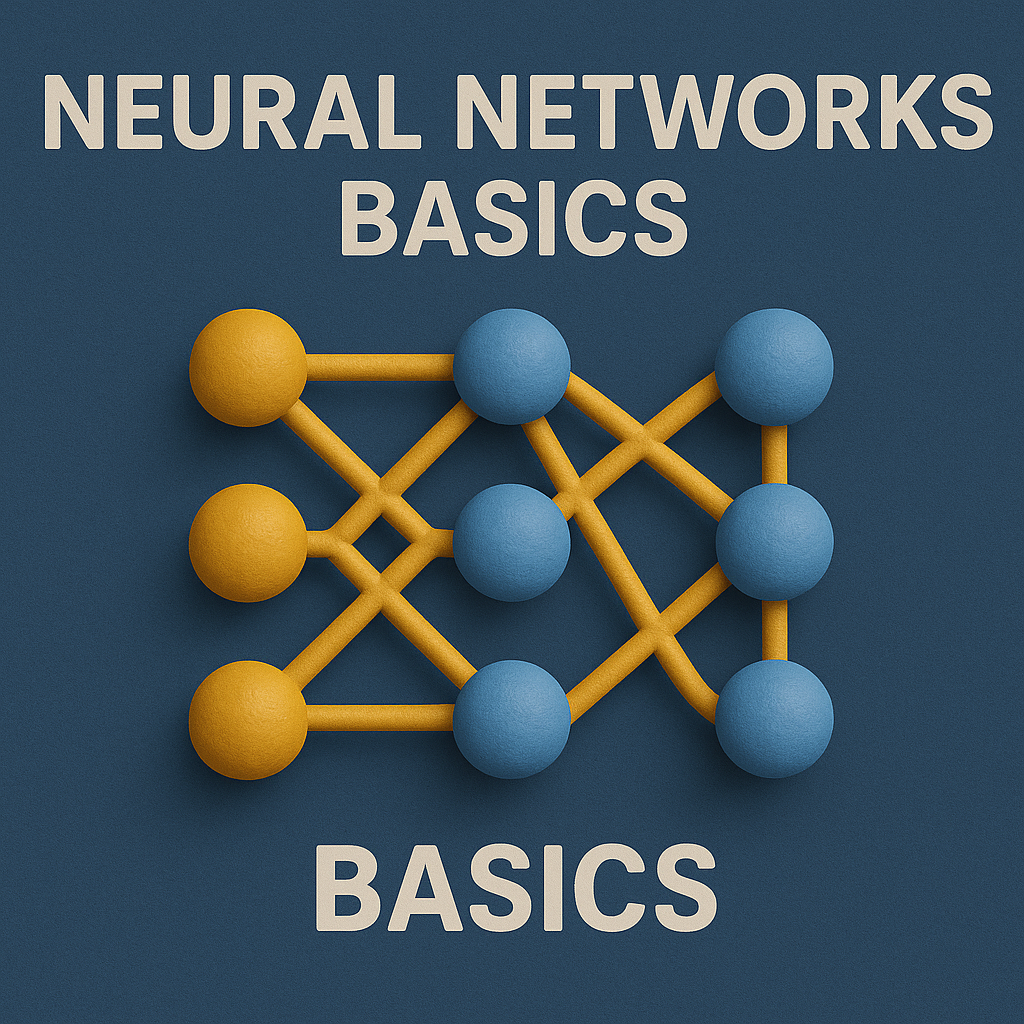
At the heart of every neural network is the concept of layers. A typical neural network consists of an input layer, one or more hidden layers, and an output layer. Each layer contains neurons that receive input, perform a mathematical operation, and pass the result forward. The input layer collects raw data—numbers, images, text vectors, or audio signals. Hidden layers perform complex transformations, learning relationships and patterns. Finally, the output layer produces the result, whether it’s a classification label, a predicted number, or a generated output. The power of neural networks grows as the number of hidden layers and neurons increases, enabling them to learn more sophisticated patterns.
A neural network learns through a process known as forward propagation and backpropagation. In forward propagation, data flows from the input layer through hidden layers to the output layer. Each neuron multiplies inputs by weights, adds a bias value, and applies an activation function to produce an output. Backpropagation begins after the network predicts an output. The predicted output is compared with the actual target value to compute a loss (error). The network then works backward, adjusting the weights and biases to reduce this error. This learning process continues for many iterations until the network’s predictions become accurate. Backpropagation is the backbone of neural network training and is optimized using algorithms such as gradient descent.
Activation functions play a crucial role in helping neural networks learn non-linear patterns. Without them, the entire network would behave like a simple linear model and fail to solve complex problems. Popular activation functions include ReLU (Rectified Linear Unit), which is widely used for speed and performance; Sigmoid, which is helpful for binary classification; and Tanh, which normalizes inputs between -1 and 1. Activation functions decide whether a neuron should “fire” or remain inactive, enabling the network to learn from variations and noise in data. Choosing the right activation function directly affects the network’s training stability and accuracy.
Another essential concept in neural networks is loss functions and optimization. Loss functions measure how far the predictions are from the actual outcome. Common loss functions include Mean Squared Error for regression tasks and Cross-Entropy Loss for classification tasks. Optimization algorithms such as Stochastic Gradient Descent (SGD), Adam, and RMSProp adjust the network’s parameters to minimize the loss. Proper optimization determines how fast and how effectively a neural network learns. A poorly chosen loss or optimizer can lead to slow learning, oscillations, or failure to converge.
Neural networks also face challenges such as overfitting and underfitting. Overfitting happens when the network memorizes training data instead of learning general patterns, resulting in poor performance on unseen data. Underfitting occurs when the network is too simple to capture the data’s complexity. Techniques like dropout, regularization, early stopping, and data augmentation help improve generalization. Balancing model complexity and dataset quality is crucial for building reliable neural networks.
As neural networks evolved, more advanced architectures emerged. Convolutional Neural Networks (CNNs) revolutionized image processing by learning spatial hierarchies, detecting edges, shapes, and objects. Recurrent Neural Networks (RNNs) and LSTMs solved problems with sequential data such as text and speech. More recently, Transformers and attention mechanisms have become the standard for natural language processing, powering models like GPT, BERT, and other large language models. These architectures expand the capabilities of neural networks and push the boundaries of what AI can achieve.
In real-world applications, neural networks require large datasets, computational power (GPUs/TPUs), and careful tuning. They power facial recognition systems, recommendation engines, medical diagnosis tools, fraud detection models, and autonomous vehicles. As industries increasingly adopt AI, understanding neural network basics becomes essential for developers, engineers, and data scientists. Mastering these concepts not only opens the door to deep learning but also builds a strong foundation for more advanced AI architectures.
In conclusion, neural networks represent the fundamental framework behind deep learning. With interconnected layers, activation functions, loss optimization, and iterative learning cycles, they mimic human cognition in a mathematical form. They are responsible for dramatic breakthroughs in computer vision, language understanding, robotics, and generative AI. Learning the basics of neural networks allows you to understand how intelligent systems operate and prepares you to build sophisticated models that solve real-world problems. As AI continues to evolve, neural networks will remain at the forefront of innovation, powering the next generation of intelligent technology.
At the heart of every neural network is the concept of layers. A typical neural network consists of an input layer, one or more hidden layers, and an output layer. Each layer contains neurons that receive input, perform a mathematical operation, and pass the result forward. The input layer collects raw data—numbers, images, text vectors, or audio signals. Hidden layers perform complex transformations, learning relationships and patterns. Finally, the output layer produces the result, whether it’s a classification label, a predicted number, or a generated output. The power of neural networks grows as the number of hidden layers and neurons increases, enabling them to learn more sophisticated patterns.
A neural network learns through a process known as forward propagation and backpropagation. In forward propagation, data flows from the input layer through hidden layers to the output layer. Each neuron multiplies inputs by weights, adds a bias value, and applies an activation function to produce an output. Backpropagation begins after the network predicts an output. The predicted output is compared with the actual target value to compute a loss (error). The network then works backward, adjusting the weights and biases to reduce this error. This learning process continues for many iterations until the network’s predictions become accurate. Backpropagation is the backbone of neural network training and is optimized using algorithms such as gradient descent.
Activation functions play a crucial role in helping neural networks learn non-linear patterns. Without them, the entire network would behave like a simple linear model and fail to solve complex problems. Popular activation functions include ReLU (Rectified Linear Unit), which is widely used for speed and performance; Sigmoid, which is helpful for binary classification; and Tanh, which normalizes inputs between -1 and 1. Activation functions decide whether a neuron should “fire” or remain inactive, enabling the network to learn from variations and noise in data. Choosing the right activation function directly affects the network’s training stability and accuracy.
Another essential concept in neural networks is loss functions and optimization. Loss functions measure how far the predictions are from the actual outcome. Common loss functions include Mean Squared Error for regression tasks and Cross-Entropy Loss for classification tasks. Optimization algorithms such as Stochastic Gradient Descent (SGD), Adam, and RMSProp adjust the network’s parameters to minimize the loss. Proper optimization determines how fast and how effectively a neural network learns. A poorly chosen loss or optimizer can lead to slow learning, oscillations, or failure to converge.
Neural networks also face challenges such as overfitting and underfitting. Overfitting happens when the network memorizes training data instead of learning general patterns, resulting in poor performance on unseen data. Underfitting occurs when the network is too simple to capture the data’s complexity. Techniques like dropout, regularization, early stopping, and data augmentation help improve generalization. Balancing model complexity and dataset quality is crucial for building reliable neural networks.
As neural networks evolved, more advanced architectures emerged. Convolutional Neural Networks (CNNs) revolutionized image processing by learning spatial hierarchies, detecting edges, shapes, and objects. Recurrent Neural Networks (RNNs) and LSTMs solved problems with sequential data such as text and speech. More recently, Transformers and attention mechanisms have become the standard for natural language processing, powering models like GPT, BERT, and other large language models. These architectures expand the capabilities of neural networks and push the boundaries of what AI can achieve.
In real-world applications, neural networks require large datasets, computational power (GPUs/TPUs), and careful tuning. They power facial recognition systems, recommendation engines, medical diagnosis tools, fraud detection models, and autonomous vehicles. As industries increasingly adopt AI, understanding neural network basics becomes essential for developers, engineers, and data scientists. Mastering these concepts not only opens the door to deep learning but also builds a strong foundation for more advanced AI architectures.
In conclusion, neural networks represent the fundamental framework behind deep learning. With interconnected layers, activation functions, loss optimization, and iterative learning cycles, they mimic human cognition in a mathematical form. They are responsible for dramatic breakthroughs in computer vision, language understanding, robotics, and generative AI. Learning the basics of neural networks allows you to understand how intelligent systems operate and prepares you to build sophisticated models that solve real-world problems. As AI continues to evolve, neural networks will remain at the forefront of innovation, powering the next generation of intelligent technology.