
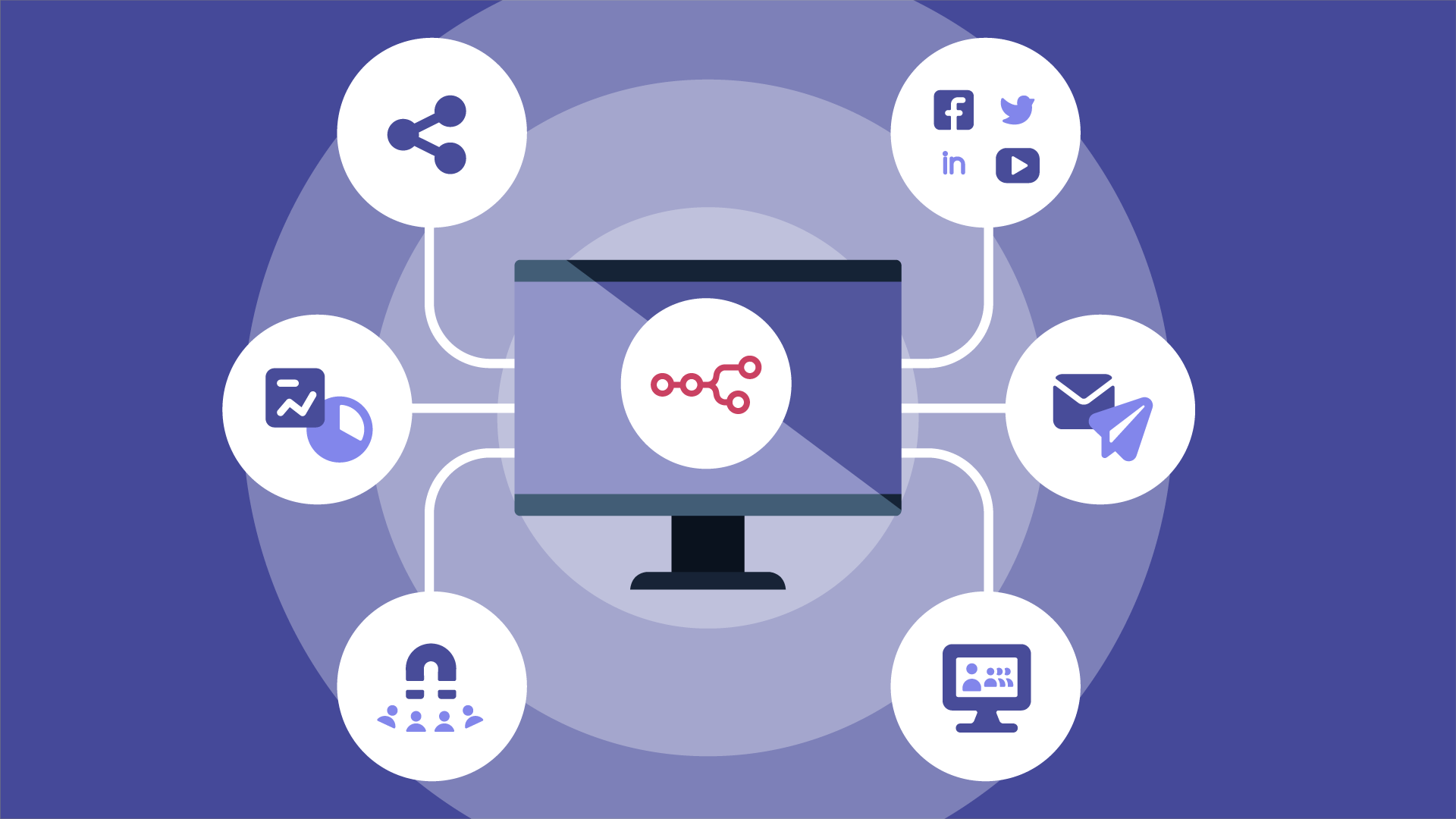
Marketing automation tools help businesses streamline and automate repetitive marketing tasks such as email campaigns, lead follow-ups, customer segmentation, and data management. By automating these routine activities, businesses save significant time and reduce manual effort while maintaining consistent communication with their audience. Automation allows marketing teams to shift their focus from operational tasks to strategic planning, creativity, and performance optimization, resulting in more efficient and scalable marketing operations.
Automation workflows define the structured path users follow as they interact with a brand across different stages of the customer journey. These workflows are triggered by specific actions, such as signing up for a newsletter, downloading a resource, or making a purchase. For example, when a user registers on a website, an automated welcome email sequence can start immediately, followed by educational or promotional messages. Such workflows ensure that communication is timely, relevant, and aligned with user behavior, improving engagement and response rates.
Email automation is one of the most widely used features of marketing automation platforms. Businesses use automated emails to send welcome messages, lead nurturing sequences, product updates, reminders, and promotional offers without manual intervention. These emails are triggered based on user actions, preferences, or inactivity, ensuring that the right message reaches the right person at the right time. This approach improves consistency while increasing the effectiveness of email marketing campaigns.
Marketing automation also plays a crucial role in improving lead management and sales alignment. Leads can be automatically scored based on engagement levels such as email opens, link clicks, website visits, and content downloads. Based on this scoring, leads are segmented and assigned to sales teams when they show high purchase intent. This process ensures that sales teams focus their efforts on qualified leads, increasing conversion rates and reducing wasted effort.
Several popular marketing automation tools are widely used by businesses of all sizes, including HubSpot, Mailchimp, ActiveCampaign, and Zoho. These platforms offer integrated solutions that combine email marketing, CRM, analytics, and workflow automation into a single system. Their ability to integrate with other tools such as customer relationship management systems and analytics platforms provides deeper insights into customer behavior and campaign performance.
Personalization is one of the most powerful benefits of marketing automation. Automated systems can customize messages based on user behavior, preferences, location, purchase history, and stage in the customer lifecycle. This level of personalization makes communication more relevant and meaningful, leading to higher engagement, stronger customer relationships, and improved brand loyalty.
Analytics and reporting features built into marketing automation tools help businesses measure and optimize performance. Metrics such as email open rates, click-through rates, conversion rates, and engagement trends provide valuable insights into what is working and what needs improvement. By analyzing this data, marketers can continuously refine workflows, messaging, and targeting strategies to achieve better results.
In conclusion, marketing automation tools and workflows play a vital role in increasing marketing efficiency, enhancing customer experience, and supporting scalable business growth. When implemented effectively, automation helps businesses deliver consistent, personalized, and data-driven communication that strengthens customer relationships and drives long-term success.
Automation workflows define the structured path users follow as they interact with a brand across different stages of the customer journey. These workflows are triggered by specific actions, such as signing up for a newsletter, downloading a resource, or making a purchase. For example, when a user registers on a website, an automated welcome email sequence can start immediately, followed by educational or promotional messages. Such workflows ensure that communication is timely, relevant, and aligned with user behavior, improving engagement and response rates.
Email automation is one of the most widely used features of marketing automation platforms. Businesses use automated emails to send welcome messages, lead nurturing sequences, product updates, reminders, and promotional offers without manual intervention. These emails are triggered based on user actions, preferences, or inactivity, ensuring that the right message reaches the right person at the right time. This approach improves consistency while increasing the effectiveness of email marketing campaigns.
Marketing automation also plays a crucial role in improving lead management and sales alignment. Leads can be automatically scored based on engagement levels such as email opens, link clicks, website visits, and content downloads. Based on this scoring, leads are segmented and assigned to sales teams when they show high purchase intent. This process ensures that sales teams focus their efforts on qualified leads, increasing conversion rates and reducing wasted effort.
Several popular marketing automation tools are widely used by businesses of all sizes, including HubSpot, Mailchimp, ActiveCampaign, and Zoho. These platforms offer integrated solutions that combine email marketing, CRM, analytics, and workflow automation into a single system. Their ability to integrate with other tools such as customer relationship management systems and analytics platforms provides deeper insights into customer behavior and campaign performance.
Personalization is one of the most powerful benefits of marketing automation. Automated systems can customize messages based on user behavior, preferences, location, purchase history, and stage in the customer lifecycle. This level of personalization makes communication more relevant and meaningful, leading to higher engagement, stronger customer relationships, and improved brand loyalty.
Analytics and reporting features built into marketing automation tools help businesses measure and optimize performance. Metrics such as email open rates, click-through rates, conversion rates, and engagement trends provide valuable insights into what is working and what needs improvement. By analyzing this data, marketers can continuously refine workflows, messaging, and targeting strategies to achieve better results.
In conclusion, marketing automation tools and workflows play a vital role in increasing marketing efficiency, enhancing customer experience, and supporting scalable business growth. When implemented effectively, automation helps businesses deliver consistent, personalized, and data-driven communication that strengthens customer relationships and drives long-term success.