
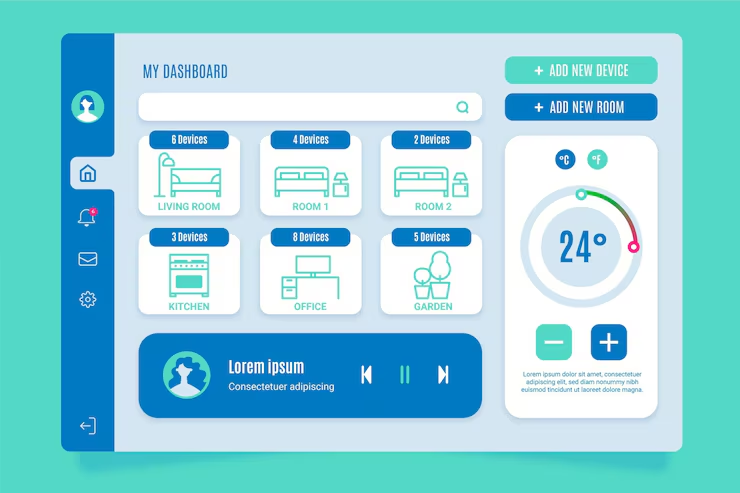
IoT Interface Design focuses on creating intuitive and secure interactions between humans and connected devices such as smart home appliances, wearables, industrial sensors, and healthcare devices. Since IoT systems combine physical products with digital controls, interface design must ensure simple, seamless communication between users and their smart environments.
The complexity of IoT is hidden behind a smooth user experience. Users should be able to discover devices easily, onboard them quickly, and control them with minimal effort. Clear instructions, guided setup flows, and visible feedback indicators (like connection status or alerts) are essential to prevent frustration during device pairing and operation.
Multi-modal interaction plays a major role in IoT systems. Interfaces must support a variety of input methods — touch, voice, gesture, remote apps, and automation triggers. For example, users may control lights with voice commands, schedule routines through a mobile app, or rely on sensors to trigger automatic actions. Flexibility helps accommodate different user abilities and contexts.
Context awareness is a key strength of smart devices. IoT interfaces analyze environmental data (temperature, motion, location) to provide proactive and personalized actions. This requires thoughtful UX logic so automated behavior feels helpful rather than intrusive. Transparency is important: users must understand why a smart device takes an action to maintain trust.
Limited screen space on IoT devices demands clever design. A thermostat display or smartwatch cannot show detailed settings like a phone app can. Designers often distribute tasks across multi-device experiences — quick controls on the device, deeper customization in the app. Consistency in icons, interactions, and terminology across platforms builds familiarity and reduces learning time.
Security and privacy are critical concerns in IoT UX. Smart devices collect personal data such as voice recordings, location, and health metrics. Interfaces must clearly explain permission requests, data access, and security status. Easy account management, authentication, and device-sharing controls ensure users retain ownership and safety of their devices.
Reliability is another major challenge. IoT networks depend on connectivity — Wi-Fi drops or cloud delays disrupt the experience. Good design minimizes user stress by offering offline modes, error recovery prompts, and fail-safe communication. Meaningful alerts help users troubleshoot instead of feeling helpless when things go wrong.
IoT Interface Design demands a holistic approach — balancing usability, automation, accessibility, and trust. As smart ecosystems expand into homes, hospitals, factories, and cities, well-crafted UX ensures technology blends naturally into people’s lives. Great IoT design makes smart devices feel truly intelligent — empowering users with convenience, safety, and peace of mind.
The complexity of IoT is hidden behind a smooth user experience. Users should be able to discover devices easily, onboard them quickly, and control them with minimal effort. Clear instructions, guided setup flows, and visible feedback indicators (like connection status or alerts) are essential to prevent frustration during device pairing and operation.
Multi-modal interaction plays a major role in IoT systems. Interfaces must support a variety of input methods — touch, voice, gesture, remote apps, and automation triggers. For example, users may control lights with voice commands, schedule routines through a mobile app, or rely on sensors to trigger automatic actions. Flexibility helps accommodate different user abilities and contexts.
Context awareness is a key strength of smart devices. IoT interfaces analyze environmental data (temperature, motion, location) to provide proactive and personalized actions. This requires thoughtful UX logic so automated behavior feels helpful rather than intrusive. Transparency is important: users must understand why a smart device takes an action to maintain trust.
Limited screen space on IoT devices demands clever design. A thermostat display or smartwatch cannot show detailed settings like a phone app can. Designers often distribute tasks across multi-device experiences — quick controls on the device, deeper customization in the app. Consistency in icons, interactions, and terminology across platforms builds familiarity and reduces learning time.
Security and privacy are critical concerns in IoT UX. Smart devices collect personal data such as voice recordings, location, and health metrics. Interfaces must clearly explain permission requests, data access, and security status. Easy account management, authentication, and device-sharing controls ensure users retain ownership and safety of their devices.
Reliability is another major challenge. IoT networks depend on connectivity — Wi-Fi drops or cloud delays disrupt the experience. Good design minimizes user stress by offering offline modes, error recovery prompts, and fail-safe communication. Meaningful alerts help users troubleshoot instead of feeling helpless when things go wrong.
IoT Interface Design demands a holistic approach — balancing usability, automation, accessibility, and trust. As smart ecosystems expand into homes, hospitals, factories, and cities, well-crafted UX ensures technology blends naturally into people’s lives. Great IoT design makes smart devices feel truly intelligent — empowering users with convenience, safety, and peace of mind.