
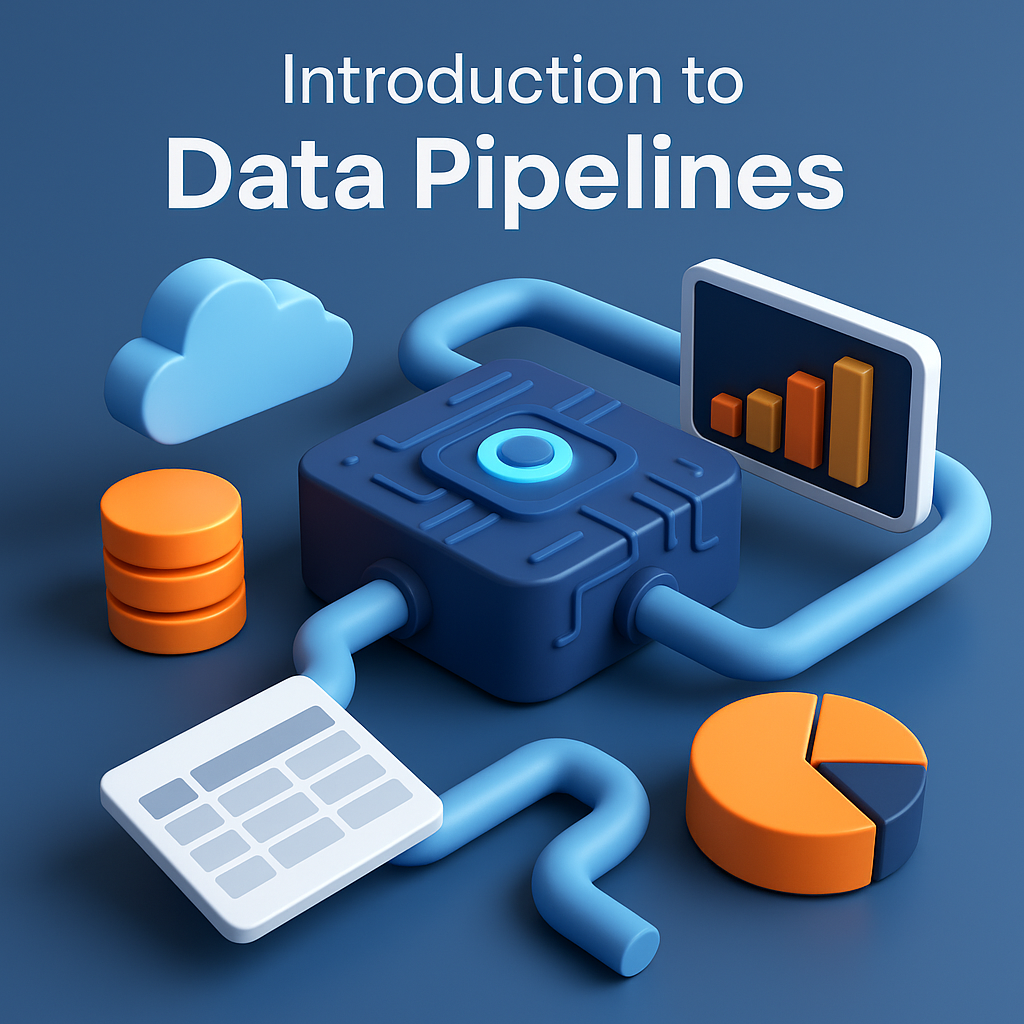
A data pipeline is the backbone of any modern data-driven organization, enabling the smooth flow of information from raw sources to meaningful insights. In a world where companies generate vast amounts of data across applications, devices, sensors, transactions, and digital interactions, data pipelines ensure that this information is collected, cleaned, transformed, stored, and delivered reliably. Without an efficient pipeline, data would remain scattered, inconsistent, and unusable for decision-making, analytics, and machine learning. The concept of a data pipeline revolves around automation and scalability—moving away from manual processes toward systems that continuously ingest and process data in real time or batches. As organizations increasingly adopt cloud platforms, AI systems, and real-time analytics, understanding data pipelines has become foundational for data engineers, analysts, developers, and business teams alike.
At its core, a data pipeline consists of several essential stages: data ingestion, data processing, data transformation, data storage, and data consumption. Each stage plays a critical role in converting raw, unstructured, or semi-structured information into a standardized and high-quality dataset. Data ingestion involves capturing data from diverse sources such as APIs, databases, mobile apps, IoT devices, logs, CRM systems, or third-party platforms. Processing and transformation steps cleanse the data by removing duplicates, fixing formatting issues, applying business rules, and reshaping the dataset for analytics. Storage systems—ranging from data lakes to warehouses—serve as centralized repositories for long-term access. Finally, the pipeline makes data available for dashboards, BI tools, machine learning models, and operational applications. A pipeline is not simply a sequence of steps but a highly orchestrated system built for reliability, speed, and consistency.
One of the biggest challenges in modern organizations is dealing with data variety, volume, and velocity. Traditional ETL (Extract, Transform, Load) pipelines were designed for structured data from a few sources and processed mainly in batches. However, as digital transformation accelerated, data began arriving from millions of users, sensors, and automation tools at high speed. This led to a shift from batch ETL to real-time or streaming pipelines using technologies like Apache Kafka, Spark Streaming, and cloud-native services. The need to process data as it arrives—for personalized recommendations, fraud detection, monitoring systems, or live dashboards—has pushed organizations to adopt hybrid pipelines that support both batch and streaming architectures. These pipelines handle everything from hourly sales reports to millisecond-level event streams, ensuring that businesses always have up-to-date information.
Another critical dimension of data pipelines is data quality and governance. High-quality data is the foundation of accurate analytics and trustworthy machine learning models. A pipeline ensures data quality by applying validation rules, detecting anomalies, enforcing schema consistency, and maintaining lineage. Data governance tools track who uses the data, how it was transformed, and whether it complies with internal or external regulations. This is especially important in industries like healthcare, finance, and government, where privacy and security are essential. Poor pipeline design can lead to unreliable reporting, model failures, compliance violations, and incorrect business decisions. Thus, modern pipelines must incorporate monitoring, automated alerts, and rollback mechanisms to ensure data is always accurate, complete, and trustworthy.
The architecture of data pipelines has evolved significantly with the rise of cloud platforms such as AWS, Google Cloud, and Microsoft Azure. Cloud-native pipelines leverage scalable storage, serverless processing, automated orchestration, and pay-as-you-go infrastructure. Tools like AWS Glue, Google Dataflow, Azure Data Factory, Snowflake, and Databricks simplify the process of building and managing pipelines without requiring teams to maintain complex hardware. These platforms provide built-in connectors, workflow automation, security controls, and monitoring dashboards, making pipelines faster to deploy and easier to maintain. The shift to cloud data pipelines enables organizations to handle large datasets with elasticity—scaling up during peak loads and scaling down when workloads reduce, saving costs and improving performance.
Modern data pipelines also support advanced use cases such as machine learning model training, MLOps, operational analytics, and real-time personalization. Machine learning pipelines require continuous data ingestion, feature extraction, model training, and model deployment—all integrated into a seamless workflow. Pipelines ensure that models receive fresh, accurate data, preventing model drift and improving prediction quality. For industries like e-commerce, finance, and healthcare, pipelines are the backbone of AI systems that automate decisions, detect anomalies, and deliver personalized experiences. The integration of data pipelines with MLOps frameworks boosts automation, reproducibility, and large-scale deployment of models throughout the organization.
Designing an effective data pipeline requires understanding key engineering principles such as scalability, fault tolerance, latency optimization, and orchestration. Scalability ensures that pipelines can handle growing data loads without slowing down. Fault tolerance allows the system to recover automatically from failures, ensuring no data is lost. Orchestration tools like Apache Airflow, Prefect, and Dagster manage complex workflows, scheduling tasks, tracking dependencies, and retrying failed jobs. Latency optimization ensures data reaches its destination quickly, especially important for real-time analytics. Engineers must also consider schema evolution, data partitioning, caching, and security. Building a pipeline is not just about moving data—it is about designing a resilient and intelligent system that adapts to the needs of the business.
While pipelines deliver tremendous value, constructing and managing them also comes with challenges. Complex infrastructures, incompatible data formats, evolving business requirements, and continuous maintenance needs can make pipelines difficult to manage without proper planning. Teams must ensure proper documentation, version control, testing, modular design, and monitoring dashboards. As pipeline ecosystems grow, organizations often adopt DataOps—a set of practices that brings automation, collaboration, and repeatable processes to data engineering. DataOps improves cycle time, reduces errors, and ensures faster delivery of insights. It transforms traditional pipelines into agile, efficient, and continually improving systems.
Ultimately, data pipelines turn raw, chaotic information into structured, trustworthy insights that drive business strategy, innovation, and operational efficiency. They form the invisible yet essential infrastructure behind dashboards, reports, machine learning models, and automated decision systems. Organizations that invest in strong pipeline architecture gain a significant competitive advantage, enabling faster time-to-insight, better customer experiences, improved automation, and higher data reliability. As digital transformation accelerates, pipelines will continue evolving, integrating AI-driven automation, real-time intelligence, and cloud-native architectures. Understanding how data pipelines work—and how to build them effectively—has become a critical skill for anyone involved in data science, engineering, analytics, or business strategy
At its core, a data pipeline consists of several essential stages: data ingestion, data processing, data transformation, data storage, and data consumption. Each stage plays a critical role in converting raw, unstructured, or semi-structured information into a standardized and high-quality dataset. Data ingestion involves capturing data from diverse sources such as APIs, databases, mobile apps, IoT devices, logs, CRM systems, or third-party platforms. Processing and transformation steps cleanse the data by removing duplicates, fixing formatting issues, applying business rules, and reshaping the dataset for analytics. Storage systems—ranging from data lakes to warehouses—serve as centralized repositories for long-term access. Finally, the pipeline makes data available for dashboards, BI tools, machine learning models, and operational applications. A pipeline is not simply a sequence of steps but a highly orchestrated system built for reliability, speed, and consistency.
One of the biggest challenges in modern organizations is dealing with data variety, volume, and velocity. Traditional ETL (Extract, Transform, Load) pipelines were designed for structured data from a few sources and processed mainly in batches. However, as digital transformation accelerated, data began arriving from millions of users, sensors, and automation tools at high speed. This led to a shift from batch ETL to real-time or streaming pipelines using technologies like Apache Kafka, Spark Streaming, and cloud-native services. The need to process data as it arrives—for personalized recommendations, fraud detection, monitoring systems, or live dashboards—has pushed organizations to adopt hybrid pipelines that support both batch and streaming architectures. These pipelines handle everything from hourly sales reports to millisecond-level event streams, ensuring that businesses always have up-to-date information.
Another critical dimension of data pipelines is data quality and governance. High-quality data is the foundation of accurate analytics and trustworthy machine learning models. A pipeline ensures data quality by applying validation rules, detecting anomalies, enforcing schema consistency, and maintaining lineage. Data governance tools track who uses the data, how it was transformed, and whether it complies with internal or external regulations. This is especially important in industries like healthcare, finance, and government, where privacy and security are essential. Poor pipeline design can lead to unreliable reporting, model failures, compliance violations, and incorrect business decisions. Thus, modern pipelines must incorporate monitoring, automated alerts, and rollback mechanisms to ensure data is always accurate, complete, and trustworthy.
The architecture of data pipelines has evolved significantly with the rise of cloud platforms such as AWS, Google Cloud, and Microsoft Azure. Cloud-native pipelines leverage scalable storage, serverless processing, automated orchestration, and pay-as-you-go infrastructure. Tools like AWS Glue, Google Dataflow, Azure Data Factory, Snowflake, and Databricks simplify the process of building and managing pipelines without requiring teams to maintain complex hardware. These platforms provide built-in connectors, workflow automation, security controls, and monitoring dashboards, making pipelines faster to deploy and easier to maintain. The shift to cloud data pipelines enables organizations to handle large datasets with elasticity—scaling up during peak loads and scaling down when workloads reduce, saving costs and improving performance.
Modern data pipelines also support advanced use cases such as machine learning model training, MLOps, operational analytics, and real-time personalization. Machine learning pipelines require continuous data ingestion, feature extraction, model training, and model deployment—all integrated into a seamless workflow. Pipelines ensure that models receive fresh, accurate data, preventing model drift and improving prediction quality. For industries like e-commerce, finance, and healthcare, pipelines are the backbone of AI systems that automate decisions, detect anomalies, and deliver personalized experiences. The integration of data pipelines with MLOps frameworks boosts automation, reproducibility, and large-scale deployment of models throughout the organization.
Designing an effective data pipeline requires understanding key engineering principles such as scalability, fault tolerance, latency optimization, and orchestration. Scalability ensures that pipelines can handle growing data loads without slowing down. Fault tolerance allows the system to recover automatically from failures, ensuring no data is lost. Orchestration tools like Apache Airflow, Prefect, and Dagster manage complex workflows, scheduling tasks, tracking dependencies, and retrying failed jobs. Latency optimization ensures data reaches its destination quickly, especially important for real-time analytics. Engineers must also consider schema evolution, data partitioning, caching, and security. Building a pipeline is not just about moving data—it is about designing a resilient and intelligent system that adapts to the needs of the business.
While pipelines deliver tremendous value, constructing and managing them also comes with challenges. Complex infrastructures, incompatible data formats, evolving business requirements, and continuous maintenance needs can make pipelines difficult to manage without proper planning. Teams must ensure proper documentation, version control, testing, modular design, and monitoring dashboards. As pipeline ecosystems grow, organizations often adopt DataOps—a set of practices that brings automation, collaboration, and repeatable processes to data engineering. DataOps improves cycle time, reduces errors, and ensures faster delivery of insights. It transforms traditional pipelines into agile, efficient, and continually improving systems.
Ultimately, data pipelines turn raw, chaotic information into structured, trustworthy insights that drive business strategy, innovation, and operational efficiency. They form the invisible yet essential infrastructure behind dashboards, reports, machine learning models, and automated decision systems. Organizations that invest in strong pipeline architecture gain a significant competitive advantage, enabling faster time-to-insight, better customer experiences, improved automation, and higher data reliability. As digital transformation accelerates, pipelines will continue evolving, integrating AI-driven automation, real-time intelligence, and cloud-native architectures. Understanding how data pipelines work—and how to build them effectively—has become a critical skill for anyone involved in data science, engineering, analytics, or business strategy