
Influencer marketing has become one of the most powerful digital marketing strategies for modern businesses. With millions of users actively engaging on platforms like Instagram, YouTube, TikTok, and Facebook, influencers are now capable of shaping opinions, promoting brands, and driving large-scale purchasing decisions. Influencers build trust through authentic storytelling, community interaction, and consistent content. This makes them extremely valuable partners for businesses seeking reach, credibility, and engagement. As a result, influencer collaboration strategies have become essential for brands of all sizes—from small start-ups to global corporations. Understanding how to choose influencers, structure collaborations, and measure performance is crucial for success in today’s competitive digital landscape.
Influencers come in different categories based on follower count, specialization, and engagement. Mega influencers (1M+ followers) deliver massive reach but are expensive and often less niche-focused. Macro influencers (100k–1M followers) provide strong reach and credibility. Micro influencers (10k–100k followers) offer higher engagement and niche-targeted audiences, making them ideal for specific industries like fitness, travel, tech, or beauty. Nano influencers (1k–10k followers) are everyday consumers with small yet deeply loyal communities—excellent for local businesses. Understanding these categories helps brands choose the right influencer type based on their goals, budget, and audience segment. For instance, businesses focusing on trust and local reach should lean toward micro and nano influencers, while large brands aiming for wide exposure may invest in macro and mega partnerships.
Choosing the right influencer is the most important step in collaboration. Brands must look beyond follower count and focus on engagement rate, content quality, audience demographics, authenticity, past collaborations, and brand alignment. A high-quality influencer should have genuine interactions in the comments, meaningful conversations with followers, and a consistent content style that matches the brand’s values. Tools like HypeAuditor, Social Blade, Upfluence, and BuzzSumo help evaluate growth patterns, engagement metrics, and audience authenticity. Brands must ensure that an influencer’s audience matches their target customers in age, location, interests, and purchasing behavior. Collaborations fail when influencers attract an audience irrelevant to the brand. Selecting influencers with genuine community loyalty leads to more effective and trustworthy campaigns.
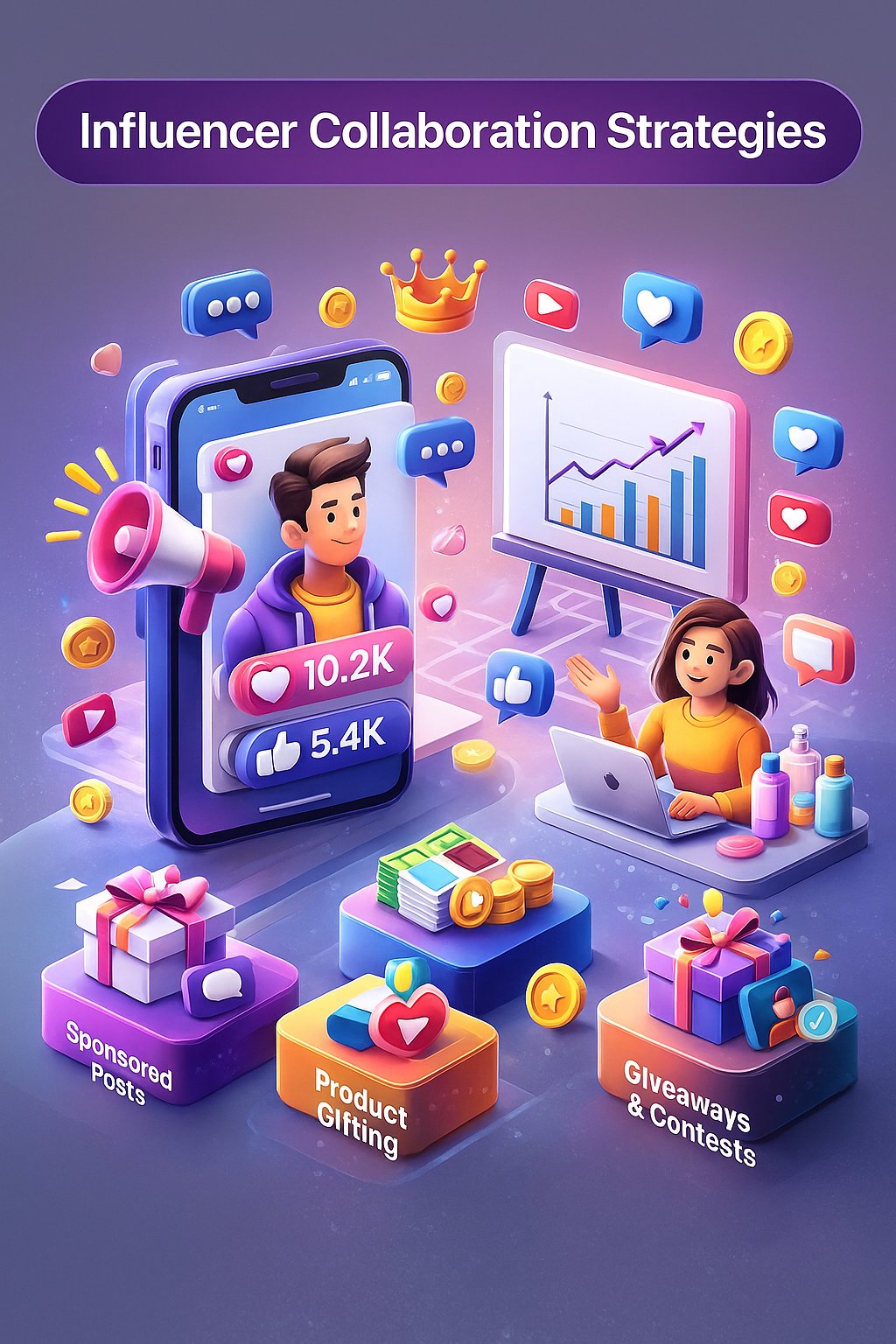
Influencer marketing offers various collaboration models depending on the campaign goals. Sponsored Posts are the most common, where influencers promote a product through a single post or video. Product Gifting involves sending free products to influencers in exchange for optional or agreed content. Affiliate Partnerships provide influencers with commissions for each sale made through their unique link. Ambassador Programs are long-term collaborations where influencers become the face of a brand for months or years. Giveaways and contests attract high engagement and grow brand visibility. Event collaborations involve influencers attending launches or brand events to create real-time content. UGC (User-Generated Content) involves influencers creating content for brand use rather than posting on their own profiles. Each model serves different goals such as sales, brand awareness, community building, or trust generation.
A successful influencer campaign begins with clear objectives. Brands must define the goal—is it to increase brand awareness, drive sales, generate leads, grow followers, or launch a new product? After setting goals, brands must prepare a detailed collaboration brief that includes campaign message, hashtags, timelines, guidelines, content expectations, and deliverables. Creativity should not be restricted—brands must allow influencers enough freedom to integrate the product naturally into their style. Forced or overly scripted promotions often feel inauthentic and reduce campaign effectiveness. Influencers know their audience best; allowing them to customize messaging increases authenticity and engagement. A strong collaboration balances the brand’s expectations with the influencer’s creative vision.
Influencer compensation varies depending on platform, content type, audience size, and engagement rate. Payments can be structured via fixed fees, product exchanges, affiliate commissions, or performance-based bonuses. Nano and micro influencers often accept product gifting or smaller fees, while macro and mega influencers typically require higher budgets. Clear contracts are essential—they outline deliverables, timelines, posting rights, usage rights, exclusivity terms, and payment conditions. Additionally, brands must consider creative fees, ad usage rights, and content licensing when planning budgets. Negotiations should be transparent and respectful. Influencers value long-term partnerships, so brands offering recurring collaboration opportunities often secure better deals and stronger loyalty.
Measuring performance is critical to understand campaign success and optimize future collaborations. Key performance indicators (KPIs) include engagement rate, click-through rate, reach, impressions, conversions, sales using affiliate codes, and growth in followers. Tools like Google Analytics, Meta Insights, TikTok Analytics, YouTube Studio, Bitly, and influencer marketing platforms help track detailed metrics. ROI analysis is important to evaluate whether the investment generated satisfactory returns. Beyond quantitative metrics, qualitative insights such as customer sentiment, comments, and user feedback help assess brand impact. Brands should compare performance across influencers to identify top-performing partners for future collaborations.
The best influencer strategies focus on building long-term partnerships rather than one-off deals. Consistent collaborations strengthen trust, deepen audience loyalty, and reinforce brand visibility. Long-term ambassadors become part of the brand’s identity and deliver much stronger results over time. Brands can nurture these relationships by offering early access to products, exclusive gifts, personalized experiences, and recognition. Regular communication, feedback sharing, and performance discussions create strong bonds. Influencers who feel valued naturally promote the brand more passionately and consistently.
Influencer collaboration strategies have become essential for modern digital marketing. A well-planned influencer strategy helps brands reach the right audience, build credibility, generate conversions, and stay competitive. By choosing relevant influencers, creating authentic content, negotiating fairly, and using data to optimize results, businesses can build powerful influencer partnerships that deliver long-term returns. As social media continues to grow, influencer collaboration will remain one of the most impactful marketing channels—especially for brands that embrace creativity, authenticity, and the value of strong relationships.
Influencers come in different categories based on follower count, specialization, and engagement. Mega influencers (1M+ followers) deliver massive reach but are expensive and often less niche-focused. Macro influencers (100k–1M followers) provide strong reach and credibility. Micro influencers (10k–100k followers) offer higher engagement and niche-targeted audiences, making them ideal for specific industries like fitness, travel, tech, or beauty. Nano influencers (1k–10k followers) are everyday consumers with small yet deeply loyal communities—excellent for local businesses. Understanding these categories helps brands choose the right influencer type based on their goals, budget, and audience segment. For instance, businesses focusing on trust and local reach should lean toward micro and nano influencers, while large brands aiming for wide exposure may invest in macro and mega partnerships.
Choosing the right influencer is the most important step in collaboration. Brands must look beyond follower count and focus on engagement rate, content quality, audience demographics, authenticity, past collaborations, and brand alignment. A high-quality influencer should have genuine interactions in the comments, meaningful conversations with followers, and a consistent content style that matches the brand’s values. Tools like HypeAuditor, Social Blade, Upfluence, and BuzzSumo help evaluate growth patterns, engagement metrics, and audience authenticity. Brands must ensure that an influencer’s audience matches their target customers in age, location, interests, and purchasing behavior. Collaborations fail when influencers attract an audience irrelevant to the brand. Selecting influencers with genuine community loyalty leads to more effective and trustworthy campaigns.
Influencer marketing offers various collaboration models depending on the campaign goals. Sponsored Posts are the most common, where influencers promote a product through a single post or video. Product Gifting involves sending free products to influencers in exchange for optional or agreed content. Affiliate Partnerships provide influencers with commissions for each sale made through their unique link. Ambassador Programs are long-term collaborations where influencers become the face of a brand for months or years. Giveaways and contests attract high engagement and grow brand visibility. Event collaborations involve influencers attending launches or brand events to create real-time content. UGC (User-Generated Content) involves influencers creating content for brand use rather than posting on their own profiles. Each model serves different goals such as sales, brand awareness, community building, or trust generation.
A successful influencer campaign begins with clear objectives. Brands must define the goal—is it to increase brand awareness, drive sales, generate leads, grow followers, or launch a new product? After setting goals, brands must prepare a detailed collaboration brief that includes campaign message, hashtags, timelines, guidelines, content expectations, and deliverables. Creativity should not be restricted—brands must allow influencers enough freedom to integrate the product naturally into their style. Forced or overly scripted promotions often feel inauthentic and reduce campaign effectiveness. Influencers know their audience best; allowing them to customize messaging increases authenticity and engagement. A strong collaboration balances the brand’s expectations with the influencer’s creative vision.
Influencer compensation varies depending on platform, content type, audience size, and engagement rate. Payments can be structured via fixed fees, product exchanges, affiliate commissions, or performance-based bonuses. Nano and micro influencers often accept product gifting or smaller fees, while macro and mega influencers typically require higher budgets. Clear contracts are essential—they outline deliverables, timelines, posting rights, usage rights, exclusivity terms, and payment conditions. Additionally, brands must consider creative fees, ad usage rights, and content licensing when planning budgets. Negotiations should be transparent and respectful. Influencers value long-term partnerships, so brands offering recurring collaboration opportunities often secure better deals and stronger loyalty.
Measuring performance is critical to understand campaign success and optimize future collaborations. Key performance indicators (KPIs) include engagement rate, click-through rate, reach, impressions, conversions, sales using affiliate codes, and growth in followers. Tools like Google Analytics, Meta Insights, TikTok Analytics, YouTube Studio, Bitly, and influencer marketing platforms help track detailed metrics. ROI analysis is important to evaluate whether the investment generated satisfactory returns. Beyond quantitative metrics, qualitative insights such as customer sentiment, comments, and user feedback help assess brand impact. Brands should compare performance across influencers to identify top-performing partners for future collaborations.
The best influencer strategies focus on building long-term partnerships rather than one-off deals. Consistent collaborations strengthen trust, deepen audience loyalty, and reinforce brand visibility. Long-term ambassadors become part of the brand’s identity and deliver much stronger results over time. Brands can nurture these relationships by offering early access to products, exclusive gifts, personalized experiences, and recognition. Regular communication, feedback sharing, and performance discussions create strong bonds. Influencers who feel valued naturally promote the brand more passionately and consistently.
Influencer collaboration strategies have become essential for modern digital marketing. A well-planned influencer strategy helps brands reach the right audience, build credibility, generate conversions, and stay competitive. By choosing relevant influencers, creating authentic content, negotiating fairly, and using data to optimize results, businesses can build powerful influencer partnerships that deliver long-term returns. As social media continues to grow, influencer collaboration will remain one of the most impactful marketing channels—especially for brands that embrace creativity, authenticity, and the value of strong relationships.