
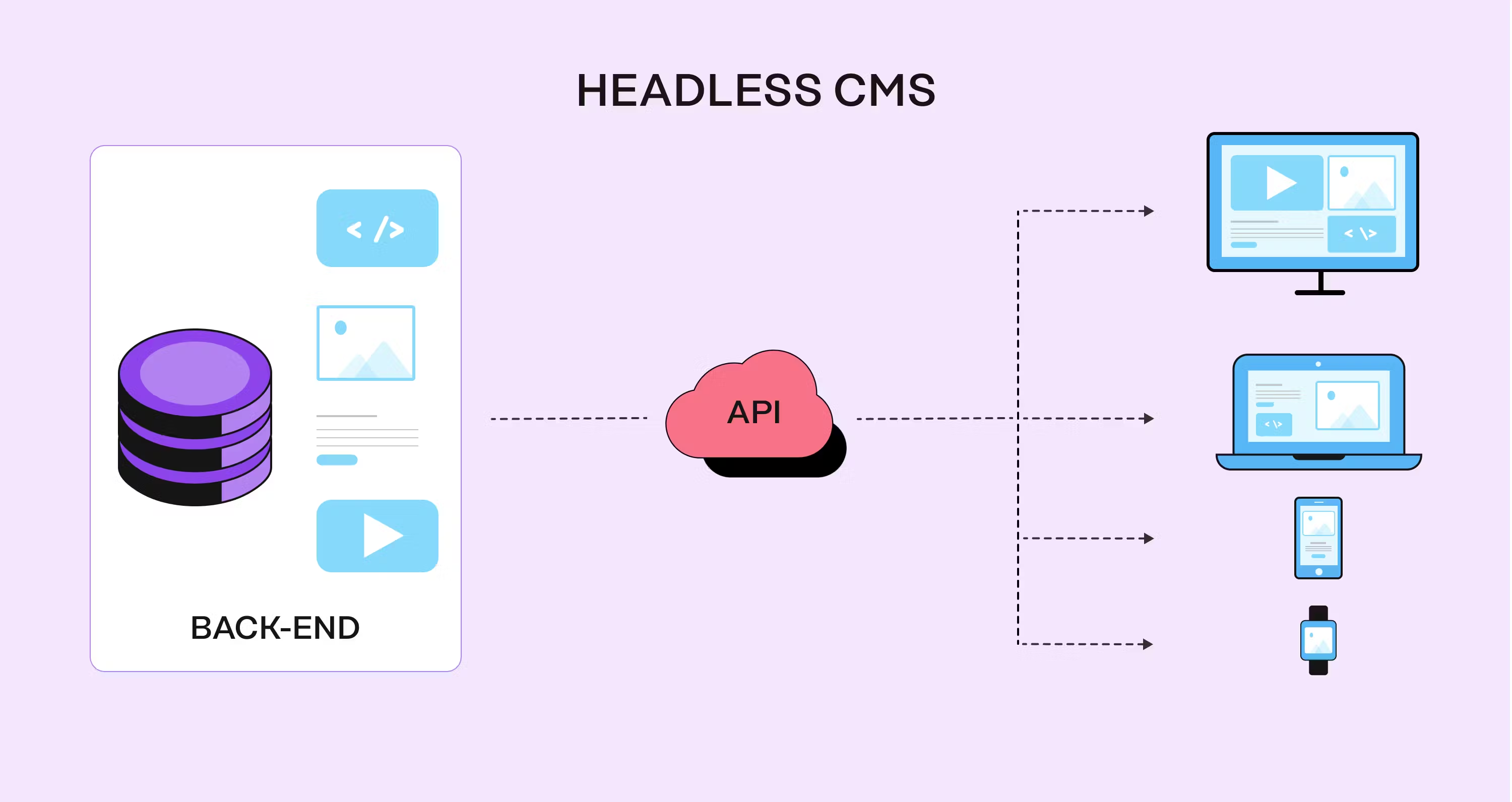
A headless CMS represents a modern shift in how digital content is managed and delivered across different platforms. Instead of binding the backend content storage to a single frontend presentation layer, a headless CMS separates these two layers completely. This decoupling gives developers the freedom to build applications using any framework or technology while still pulling content from a centralized, structured CMS. As a result, teams gain significant flexibility and scalability when creating websites, mobile apps, digital displays, and even IoT interfaces.
In a traditional CMS, everything—content creation, storage, and presentation—is tightly connected. This approach limits developers because the system dictates how content must be displayed. A headless CMS eliminates this restriction by providing content through APIs, usually REST or GraphQL, enabling the same data to be reused across multiple frontends. Content creators still enjoy a familiar dashboard for managing text, images, and media, but developers are free to build the front-end in React, Next.js, Flutter, or any technology they prefer.
The rise of omnichannel experiences has accelerated the adoption of headless architecture. Brands today must deliver consistent and personalized content across websites, apps, kiosks, voice assistants, and wearables. A headless CMS makes this possible by storing content in a structured way and distributing it to any device through API calls. This ensures uniformity while reducing the effort required to maintain different content systems for multiple platforms.
Another major benefit is performance. Because the frontend is not tied to the CMS engine, developers can optimize rendering, caching, and asset delivery more effectively. Frameworks like Next.js, Gatsby, and Nuxt allow pre-rendering or server-side rendering, which speeds up page load times. Faster performance improves user experience and boosts SEO results, making headless architecture particularly attractive for high-traffic or content-heavy applications.
Headless CMS solutions also enhance security. Since the public-facing website or application does not live inside the CMS, the attack surface is significantly smaller. The CMS remains hidden behind APIs, reducing vulnerabilities commonly found in monolithic systems. This architectural separation ensures that even if the frontend is compromised, the backend content repository remains protected.
From a developer’s perspective, the freedom to choose tools and frameworks is invaluable. Teams working on complex or large-scale projects can adopt modern tech stacks without worrying about CMS compatibility. Developers can experiment, innovate, and upgrade technologies without disrupting the content structure. This agility is one of the reasons why headless CMS platforms like Strapi, Contentful, and Sanity have become popular in modern development workflows.
For content teams, headless systems improve productivity. Editors can create reusable content blocks, structured entries, and dynamic fields. This structured approach enables faster content updates and easy adaptation to new platforms. Because the content exists independently from design, teams can refresh the website’s look or migrate to a new frontend without rewriting every piece of content.
Headless CMS also pairs well with cloud-native setups. Many platforms offer built-in scalability, CDN delivery, automation, and versioning. This ensures excellent performance even during traffic spikes, making it ideal for e-commerce brands, news platforms, and enterprise applications that require fast updates and global reach.
Overall, a headless CMS empowers organizations to future-proof their digital strategy. With its flexibility, scalability, and performance benefits, it supports rapid innovation and consistent content delivery across all channels. As digital experiences continue to expand beyond traditional websites, the headless approach has emerged as a foundation for modern content architecture.
In a traditional CMS, everything—content creation, storage, and presentation—is tightly connected. This approach limits developers because the system dictates how content must be displayed. A headless CMS eliminates this restriction by providing content through APIs, usually REST or GraphQL, enabling the same data to be reused across multiple frontends. Content creators still enjoy a familiar dashboard for managing text, images, and media, but developers are free to build the front-end in React, Next.js, Flutter, or any technology they prefer.
The rise of omnichannel experiences has accelerated the adoption of headless architecture. Brands today must deliver consistent and personalized content across websites, apps, kiosks, voice assistants, and wearables. A headless CMS makes this possible by storing content in a structured way and distributing it to any device through API calls. This ensures uniformity while reducing the effort required to maintain different content systems for multiple platforms.
Another major benefit is performance. Because the frontend is not tied to the CMS engine, developers can optimize rendering, caching, and asset delivery more effectively. Frameworks like Next.js, Gatsby, and Nuxt allow pre-rendering or server-side rendering, which speeds up page load times. Faster performance improves user experience and boosts SEO results, making headless architecture particularly attractive for high-traffic or content-heavy applications.
Headless CMS solutions also enhance security. Since the public-facing website or application does not live inside the CMS, the attack surface is significantly smaller. The CMS remains hidden behind APIs, reducing vulnerabilities commonly found in monolithic systems. This architectural separation ensures that even if the frontend is compromised, the backend content repository remains protected.
From a developer’s perspective, the freedom to choose tools and frameworks is invaluable. Teams working on complex or large-scale projects can adopt modern tech stacks without worrying about CMS compatibility. Developers can experiment, innovate, and upgrade technologies without disrupting the content structure. This agility is one of the reasons why headless CMS platforms like Strapi, Contentful, and Sanity have become popular in modern development workflows.
For content teams, headless systems improve productivity. Editors can create reusable content blocks, structured entries, and dynamic fields. This structured approach enables faster content updates and easy adaptation to new platforms. Because the content exists independently from design, teams can refresh the website’s look or migrate to a new frontend without rewriting every piece of content.
Headless CMS also pairs well with cloud-native setups. Many platforms offer built-in scalability, CDN delivery, automation, and versioning. This ensures excellent performance even during traffic spikes, making it ideal for e-commerce brands, news platforms, and enterprise applications that require fast updates and global reach.
Overall, a headless CMS empowers organizations to future-proof their digital strategy. With its flexibility, scalability, and performance benefits, it supports rapid innovation and consistent content delivery across all channels. As digital experiences continue to expand beyond traditional websites, the headless approach has emerged as a foundation for modern content architecture.