
Domain-Driven Design (DDD) is an approach to software development that emphasizes understanding and modeling the core business domain. Rather than focusing first on code or technology, DDD encourages teams to collaborate closely with domain experts to create software that reflects real-world processes and rules. This alignment reduces misunderstandings and helps build systems that are flexible, scalable, and easier to maintain.
A central concept in DDD is the domain model, which represents the business logic and rules in the system. Instead of placing logic in controllers or database layers, DDD encourages encapsulating logic within domain objects. These models speak the same language that domain experts use, making communication clear and consistent.
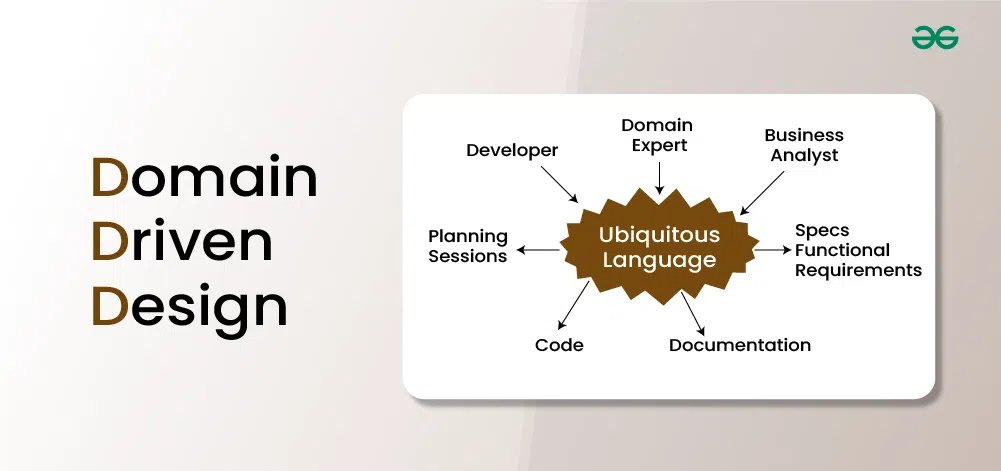
DDD introduces the Ubiquitous Language, a shared vocabulary between developers and non-technical stakeholders. This language appears in code, documentation, discussions, and tests. When everyone uses the same terms, confusion is reduced, and the domain model becomes a true representation of business needs.
Another key idea is the Bounded Context, which defines clear boundaries around different parts of a system. Large systems often have multiple contexts—for example, billing, customer management, and inventory. Each context has its own domain model and language, preventing conflicts and keeping complexity manageable. Integrations between contexts are handled explicitly through contracts and translations.
Within each bounded context, DDD introduces building blocks such as Entities, Value Objects, Aggregates, Repositories, and Domain Events. Entities have identity and change over time, while value objects are immutable and defined by their attributes. Aggregates ensure business rules are enforced consistently, repositories abstract data storage, and domain events represent meaningful changes in the system.
DDD also distinguishes between strategic and tactical design. Strategic design focuses on shaping system boundaries and relationships between domains, while tactical design focuses on implementing domain models correctly. Together, they give both high-level clarity and practical coding guidance, making DDD suitable for large and complex systems.
DDD is especially powerful for systems with evolving business rules, such as fintech, logistics, healthcare, and enterprise applications. Its emphasis on domain knowledge ensures changes can be handled gracefully without breaking existing logic. This adaptability makes systems more resilient over time.
However, DDD is not required for every project. Simple CRUD-based apps may not benefit from this depth of modeling. DDD works best when the domain is complex and business rules are critical to success. “Over-engineering” is a risk if DDD is applied without a clear need.
In practice, DDD leads to better architecture, clearer communication, and software that evolves with the business. It ensures that code reflects actual business processes, reducing technical debt and improving developer productivity. For long-term, complex systems, DDD remains one of the most effective design methodologies.
A central concept in DDD is the domain model, which represents the business logic and rules in the system. Instead of placing logic in controllers or database layers, DDD encourages encapsulating logic within domain objects. These models speak the same language that domain experts use, making communication clear and consistent.
DDD introduces the Ubiquitous Language, a shared vocabulary between developers and non-technical stakeholders. This language appears in code, documentation, discussions, and tests. When everyone uses the same terms, confusion is reduced, and the domain model becomes a true representation of business needs.
Another key idea is the Bounded Context, which defines clear boundaries around different parts of a system. Large systems often have multiple contexts—for example, billing, customer management, and inventory. Each context has its own domain model and language, preventing conflicts and keeping complexity manageable. Integrations between contexts are handled explicitly through contracts and translations.
Within each bounded context, DDD introduces building blocks such as Entities, Value Objects, Aggregates, Repositories, and Domain Events. Entities have identity and change over time, while value objects are immutable and defined by their attributes. Aggregates ensure business rules are enforced consistently, repositories abstract data storage, and domain events represent meaningful changes in the system.
DDD also distinguishes between strategic and tactical design. Strategic design focuses on shaping system boundaries and relationships between domains, while tactical design focuses on implementing domain models correctly. Together, they give both high-level clarity and practical coding guidance, making DDD suitable for large and complex systems.
DDD is especially powerful for systems with evolving business rules, such as fintech, logistics, healthcare, and enterprise applications. Its emphasis on domain knowledge ensures changes can be handled gracefully without breaking existing logic. This adaptability makes systems more resilient over time.
However, DDD is not required for every project. Simple CRUD-based apps may not benefit from this depth of modeling. DDD works best when the domain is complex and business rules are critical to success. “Over-engineering” is a risk if DDD is applied without a clear need.
In practice, DDD leads to better architecture, clearer communication, and software that evolves with the business. It ensures that code reflects actual business processes, reducing technical debt and improving developer productivity. For long-term, complex systems, DDD remains one of the most effective design methodologies.