
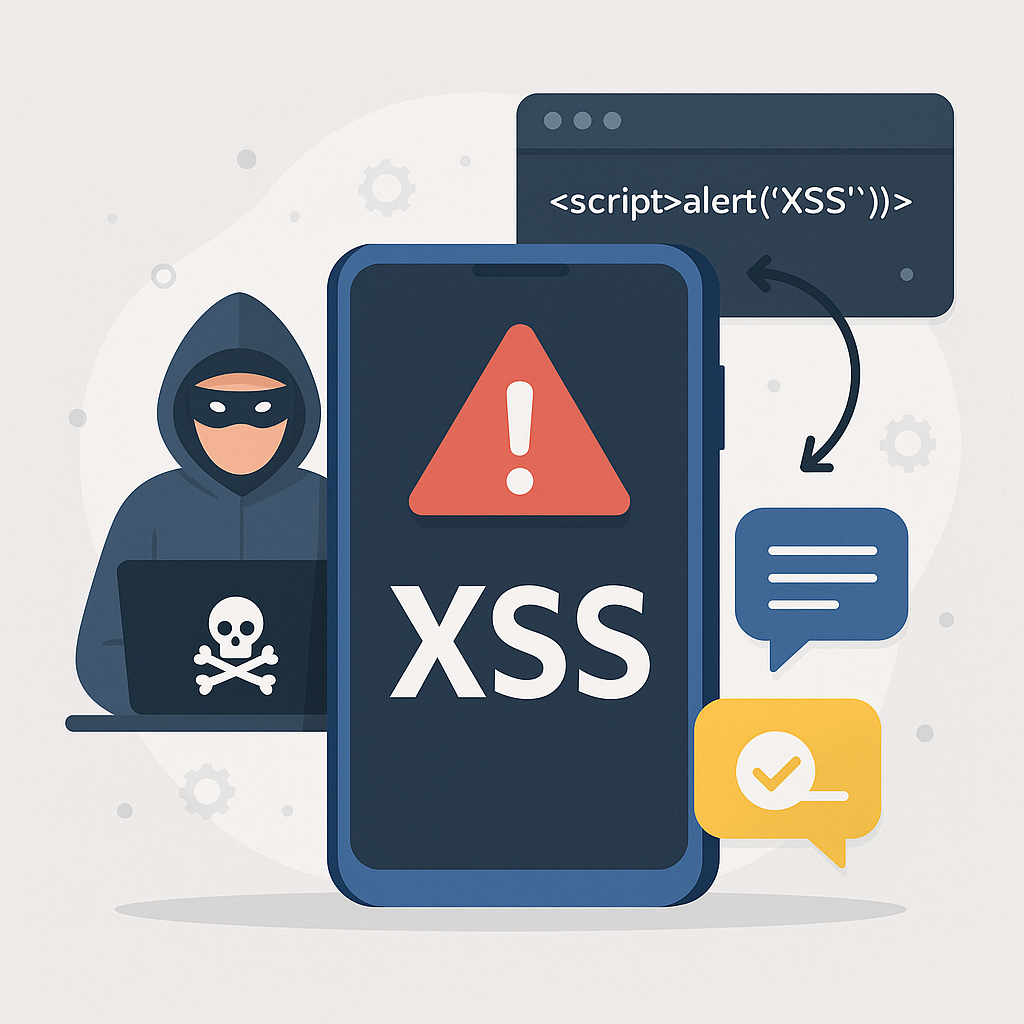
Cross-Site Scripting (XSS) is one of the most common and dangerous vulnerabilities found in web applications. It occurs when attackers inject malicious scripts into trusted websites, tricking the browser into executing harmful JavaScript on behalf of the victim. This allows attackers to steal session cookies, hijack accounts, deface websites, spread malware, or redirect users to malicious pages. XSS vulnerabilities continue to appear even in well-known platforms, making it a top priority in cybersecurity and ethical hacking. What makes XSS so effective is that it exploits the trust that users place in a legitimate website — the attack runs inside the browser, not on the server, making it difficult for victims to detect.
XSS targets the interaction between user input and the web page’s output. When a website fails to properly sanitize or validate user inputs, attackers can inject JavaScript code into fields such as search boxes, comments, contact forms, profile descriptions, and URLs. When the web page renders this input, the browser interprets it as normal code and executes it. Because the script runs within the context of the website, it gains access to cookies, local storage, DOM elements, and other sensitive data. Attackers can manipulate the page, steal user data, or trick users into performing actions. Understanding how browsers interpret dynamic content is key to understanding XSS attacks.
There are three major types of XSS, each with its own characteristics and attack vectors:
1)Reflected XSS:
Occurs when user input is immediately returned by the server without sanitization. Attackers craft malicious URLs and trick users into clicking them. The payload is executed instantly within the user’s browser.
2)Stored XSS:
This is the most dangerous form. The malicious script is permanently stored on the server — for example, inside comments, posts, or usernames. Every user who views the infected content triggers the payload. Social media platforms and forums are common targets.
3)DOM-Based XSS:
This attack occurs entirely on the client side. It does not involve server responses. Instead, vulnerable JavaScript on the webpage dynamically processes user input (like URL parameters) in an unsafe way, injecting the attacker’s payload into the DOM.
Each type requires different defensive techniques, making XSS prevention a multi-layered process.
XSS can lead to severe consequences because it grants attackers full access to the user’s browser session and data linked to a vulnerable site. Common malicious actions include:
1)Stealing session cookies and hijacking accounts
2)Logging keystrokes to capture passwords
3)Redirecting victims to phishing or malware pages
4)Modifying page content to mislead or scam users
5)Performing actions on behalf of the victim (CSRF + XSS combinations)
6)Spying on browser activity
7)Injecting fake login forms to steal credentials
Because the attack originates from a trusted website domain, browsers cannot easily distinguish malicious scripts from legitimate ones — making XSS highly effective.
Many popular websites have suffered XSS vulnerabilities. For example, social media platforms like Facebook, Twitter, and MySpace have previously experienced XSS issues that allowed attackers to spread self-replicating worms. E-commerce sites have been victims of XSS used to steal payment information. Even government and banking portals have faced XSS-based data theft. These incidents demonstrate that XSS is not limited to small websites; even major platforms with advanced security teams can still make input-handling mistakes. Real-world XSS attacks often go unnoticed, causing silent data theft across millions of users.
Preventing XSS requires a combination of strong coding practices and security frameworks. The most important prevention method is contextual output encoding — converting special characters (like <, >, &, ", ') into safe HTML entities before rendering them. This ensures browsers treat user input as text, not code. Input validation helps reject unexpected characters or disallowed formats, reducing the chances of malicious payload insertion. Developers should also avoid using innerHTML, document.write, or unsafe dynamic rendering without proper sanitization. Frameworks like React, Angular, Laravel, and Django provide built-in protections but still require developers to follow secure coding practices.
Beyond coding-level defenses, browser and server configurations play a major role in preventing XSS.
Key protections include:
1)Content Security Policy (CSP):
Restricts where scripts can load from and prevents execution of inline JavaScript. A strong CSP can block most XSS attempts even if the site contains vulnerabilities.
2)HTTPOnly Cookies:
Protect session cookies from being accessed via JavaScript.
3)X-XSS-Protection Header:
An older but still occasionally useful browser feature that blocks reflected XSS attempts.
4)Escaping dynamic data in templates:
Ensures that untrusted data never becomes part of executable script.
When combined, these defenses drastically reduce XSS attack success rates.
Security testers use specialized tools and manual techniques to identify XSS vulnerabilities. Tools like Burp Suite, OWASP ZAP, Acunetix, and Nmap help detect insecure parameters and injection points. Ethical hackers test fields such as comment boxes, search bars, and URL parameters with harmless payloads like:
<script>alert('XSS')</script>
or
"><img src=x onerror=alert('XSS')>
They also inspect JavaScript functions, dynamic DOM updates, and third-party scripts for unsafe injections. Testing across different browsers and devices is crucial because some XSS vectors work only in certain environments. Ethical testing helps developers fix vulnerabilities before cybercriminals exploit them.
Cross-Site Scripting remains one of the most persistent cybersecurity threats due to human error, poor input handling, and the complexity of modern web applications. It enables attackers to manipulate trusted websites and exploit users directly in their browsers. By understanding how XSS works — and applying best practices such as output encoding, script sanitization, and Content Security Policy — developers can greatly reduce risks. For beginners, learning XSS fundamentals is essential because it builds a strong foundation for secure coding, ethical hacking, penetration testing, and web application security. Preventing XSS is not just about protecting code — it is about protecting users.
XSS targets the interaction between user input and the web page’s output. When a website fails to properly sanitize or validate user inputs, attackers can inject JavaScript code into fields such as search boxes, comments, contact forms, profile descriptions, and URLs. When the web page renders this input, the browser interprets it as normal code and executes it. Because the script runs within the context of the website, it gains access to cookies, local storage, DOM elements, and other sensitive data. Attackers can manipulate the page, steal user data, or trick users into performing actions. Understanding how browsers interpret dynamic content is key to understanding XSS attacks.
There are three major types of XSS, each with its own characteristics and attack vectors:
1)Reflected XSS:
Occurs when user input is immediately returned by the server without sanitization. Attackers craft malicious URLs and trick users into clicking them. The payload is executed instantly within the user’s browser.
2)Stored XSS:
This is the most dangerous form. The malicious script is permanently stored on the server — for example, inside comments, posts, or usernames. Every user who views the infected content triggers the payload. Social media platforms and forums are common targets.
3)DOM-Based XSS:
This attack occurs entirely on the client side. It does not involve server responses. Instead, vulnerable JavaScript on the webpage dynamically processes user input (like URL parameters) in an unsafe way, injecting the attacker’s payload into the DOM.
Each type requires different defensive techniques, making XSS prevention a multi-layered process.
XSS can lead to severe consequences because it grants attackers full access to the user’s browser session and data linked to a vulnerable site. Common malicious actions include:
1)Stealing session cookies and hijacking accounts
2)Logging keystrokes to capture passwords
3)Redirecting victims to phishing or malware pages
4)Modifying page content to mislead or scam users
5)Performing actions on behalf of the victim (CSRF + XSS combinations)
6)Spying on browser activity
7)Injecting fake login forms to steal credentials
Because the attack originates from a trusted website domain, browsers cannot easily distinguish malicious scripts from legitimate ones — making XSS highly effective.
Many popular websites have suffered XSS vulnerabilities. For example, social media platforms like Facebook, Twitter, and MySpace have previously experienced XSS issues that allowed attackers to spread self-replicating worms. E-commerce sites have been victims of XSS used to steal payment information. Even government and banking portals have faced XSS-based data theft. These incidents demonstrate that XSS is not limited to small websites; even major platforms with advanced security teams can still make input-handling mistakes. Real-world XSS attacks often go unnoticed, causing silent data theft across millions of users.
Preventing XSS requires a combination of strong coding practices and security frameworks. The most important prevention method is contextual output encoding — converting special characters (like <, >, &, ", ') into safe HTML entities before rendering them. This ensures browsers treat user input as text, not code. Input validation helps reject unexpected characters or disallowed formats, reducing the chances of malicious payload insertion. Developers should also avoid using innerHTML, document.write, or unsafe dynamic rendering without proper sanitization. Frameworks like React, Angular, Laravel, and Django provide built-in protections but still require developers to follow secure coding practices.
Beyond coding-level defenses, browser and server configurations play a major role in preventing XSS.
Key protections include:
1)Content Security Policy (CSP):
Restricts where scripts can load from and prevents execution of inline JavaScript. A strong CSP can block most XSS attempts even if the site contains vulnerabilities.
2)HTTPOnly Cookies:
Protect session cookies from being accessed via JavaScript.
3)X-XSS-Protection Header:
An older but still occasionally useful browser feature that blocks reflected XSS attempts.
4)Escaping dynamic data in templates:
Ensures that untrusted data never becomes part of executable script.
When combined, these defenses drastically reduce XSS attack success rates.
Security testers use specialized tools and manual techniques to identify XSS vulnerabilities. Tools like Burp Suite, OWASP ZAP, Acunetix, and Nmap help detect insecure parameters and injection points. Ethical hackers test fields such as comment boxes, search bars, and URL parameters with harmless payloads like:
<script>alert('XSS')</script>
or
"><img src=x onerror=alert('XSS')>
They also inspect JavaScript functions, dynamic DOM updates, and third-party scripts for unsafe injections. Testing across different browsers and devices is crucial because some XSS vectors work only in certain environments. Ethical testing helps developers fix vulnerabilities before cybercriminals exploit them.
Cross-Site Scripting remains one of the most persistent cybersecurity threats due to human error, poor input handling, and the complexity of modern web applications. It enables attackers to manipulate trusted websites and exploit users directly in their browsers. By understanding how XSS works — and applying best practices such as output encoding, script sanitization, and Content Security Policy — developers can greatly reduce risks. For beginners, learning XSS fundamentals is essential because it builds a strong foundation for secure coding, ethical hacking, penetration testing, and web application security. Preventing XSS is not just about protecting code — it is about protecting users.