
Creating MVP (Minimum Viable Product) mobile apps is one of the smartest and most efficient ways to build digital products, especially for startups, entrepreneurs, and early-stage development teams. An MVP focuses on developing only the essential features that solve a core problem for the user, avoiding unnecessary complexity. Instead of spending months building a full-scale application, teams release a simplified version to gather real-world feedback quickly. This approach minimizes risk, saves time and budget, and ensures that the product evolves based on actual user needs rather than assumptions.
At the heart of MVP development is the concept of validation. An MVP allows teams to test whether an idea truly resonates with users before investing heavily in design, advanced features, or a large development team. Many successful apps—including Instagram, Uber, and Dropbox—started as minimal versions of what they eventually became. By launching early, developers gather insights about user behavior, preferences, and pain points. These insights help refine the product direction and avoid building features nobody wants. The primary objective is not perfection but learning.
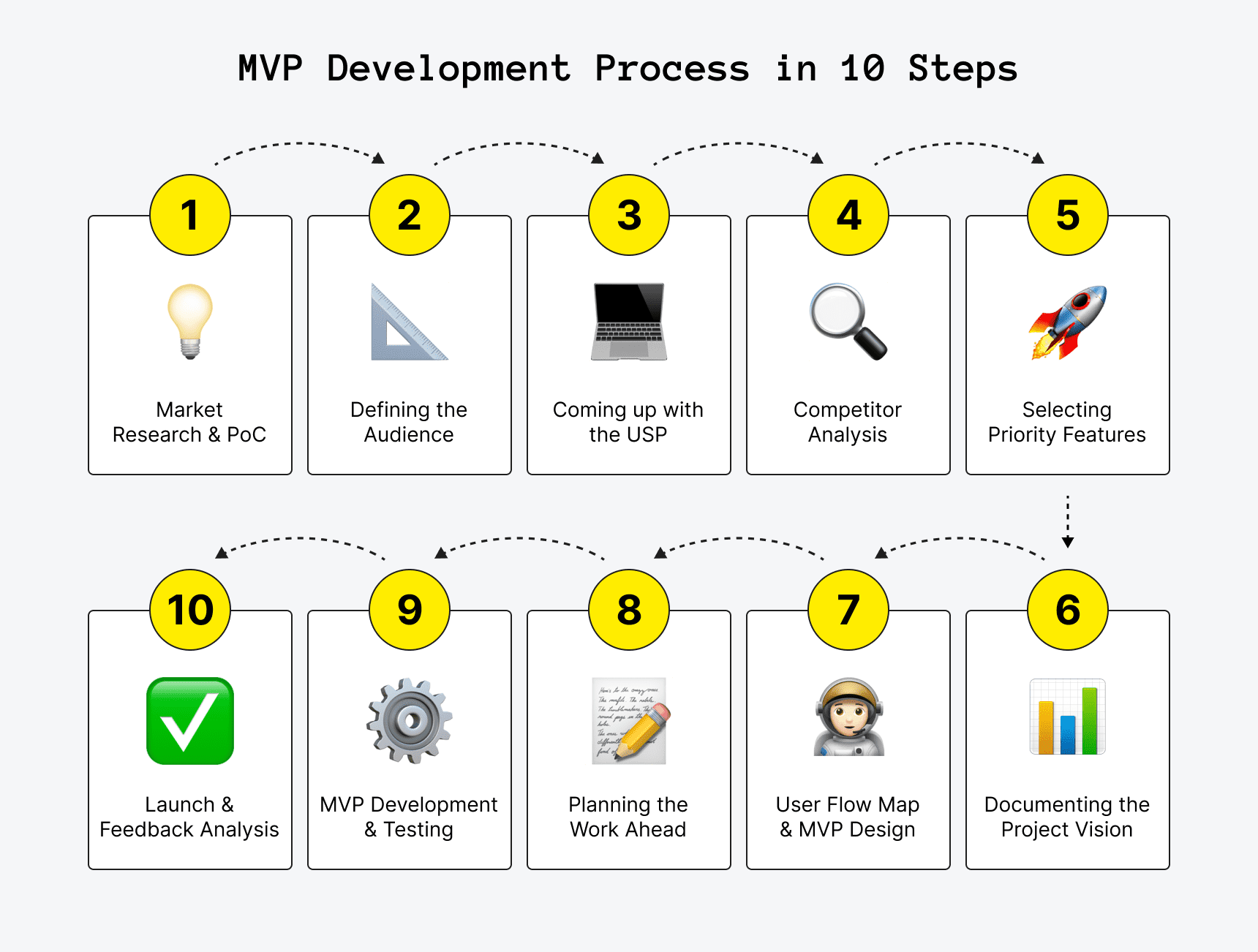
The process of creating an MVP starts with identifying a clear problem and defining a specific target audience. Instead of trying to serve “everyone,” an MVP thrives when built for a narrow group with a well-understood need. Once the problem is crystal clear, the next step is listing potential features and prioritizing them using methods like MoSCoW (Must-have, Should-have, Could-have, Won’t-have). Only the most essential features—the ones directly tied to solving the main problem—go into the MVP. This prevents scope creep and keeps the project focused.
Design plays an equally important role in MVP development. Even though the product is minimal, it must offer a smooth and intuitive user experience. Wireframes, prototypes, and simple user flows help visualize the product before coding begins. Modern design tools make it easy to test interactions and gather feedback. The goal is not to create the perfect interface but to provide enough clarity and usability so users can interact with the core functionality effortlessly. Good UX in an MVP reduces friction and increases the likelihood of meaningful feedback.
Development of an MVP mobile app follows a lean, iterative methodology. Developers typically build the core functionality quickly using frameworks that support rapid development such as Flutter, React Native, or native toolkits. The emphasis is on reliability and performance of the essential features while leaving room for future expansion. Choosing scalable architecture early ensures that as the app grows, developers won’t face major technical debt. During development, small test cycles help identify bugs, refine interactions, and improve stability before release.
Once the MVP is built, launching it to a selected group of real users is crucial. Many teams release it to a beta testing group, internal employees, or a limited geographic region before going public. This controlled release helps gather actionable insights without overwhelming the team. Feedback collected during the MVP stage includes feature requests, pain points, usage patterns, and overall satisfaction. Analytics tools provide quantitative data such as retention rate, session duration, onboarding completion, and feature engagement. This combination of feedback and data helps guide the next iterations.
Iterating after launch is the most powerful phase of MVP development. Based on user insights, the team refines existing features, removes unnecessary ones, and introduces new improvements. This cycle of build-measure-learn creates a feedback-driven evolution of the app. Instead of guessing what users want, teams make decisions grounded in real behavior. Continuous iteration ensures the app becomes more valuable and aligned with market expectations over time. This iterative approach transforms an MVP into a polished product prepared for wide-scale launch.
A well-developed MVP also attracts investors and stakeholders. Because the MVP already demonstrates core functionality and real-world traction, it becomes easier to secure funding, partnerships, or market support. Investors prefer seeing a working prototype with user engagement rather than theoretical ideas. A simple, functional MVP communicates clarity, focus, and vision. This makes it an essential part of the journey for startups and entrepreneurs aiming to scale their ideas.
Creating MVP mobile apps is ultimately about reducing waste and maximizing learning. Instead of building a perfect product in isolation, developers create a foundation that grows through real-world usage. This approach saves time, minimizes financial risks, and increases the chances of building an app people genuinely need. As the market becomes more competitive, MVP development helps teams stay agile, adapt quickly, and deliver meaningful solutions that evolve with user expectations.
At the heart of MVP development is the concept of validation. An MVP allows teams to test whether an idea truly resonates with users before investing heavily in design, advanced features, or a large development team. Many successful apps—including Instagram, Uber, and Dropbox—started as minimal versions of what they eventually became. By launching early, developers gather insights about user behavior, preferences, and pain points. These insights help refine the product direction and avoid building features nobody wants. The primary objective is not perfection but learning.
The process of creating an MVP starts with identifying a clear problem and defining a specific target audience. Instead of trying to serve “everyone,” an MVP thrives when built for a narrow group with a well-understood need. Once the problem is crystal clear, the next step is listing potential features and prioritizing them using methods like MoSCoW (Must-have, Should-have, Could-have, Won’t-have). Only the most essential features—the ones directly tied to solving the main problem—go into the MVP. This prevents scope creep and keeps the project focused.
Design plays an equally important role in MVP development. Even though the product is minimal, it must offer a smooth and intuitive user experience. Wireframes, prototypes, and simple user flows help visualize the product before coding begins. Modern design tools make it easy to test interactions and gather feedback. The goal is not to create the perfect interface but to provide enough clarity and usability so users can interact with the core functionality effortlessly. Good UX in an MVP reduces friction and increases the likelihood of meaningful feedback.
Development of an MVP mobile app follows a lean, iterative methodology. Developers typically build the core functionality quickly using frameworks that support rapid development such as Flutter, React Native, or native toolkits. The emphasis is on reliability and performance of the essential features while leaving room for future expansion. Choosing scalable architecture early ensures that as the app grows, developers won’t face major technical debt. During development, small test cycles help identify bugs, refine interactions, and improve stability before release.
Once the MVP is built, launching it to a selected group of real users is crucial. Many teams release it to a beta testing group, internal employees, or a limited geographic region before going public. This controlled release helps gather actionable insights without overwhelming the team. Feedback collected during the MVP stage includes feature requests, pain points, usage patterns, and overall satisfaction. Analytics tools provide quantitative data such as retention rate, session duration, onboarding completion, and feature engagement. This combination of feedback and data helps guide the next iterations.
Iterating after launch is the most powerful phase of MVP development. Based on user insights, the team refines existing features, removes unnecessary ones, and introduces new improvements. This cycle of build-measure-learn creates a feedback-driven evolution of the app. Instead of guessing what users want, teams make decisions grounded in real behavior. Continuous iteration ensures the app becomes more valuable and aligned with market expectations over time. This iterative approach transforms an MVP into a polished product prepared for wide-scale launch.
A well-developed MVP also attracts investors and stakeholders. Because the MVP already demonstrates core functionality and real-world traction, it becomes easier to secure funding, partnerships, or market support. Investors prefer seeing a working prototype with user engagement rather than theoretical ideas. A simple, functional MVP communicates clarity, focus, and vision. This makes it an essential part of the journey for startups and entrepreneurs aiming to scale their ideas.
Creating MVP mobile apps is ultimately about reducing waste and maximizing learning. Instead of building a perfect product in isolation, developers create a foundation that grows through real-world usage. This approach saves time, minimizes financial risks, and increases the chances of building an app people genuinely need. As the market becomes more competitive, MVP development helps teams stay agile, adapt quickly, and deliver meaningful solutions that evolve with user expectations.