
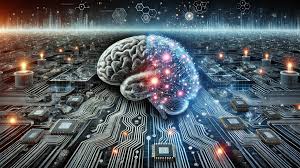
Cognitive Computing & Brain-Inspired AI focuses on building intelligent systems that learn, think, and understand like the human brain. While traditional AI models excel at narrow tasks, cognitive computing aims for more natural reasoning, context awareness, and adaptive decision-making. The goal is to create machines that can perceive the world, draw conclusions, and interact with humans more intuitively.
Brain-inspired AI models draw from neuroscience — analyzing how neurons communicate, how memory forms, and how humans solve problems with limited data. Instead of relying solely on massive computational power, these systems aim to replicate the efficiency and structure of biological intelligence. Technologies like spiking neural networks (SNNs) mimic the brain’s timing-based communication for lower energy usage and faster learning.
Cognitive computing integrates multiple AI disciplines: machine learning, natural language processing, knowledge graphs, and commonsense reasoning. It allows systems to understand context, ambiguity, and emotion — something classical AI often struggles with. IBM Watson is a well-known example, using cognitive techniques to support medical diagnosis and decision-making with human-like reasoning.
Memory and learning mechanisms in cognitive AI take inspiration from the brain’s adaptability. Humans learn continuously from interactions, but traditional models require large datasets and static retraining. Brain-inspired AI aims for incremental learning, enabling systems to adjust from new experiences without forgetting past knowledge — a key step toward lifelong learning.
Neuromorphic hardware plays a major role in brain-inspired computing. Chips like Intel’s Loihi and IBM’s TrueNorth simulate biological neural activity using specialized circuits. They consume far less power than GPUs while supporting real-time sensory processing, making them ideal for edge AI in robotics, wearables, and autonomous systems.
Cognitive systems support more natural human-machine collaboration. They interpret speech, gestures, and emotions to respond appropriately in healthcare, customer support, and assistive technologies. For example, cognitive companions help dementia patients with reminders and emotional support by recognizing patterns in behavior and mood.
However, replicating human cognition is extremely challenging. The brain has 86 billion neurons, deep emotional intelligence, and unique creative reasoning capabilities that AI has yet to fully understand. Ethical concerns also arise — cognitive AI must remain transparent and controllable to avoid harmful decision-making or misuse in surveillance.
The future of cognitive computing brings us closer to true artificial intelligence — machines that can reason abstractly, understand cause and effect, make ethical judgments, and work as partners to improve human life. Brain-inspired approaches may ultimately bridge the gap between today’s narrow AI and tomorrow’s more powerful, general intelligence systems.
Brain-inspired AI models draw from neuroscience — analyzing how neurons communicate, how memory forms, and how humans solve problems with limited data. Instead of relying solely on massive computational power, these systems aim to replicate the efficiency and structure of biological intelligence. Technologies like spiking neural networks (SNNs) mimic the brain’s timing-based communication for lower energy usage and faster learning.
Cognitive computing integrates multiple AI disciplines: machine learning, natural language processing, knowledge graphs, and commonsense reasoning. It allows systems to understand context, ambiguity, and emotion — something classical AI often struggles with. IBM Watson is a well-known example, using cognitive techniques to support medical diagnosis and decision-making with human-like reasoning.
Memory and learning mechanisms in cognitive AI take inspiration from the brain’s adaptability. Humans learn continuously from interactions, but traditional models require large datasets and static retraining. Brain-inspired AI aims for incremental learning, enabling systems to adjust from new experiences without forgetting past knowledge — a key step toward lifelong learning.
Neuromorphic hardware plays a major role in brain-inspired computing. Chips like Intel’s Loihi and IBM’s TrueNorth simulate biological neural activity using specialized circuits. They consume far less power than GPUs while supporting real-time sensory processing, making them ideal for edge AI in robotics, wearables, and autonomous systems.
Cognitive systems support more natural human-machine collaboration. They interpret speech, gestures, and emotions to respond appropriately in healthcare, customer support, and assistive technologies. For example, cognitive companions help dementia patients with reminders and emotional support by recognizing patterns in behavior and mood.
However, replicating human cognition is extremely challenging. The brain has 86 billion neurons, deep emotional intelligence, and unique creative reasoning capabilities that AI has yet to fully understand. Ethical concerns also arise — cognitive AI must remain transparent and controllable to avoid harmful decision-making or misuse in surveillance.
The future of cognitive computing brings us closer to true artificial intelligence — machines that can reason abstractly, understand cause and effect, make ethical judgments, and work as partners to improve human life. Brain-inspired approaches may ultimately bridge the gap between today’s narrow AI and tomorrow’s more powerful, general intelligence systems.