
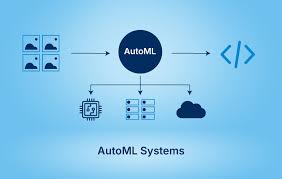
AutoML platforms and techniques have transformed the way machine learning models are developed by automating many of the complex and time-consuming tasks traditionally handled by data scientists. Instead of manually selecting algorithms, tuning hyperparameters, or engineering features, AutoML systems streamline the entire pipeline—making advanced AI accessible even to those with limited expertise. As organizations seek faster, more scalable solutions, AutoML is rapidly becoming a cornerstone of modern AI development.
At the core of AutoML is the automation of model selection. These platforms evaluate multiple algorithms in parallel, comparing performance metrics to identify the best candidate for a given dataset. This ability removes the guesswork typically associated with manual experimentation, ensuring that even non-experts can build high-performing models without extensive trial and error. Automated model ranking accelerates decision-making and boosts development efficiency.
Hyperparameter optimization is another powerful technique within AutoML. Traditional tuning requires significant time and computational resources, but AutoML tools use advanced strategies like Bayesian optimization, genetic algorithms, and grid or random searches to find optimal configurations. By intelligently exploring the parameter space, these systems drastically improve model accuracy and robustness while reducing the need for manual tuning.
Feature engineering, often the most tedious part of ML workflows, is also automated in modern systems. AutoML platforms analyze dataset structures, relationships, and statistical patterns to create meaningful features automatically. Techniques such as automated feature extraction, transformation, scaling, and encoding help models learn better representations, especially in structured datasets. This automation not only improves model performance but also reduces human error and bias.
End-to-end AutoML platforms provide seamless workflows from data ingestion to model deployment. Cloud-based tools like Google AutoML, AWS SageMaker Autopilot, H2O Driverless AI, and DataRobot integrate storage, training, evaluation, and monitoring in a single ecosystem. These platforms enable users to deploy models as real-time APIs, retrain them periodically, and monitor performance drift—all without writing complex code.
AutoML also plays a significant role in democratizing AI. Small businesses, educators, and organizations with limited AI expertise can now build predictive models without hiring specialized teams. This accessibility encourages innovation across sectors such as healthcare, finance, manufacturing, and retail. Citizen data scientists can focus on problem-solving while relying on AutoML to handle technical complexities.
Despite its advantages, AutoML has limitations. It may produce models that are difficult to interpret, raising concerns in regulated industries where explainability is essential. Automated pipelines might overlook domain-specific nuances or generate overly complex models that lack transparency. Additionally, AutoML systems rely heavily on data quality; poor or unclean datasets can still yield suboptimal outcomes despite automation.
Researchers continue advancing AutoML through meta-learning, neural architecture search (NAS), and reinforcement learning-based workflows. These next-generation techniques aim to create systems that learn from past experiments, adapt to new tasks more efficiently, and generate self-improving pipelines. As AutoML evolves, it moves closer to creating fully autonomous AI systems capable of selecting architectures, optimizing parameters, and deploying models with minimal human intervention.
Overall, AutoML platforms and techniques represent a major shift in the AI landscape. By automating complex tasks, improving accuracy, and accelerating deployment, AutoML empowers organizations to embrace machine learning with greater speed and confidence. As tools become more sophisticated, AutoML will drive the next wave of scalable, intelligent solutions across industries worldwide.
At the core of AutoML is the automation of model selection. These platforms evaluate multiple algorithms in parallel, comparing performance metrics to identify the best candidate for a given dataset. This ability removes the guesswork typically associated with manual experimentation, ensuring that even non-experts can build high-performing models without extensive trial and error. Automated model ranking accelerates decision-making and boosts development efficiency.
Hyperparameter optimization is another powerful technique within AutoML. Traditional tuning requires significant time and computational resources, but AutoML tools use advanced strategies like Bayesian optimization, genetic algorithms, and grid or random searches to find optimal configurations. By intelligently exploring the parameter space, these systems drastically improve model accuracy and robustness while reducing the need for manual tuning.
Feature engineering, often the most tedious part of ML workflows, is also automated in modern systems. AutoML platforms analyze dataset structures, relationships, and statistical patterns to create meaningful features automatically. Techniques such as automated feature extraction, transformation, scaling, and encoding help models learn better representations, especially in structured datasets. This automation not only improves model performance but also reduces human error and bias.
End-to-end AutoML platforms provide seamless workflows from data ingestion to model deployment. Cloud-based tools like Google AutoML, AWS SageMaker Autopilot, H2O Driverless AI, and DataRobot integrate storage, training, evaluation, and monitoring in a single ecosystem. These platforms enable users to deploy models as real-time APIs, retrain them periodically, and monitor performance drift—all without writing complex code.
AutoML also plays a significant role in democratizing AI. Small businesses, educators, and organizations with limited AI expertise can now build predictive models without hiring specialized teams. This accessibility encourages innovation across sectors such as healthcare, finance, manufacturing, and retail. Citizen data scientists can focus on problem-solving while relying on AutoML to handle technical complexities.
Despite its advantages, AutoML has limitations. It may produce models that are difficult to interpret, raising concerns in regulated industries where explainability is essential. Automated pipelines might overlook domain-specific nuances or generate overly complex models that lack transparency. Additionally, AutoML systems rely heavily on data quality; poor or unclean datasets can still yield suboptimal outcomes despite automation.
Researchers continue advancing AutoML through meta-learning, neural architecture search (NAS), and reinforcement learning-based workflows. These next-generation techniques aim to create systems that learn from past experiments, adapt to new tasks more efficiently, and generate self-improving pipelines. As AutoML evolves, it moves closer to creating fully autonomous AI systems capable of selecting architectures, optimizing parameters, and deploying models with minimal human intervention.
Overall, AutoML platforms and techniques represent a major shift in the AI landscape. By automating complex tasks, improving accuracy, and accelerating deployment, AutoML empowers organizations to embrace machine learning with greater speed and confidence. As tools become more sophisticated, AutoML will drive the next wave of scalable, intelligent solutions across industries worldwide.