
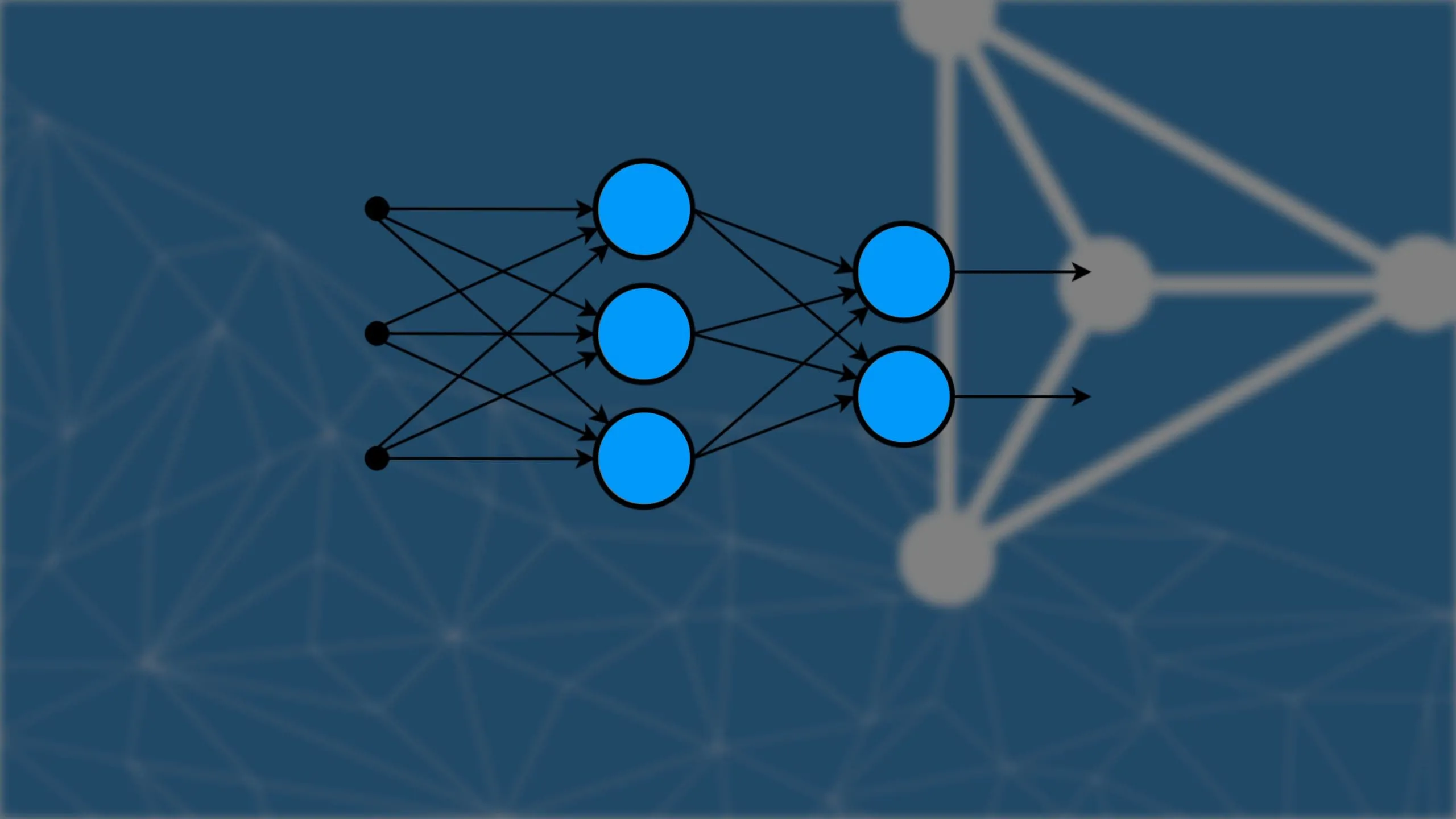
Transfer learning is a powerful concept in machine learning that allows models to use knowledge gained from one task to improve performance on another related task. Instead of training a model from scratch—which requires massive datasets, high computational power, and significant time—transfer learning leverages pre-trained models that have already learned useful features from large datasets such as ImageNet or Common Crawl. This approach is especially valuable in deep learning, where models contain millions of parameters and require extensive resources to train. By reusing these pre-trained networks, developers can achieve near state-of-the-art results even with limited labeled data. Transfer learning has become a core technique in modern AI applications, particularly in computer vision, natural language processing (NLP), and speech recognition.
At the heart of transfer learning is the idea that many machine learning tasks share fundamental patterns. For example, in computer vision, models trained on millions of images learn to identify edges, textures, shapes, and patterns that are common across most visual tasks. These lower-level features do not need to be relearned for each new application. Instead, a pre-trained model can be fine-tuned to adapt to a new dataset, such as medical images, product recognition, or facial analysis. Similarly, in NLP, large language models trained on web-scale text datasets already understand grammar, semantics, and context. Fine-tuning these models for specific tasks like sentiment analysis, summarization, or translation produces excellent results without requiring massive training data.
Transfer learning comes in different types depending on how much of the pre-trained model is reused. One of the most common techniques is feature extraction, where the pre-trained model’s early layers are frozen and used to extract general-purpose features. Only the final classification layers are replaced and trained on the new dataset. This approach is useful when the new dataset is small or similar to the original training data. The second approach, fine-tuning, involves unfreezing more layers—sometimes the entire model—and training them further on the new dataset. Fine-tuning provides greater flexibility and accuracy but requires more computational resources and careful adjustment to prevent overfitting.
A key advantage of transfer learning is its ability to drastically reduce the amount of labeled data required. Labeling data is time-consuming and expensive, especially for specialized domains like healthcare and scientific research. Transfer learning enables models to generalize well even with datasets containing only a few thousand or even a few hundred samples. This is why industries with limited data availability rely heavily on transfer learning for model training. For example, in medical imaging, datasets are often small due to privacy constraints, but transfer learning allows AI systems to achieve high accuracy using pre-trained CNN architectures like ResNet, VGG, and Inception.
Transfer learning is also a driving force behind modern NLP innovations. Large language models such as GPT, BERT, RoBERTa, and T5 are pre-trained on enormous corpora of text using self-supervised learning. These models learn contextual relationships between words, enabling them to handle a wide range of language tasks. When fine-tuned on specific datasets, they outperform traditional NLP approaches dramatically. This technique has transformed fields such as chatbots, sentiment analysis, question answering, document classification, and content generation. Without transfer learning, training such models from scratch would require billions of sentences and immense computational resources, making NLP breakthroughs far less accessible.
Despite its benefits, transfer learning has challenges that must be carefully managed. One major issue is domain mismatch, where the pre-trained model’s original training data differs significantly from the new dataset. For example, a model trained on natural images may not perform well when fine-tuned on grayscale medical scans unless extensive adaptation is applied. Another challenge is negative transfer, where reusing knowledge actually decreases performance because the source and target tasks are poorly related. To mitigate this, developers need to evaluate model suitability, freeze or unfreeze layers wisely, and apply domain adaptation techniques.
The practical implementation of transfer learning depends heavily on the selected model architecture. In computer vision, popular pre-trained models include ResNet, EfficientNet, MobileNet, and DenseNet. These networks are widely available through frameworks like TensorFlow and PyTorch, making it easy for developers to integrate them into new projects. In NLP, transformer-based architectures dominate the landscape, with models like BERT, GPT, XLNet, and DistilBERT powering a wide range of applications. These models come with ready-to-use configurations that can be fine-tuned with only a few lines of code, drastically lowering the entry barrier for AI development.
Transfer learning also plays a significant role in real-world AI applications across industries. In healthcare, it is used to identify diseases in medical scans, predict patient outcomes, and analyze pathology images. In retail, it powers recommendation engines, product recognition systems, and customer sentiment analysis. In autonomous vehicles, transfer learning accelerates model development for object detection, lane recognition, and driving pattern analysis. Even in robotics, models pre-trained in simulation environments can be fine-tuned to real-world tasks, bridging the “sim-to-real” gap.
In conclusion, transfer learning is one of the most influential techniques in modern machine learning. It democratizes AI by making powerful models accessible to developers with limited data or hardware resources. By leveraging pre-trained networks, transfer learning enables faster development, higher accuracy, reduced costs, and robust performance across diverse tasks. As models continue to grow in scale and capability, transfer learning will remain a cornerstone of AI development, driving innovation in fields ranging from healthcare to autonomous systems. It ensures that knowledge gained in one area can accelerate progress in many others, embodying the true essence of intelligent learning.
At the heart of transfer learning is the idea that many machine learning tasks share fundamental patterns. For example, in computer vision, models trained on millions of images learn to identify edges, textures, shapes, and patterns that are common across most visual tasks. These lower-level features do not need to be relearned for each new application. Instead, a pre-trained model can be fine-tuned to adapt to a new dataset, such as medical images, product recognition, or facial analysis. Similarly, in NLP, large language models trained on web-scale text datasets already understand grammar, semantics, and context. Fine-tuning these models for specific tasks like sentiment analysis, summarization, or translation produces excellent results without requiring massive training data.
Transfer learning comes in different types depending on how much of the pre-trained model is reused. One of the most common techniques is feature extraction, where the pre-trained model’s early layers are frozen and used to extract general-purpose features. Only the final classification layers are replaced and trained on the new dataset. This approach is useful when the new dataset is small or similar to the original training data. The second approach, fine-tuning, involves unfreezing more layers—sometimes the entire model—and training them further on the new dataset. Fine-tuning provides greater flexibility and accuracy but requires more computational resources and careful adjustment to prevent overfitting.
A key advantage of transfer learning is its ability to drastically reduce the amount of labeled data required. Labeling data is time-consuming and expensive, especially for specialized domains like healthcare and scientific research. Transfer learning enables models to generalize well even with datasets containing only a few thousand or even a few hundred samples. This is why industries with limited data availability rely heavily on transfer learning for model training. For example, in medical imaging, datasets are often small due to privacy constraints, but transfer learning allows AI systems to achieve high accuracy using pre-trained CNN architectures like ResNet, VGG, and Inception.
Transfer learning is also a driving force behind modern NLP innovations. Large language models such as GPT, BERT, RoBERTa, and T5 are pre-trained on enormous corpora of text using self-supervised learning. These models learn contextual relationships between words, enabling them to handle a wide range of language tasks. When fine-tuned on specific datasets, they outperform traditional NLP approaches dramatically. This technique has transformed fields such as chatbots, sentiment analysis, question answering, document classification, and content generation. Without transfer learning, training such models from scratch would require billions of sentences and immense computational resources, making NLP breakthroughs far less accessible.
Despite its benefits, transfer learning has challenges that must be carefully managed. One major issue is domain mismatch, where the pre-trained model’s original training data differs significantly from the new dataset. For example, a model trained on natural images may not perform well when fine-tuned on grayscale medical scans unless extensive adaptation is applied. Another challenge is negative transfer, where reusing knowledge actually decreases performance because the source and target tasks are poorly related. To mitigate this, developers need to evaluate model suitability, freeze or unfreeze layers wisely, and apply domain adaptation techniques.
The practical implementation of transfer learning depends heavily on the selected model architecture. In computer vision, popular pre-trained models include ResNet, EfficientNet, MobileNet, and DenseNet. These networks are widely available through frameworks like TensorFlow and PyTorch, making it easy for developers to integrate them into new projects. In NLP, transformer-based architectures dominate the landscape, with models like BERT, GPT, XLNet, and DistilBERT powering a wide range of applications. These models come with ready-to-use configurations that can be fine-tuned with only a few lines of code, drastically lowering the entry barrier for AI development.
Transfer learning also plays a significant role in real-world AI applications across industries. In healthcare, it is used to identify diseases in medical scans, predict patient outcomes, and analyze pathology images. In retail, it powers recommendation engines, product recognition systems, and customer sentiment analysis. In autonomous vehicles, transfer learning accelerates model development for object detection, lane recognition, and driving pattern analysis. Even in robotics, models pre-trained in simulation environments can be fine-tuned to real-world tasks, bridging the “sim-to-real” gap.
In conclusion, transfer learning is one of the most influential techniques in modern machine learning. It democratizes AI by making powerful models accessible to developers with limited data or hardware resources. By leveraging pre-trained networks, transfer learning enables faster development, higher accuracy, reduced costs, and robust performance across diverse tasks. As models continue to grow in scale and capability, transfer learning will remain a cornerstone of AI development, driving innovation in fields ranging from healthcare to autonomous systems. It ensures that knowledge gained in one area can accelerate progress in many others, embodying the true essence of intelligent learning.