
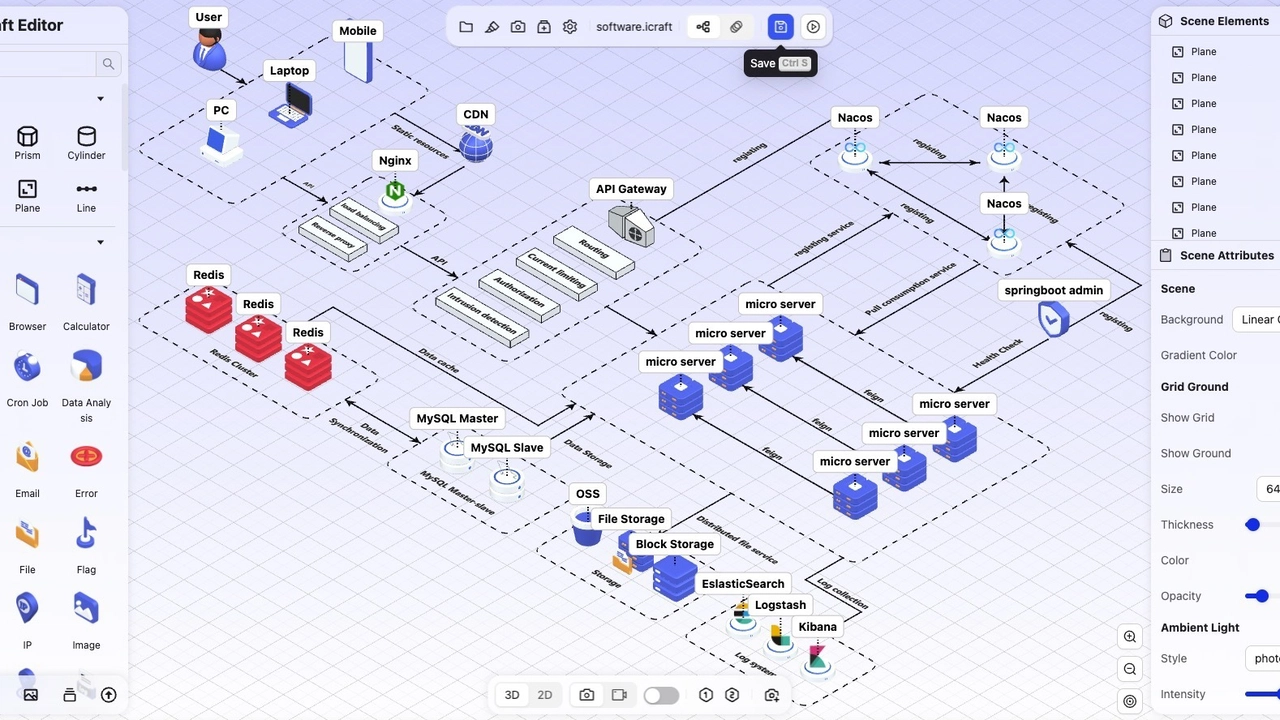
System design is the foundation of building scalable, reliable, and efficient software systems. It involves defining the architecture, components, data flow, communication methods, and operational behavior of a system before development begins. In modern applications, system design is essential because software must handle millions of users, process huge volumes of data, maintain security, and remain available even when failures occur. A well-designed system is not just about writing good code; it is about building a structure where each part works together seamlessly to meet functional and non-functional requirements. System design focuses on scalability, performance, reliability, maintainability, and cost-efficiency—qualities that determine whether a solution can succeed in real-world production environments.
At the core of system design are high-level architecture decisions. This typically starts with understanding the problem and defining clear requirements. A system can be monolithic—where all logic resides in a single codebase—or distributed, where functionality is split into microservices or modules. Monolithic architectures are simpler and easier to develop initially but struggle with scaling and deployment flexibility. Microservices, on the other hand, allow each service to scale independently, deploy separately, and use different technologies if desired. Choosing the right architecture depends on the project’s goals, expected traffic, and long-term maintainability. Poor architectural choices early in development often result in performance bottlenecks and scalability limitations later.
One of the most important concepts in system design is scalability—the ability of a system to handle increased load gracefully. Horizontal scaling involves adding more servers or nodes, while vertical scaling upgrades the existing machine's capacity. Horizontal scaling is favored in large distributed systems because it supports redundancy and fault tolerance. Load balancers distribute incoming traffic across multiple servers to prevent overload and ensure smooth performance. Caching further boosts scalability by reducing the number of database queries and serving frequently used data from fast memory storage. Together, these mechanisms help systems handle millions of requests per second while maintaining responsiveness.
Another key aspect is data storage and database design. Choosing the right database—SQL or NoSQL—can dramatically affect performance and flexibility. SQL databases offer strong consistency, structured queries, and transaction support, making them ideal for financial systems or inventory management. NoSQL databases such as MongoDB, Cassandra, and DynamoDB prioritize scalability, fast writes, and flexible schemas, making them suitable for real-time analytics, social media feeds, and large distributed systems. Often, modern architectures use polyglot persistence, meaning multiple types of databases are combined to meet different workloads. Proper indexing, query optimization, and data sharding ensure that databases scale efficiently as the system grows.
Communication between system components is another crucial part of system design. Services can communicate synchronously using APIs (REST, GraphQL) or asynchronously using message queues like Kafka, RabbitMQ, or AWS SQS. Asynchronous communication allows systems to handle spikes in traffic, avoid blocking, and decouple services, improving overall reliability. Message queues also support event-driven architecture, where components react to events such as user sign-ups, payment confirmations, or logs. This approach improves scalability and reduces dependencies between services, enabling a more resilient system.
Reliability and fault tolerance are core principles of robust system design. No matter how well-built a system is, failures will occur—servers may crash, networks may time out, or data centers may go down. To handle this, systems must implement redundancy, failover mechanisms, and replication. Techniques such as leader election, heartbeat signals, and auto-scaling help systems recover automatically without impacting users. Health checks and monitoring tools like Prometheus, Grafana, and ELK stack provide visibility into system performance, enabling engineers to detect issues early and resolve them before they escalate. Building fault tolerance ensures that the system remains available even when individual components fail.
Security is another essential part of system design. Systems must protect data at rest and in transit through encryption, authentication, and authorization mechanisms. API gateways often enforce security policies, rate limiting, and traffic filtering to prevent misuse. Modern architectures integrate Identity and Access Management (IAM) to control permissions for both users and microservices. Additionally, monitoring for suspicious behavior, using firewalls, and implementing least-privilege principles help safeguard the system from attacks. As cyber threats evolve continuously, secure architecture design becomes a non-negotiable requirement for any production-grade system.
Maintainability and observability determine how easy it is to manage and evolve a system over time. A well-designed system uses modular components, clear interfaces, meaningful documentation, and automated testing. Observability involves collecting logs, metrics, and traces to understand how the system behaves internally. Distributed tracing is especially important in microservices architectures, where a request may pass through dozens of different services. Tools like Jaeger, Zipkin, and OpenTelemetry help engineers identify bottlenecks, improve performance, and troubleshoot issues more efficiently. Maintainable systems reduce long-term development costs and help organizations adapt quickly to new business needs.
Ultimately, system design is about balancing trade-offs. No single architecture fits all scenarios. Engineers must evaluate constraints such as cost, performance expectations, traffic load, development speed, and business goals. A well-designed system is not the most complex one; rather, it is the one that effectively meets requirements while remaining scalable, reliable, secure, and maintainable. System design is a continuous process, evolving as systems grow and user needs change. Mastering system design fundamentals prepares developers and architects to build solutions that can handle real-world challenges and perform consistently at scale.
At the core of system design are high-level architecture decisions. This typically starts with understanding the problem and defining clear requirements. A system can be monolithic—where all logic resides in a single codebase—or distributed, where functionality is split into microservices or modules. Monolithic architectures are simpler and easier to develop initially but struggle with scaling and deployment flexibility. Microservices, on the other hand, allow each service to scale independently, deploy separately, and use different technologies if desired. Choosing the right architecture depends on the project’s goals, expected traffic, and long-term maintainability. Poor architectural choices early in development often result in performance bottlenecks and scalability limitations later.
One of the most important concepts in system design is scalability—the ability of a system to handle increased load gracefully. Horizontal scaling involves adding more servers or nodes, while vertical scaling upgrades the existing machine's capacity. Horizontal scaling is favored in large distributed systems because it supports redundancy and fault tolerance. Load balancers distribute incoming traffic across multiple servers to prevent overload and ensure smooth performance. Caching further boosts scalability by reducing the number of database queries and serving frequently used data from fast memory storage. Together, these mechanisms help systems handle millions of requests per second while maintaining responsiveness.
Another key aspect is data storage and database design. Choosing the right database—SQL or NoSQL—can dramatically affect performance and flexibility. SQL databases offer strong consistency, structured queries, and transaction support, making them ideal for financial systems or inventory management. NoSQL databases such as MongoDB, Cassandra, and DynamoDB prioritize scalability, fast writes, and flexible schemas, making them suitable for real-time analytics, social media feeds, and large distributed systems. Often, modern architectures use polyglot persistence, meaning multiple types of databases are combined to meet different workloads. Proper indexing, query optimization, and data sharding ensure that databases scale efficiently as the system grows.
Communication between system components is another crucial part of system design. Services can communicate synchronously using APIs (REST, GraphQL) or asynchronously using message queues like Kafka, RabbitMQ, or AWS SQS. Asynchronous communication allows systems to handle spikes in traffic, avoid blocking, and decouple services, improving overall reliability. Message queues also support event-driven architecture, where components react to events such as user sign-ups, payment confirmations, or logs. This approach improves scalability and reduces dependencies between services, enabling a more resilient system.
Reliability and fault tolerance are core principles of robust system design. No matter how well-built a system is, failures will occur—servers may crash, networks may time out, or data centers may go down. To handle this, systems must implement redundancy, failover mechanisms, and replication. Techniques such as leader election, heartbeat signals, and auto-scaling help systems recover automatically without impacting users. Health checks and monitoring tools like Prometheus, Grafana, and ELK stack provide visibility into system performance, enabling engineers to detect issues early and resolve them before they escalate. Building fault tolerance ensures that the system remains available even when individual components fail.
Security is another essential part of system design. Systems must protect data at rest and in transit through encryption, authentication, and authorization mechanisms. API gateways often enforce security policies, rate limiting, and traffic filtering to prevent misuse. Modern architectures integrate Identity and Access Management (IAM) to control permissions for both users and microservices. Additionally, monitoring for suspicious behavior, using firewalls, and implementing least-privilege principles help safeguard the system from attacks. As cyber threats evolve continuously, secure architecture design becomes a non-negotiable requirement for any production-grade system.
Maintainability and observability determine how easy it is to manage and evolve a system over time. A well-designed system uses modular components, clear interfaces, meaningful documentation, and automated testing. Observability involves collecting logs, metrics, and traces to understand how the system behaves internally. Distributed tracing is especially important in microservices architectures, where a request may pass through dozens of different services. Tools like Jaeger, Zipkin, and OpenTelemetry help engineers identify bottlenecks, improve performance, and troubleshoot issues more efficiently. Maintainable systems reduce long-term development costs and help organizations adapt quickly to new business needs.
Ultimately, system design is about balancing trade-offs. No single architecture fits all scenarios. Engineers must evaluate constraints such as cost, performance expectations, traffic load, development speed, and business goals. A well-designed system is not the most complex one; rather, it is the one that effectively meets requirements while remaining scalable, reliable, secure, and maintainable. System design is a continuous process, evolving as systems grow and user needs change. Mastering system design fundamentals prepares developers and architects to build solutions that can handle real-world challenges and perform consistently at scale.