
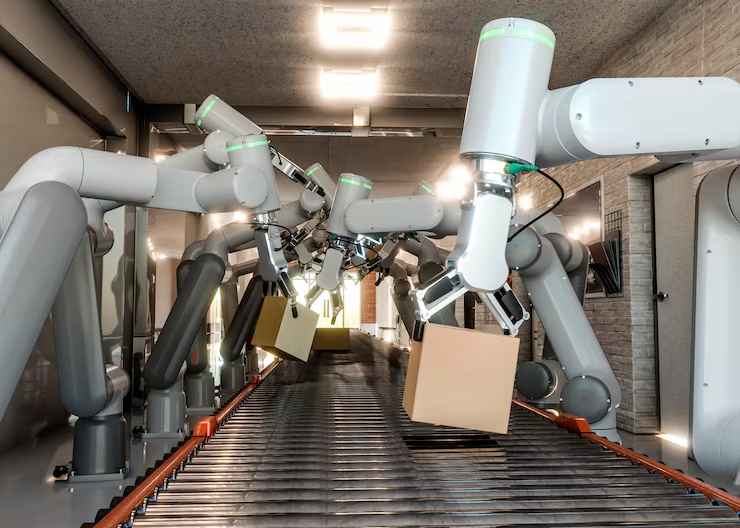
Smart manufacturing robotics is transforming industrial production by using intelligent robots capable of automation, decision-making, and collaboration with humans. These robots are integrated with sensors, artificial intelligence, and advanced control systems, enabling factories to operate with improved precision, speed, and safety. This shift supports Industry 4.0 — the new era of connected, autonomous manufacturing systems.
Traditional industrial robotics focused on repetitive, high-speed tasks in isolated environments. Smart robots are different — they can adapt to changing environments, detect objects dynamically, and handle customized production needs. They use AI for real-time problem-solving, allowing more flexible and personalized manufacturing instead of mass production alone.
Collaborative robots, or cobots, work directly alongside human workers. They assist in tasks like assembly, welding, labeling, and packaging while reducing physical strain and maintaining accuracy. This human-robot teamwork increases overall productivity and ensures workers can focus on more skilled and creative tasks.
Sensors and IoT connectivity allow smart robots to continuously collect data from machines, assembly lines, and surrounding environments. This enables predictive maintenance — identifying machine problems before breakdowns happen. As a result, downtime is reduced, equipment lifespan increases, and operating costs decrease.
Computer vision plays a major role in intelligent manufacturing. Robots equipped with cameras and image processing software can inspect products for defects with far greater reliability than the human eye. Real-time quality control ensures that only defect-free items move ahead, minimizing waste and improving brand trust.
Smart robotics supports supply chain automation as well. Robots manage warehouse operations, move products autonomously, and coordinate with logistics systems. Automated guided vehicles (AGVs) and autonomous mobile robots (AMRs) optimize material flow and accelerate delivery, especially in fast-paced industries like e-commerce and automotive production.
One of the biggest benefits is scalability. Smart robots can be quickly reprogrammed or upgraded for new products or processes. This flexibility allows manufacturing companies to respond faster to market demands and global competition. It also enables smaller manufacturers to adopt automation at lower costs.
However, challenges remain — including the need for skilled workers trained in robotics, cybersecurity risks due to network connectivity, and high initial investment for advanced automation systems. Organizations must adopt proper safety standards and strategic planning to ensure smooth robot integration.
In conclusion, smart manufacturing robotics represents the future of industrial transformation. With enhanced intelligence, connectivity, and adaptability, robots are creating sustainable, efficient, and globally competitive factories. As technology continues to evolve, robotics will become a cornerstone of innovation, shaping the next generation of manufacturing worldwide.
Traditional industrial robotics focused on repetitive, high-speed tasks in isolated environments. Smart robots are different — they can adapt to changing environments, detect objects dynamically, and handle customized production needs. They use AI for real-time problem-solving, allowing more flexible and personalized manufacturing instead of mass production alone.
Collaborative robots, or cobots, work directly alongside human workers. They assist in tasks like assembly, welding, labeling, and packaging while reducing physical strain and maintaining accuracy. This human-robot teamwork increases overall productivity and ensures workers can focus on more skilled and creative tasks.
Sensors and IoT connectivity allow smart robots to continuously collect data from machines, assembly lines, and surrounding environments. This enables predictive maintenance — identifying machine problems before breakdowns happen. As a result, downtime is reduced, equipment lifespan increases, and operating costs decrease.
Computer vision plays a major role in intelligent manufacturing. Robots equipped with cameras and image processing software can inspect products for defects with far greater reliability than the human eye. Real-time quality control ensures that only defect-free items move ahead, minimizing waste and improving brand trust.
Smart robotics supports supply chain automation as well. Robots manage warehouse operations, move products autonomously, and coordinate with logistics systems. Automated guided vehicles (AGVs) and autonomous mobile robots (AMRs) optimize material flow and accelerate delivery, especially in fast-paced industries like e-commerce and automotive production.
One of the biggest benefits is scalability. Smart robots can be quickly reprogrammed or upgraded for new products or processes. This flexibility allows manufacturing companies to respond faster to market demands and global competition. It also enables smaller manufacturers to adopt automation at lower costs.
However, challenges remain — including the need for skilled workers trained in robotics, cybersecurity risks due to network connectivity, and high initial investment for advanced automation systems. Organizations must adopt proper safety standards and strategic planning to ensure smooth robot integration.
In conclusion, smart manufacturing robotics represents the future of industrial transformation. With enhanced intelligence, connectivity, and adaptability, robots are creating sustainable, efficient, and globally competitive factories. As technology continues to evolve, robotics will become a cornerstone of innovation, shaping the next generation of manufacturing worldwide.