
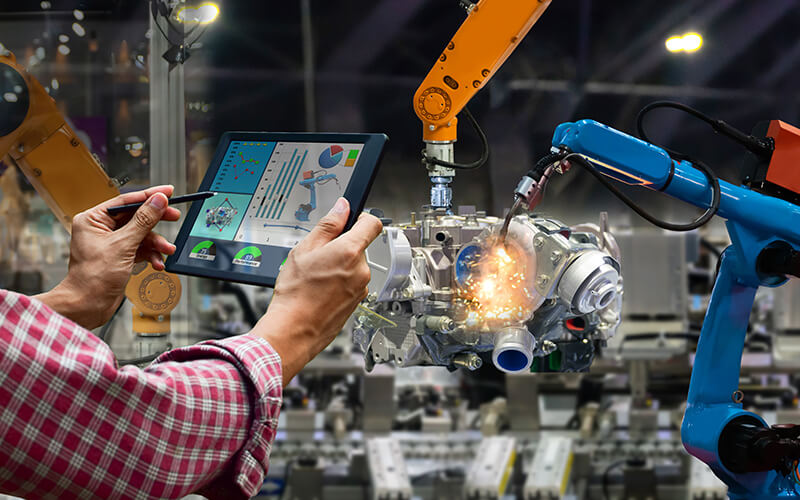
Industry 4.0 represents the fourth industrial revolution—a transformation driven by intelligent automation, cyber-physical systems, robotics, IoT, AI, cloud computing, and real-time data analytics. Robotics and automation lie at the core of this revolution, reshaping how factories operate, how products are manufactured, and how businesses deliver value. Unlike traditional automation, which focused on repetitive, rule-based tasks, Industry 4.0 integrates smart robots that are capable of learning, adapting, and collaborating with humans. These modern robotic systems communicate with machines, sensors, and software platforms through interconnected networks, enabling fully automated production lines, predictive maintenance, and minimal human intervention. Companies across sectors like automotive, electronics, aerospace, pharmaceuticals, logistics, and consumer goods are implementing robotics to increase efficiency, reduce operational costs, ensure product quality, and meet global market demands. Industry 4.0 transforms manufacturing from linear workflows to flexible, data-driven ecosystems where robots enhance productivity, speed, and accuracy. This revolution not only improves industrial performance but also sets the stage for sustainable manufacturing through optimized resource usage, reduced waste, and energy-efficient processes. As global competition intensifies, robotics and intelligent automation are becoming essential for maintaining operational excellence and future growth.
Robotics in Industry 4.0 includes a wide range of systems designed for different functions and environments. Industrial robots, such as articulated arms, SCARA robots, and delta robots, perform high-speed, high-precision tasks in assembly lines, welding, painting, and packaging. Collaborative robots (cobots) work safely alongside humans, assisting with tasks that require dexterity, ease of movement, and human judgment. Cobots are widely used in small and medium manufacturers who aim to automate without highly complex or expensive infrastructure. Autonomous Mobile Robots (AMRs) and AGVs (Automated Guided Vehicles) handle material movement, warehouse management, and logistics with advanced navigation systems. They optimize inventory handling by transporting goods automatically across production units. In addition, AI-powered robotic vision systems enable robots to recognize objects, inspect products, and make real-time decisions. Robotic Process Automation (RPA) automates digital workflows in IT and business processes, reducing manual data entry, errors, and operational delays.
Real-world applications extend across multiple industries. Automobile factories deploy robots for assembling engines, welding chassis, and painting vehicles with precision. Electronics manufacturers use robotics to mount microchips, inspect circuit boards, and test components at micro-level accuracy. In pharmaceuticals and medical device production, robots ensure sterility, reliability, and adherence to regulatory standards. Logistics companies implement warehouse robots for sorting, packing, and order fulfillment—Amazon, for example, operates one of the world’s largest robotic warehouse fleets. Food and beverage companies deploy robots for processing, packaging, and quality checking. Even agriculture uses robots for planting, harvesting, and monitoring crops through drones and automated equipment. These applications demonstrate how robotics drives scalability, minimizes labor fatigue, improves consistency, and accelerates production in the Industry 4.0 era.
Robotics and automation deliver powerful benefits to modern industries. They significantly increase production speed, reduce defects, enhance precision, and ensure consistent product quality. Automation helps businesses operate continuously 24/7, improving productivity without the limitations of human fatigue. Robots minimize workplace hazards by performing dangerous tasks such as lifting heavy loads, handling toxic chemicals, or working in high-temperature environments. They also reduce operational costs, especially in high-volume manufacturing, by optimizing resource usage and minimizing downtime. With intelligent robotics, factories can detect anomalies early, predict equipment failure, and schedule maintenance proactively. These improvements lead to higher profitability, sustainability, and competitive advantage.
However, robotics in Industry 4.0 also presents challenges. The initial investment in robotic systems can be high, especially for small companies. Integration with legacy systems requires technical expertise, while cybersecurity risks increase as more machines connect to digital networks. Workforce transformation is another major factor—automation changes job roles, requiring employees to gain new skills in robotics programming, machine maintenance, data analytics, and digital monitoring. Instead of eliminating jobs, Industry 4.0 creates demand for high-skill roles such as robot technicians, AI specialists, automation engineers, and data analysts. Companies must invest in training, reskilling, and collaborative human-robot workflows to ensure smooth adoption. Ethical considerations arise as robots become more autonomous, requiring transparency in decision-making systems. Despite these challenges, the long-term gains of robotics—efficiency, safety, scalability, and innovation—far outweigh the obstacles, making it indispensable for future-ready industries.
The future of robotics and automation is moving toward even more intelligent, autonomous, and interconnected systems. AI-driven robotics will enable machines to learn from experience, optimize tasks independently, and collaborate more naturally with human workers. Robots will be equipped with advanced sensors, 3D vision, machine learning algorithms, and real-time analytics to handle complex production scenarios. Smart factories, built on digital twins, IoT networks, cloud computing, and predictive analytics, will operate as self-optimizing ecosystems where robots communicate with every part of the production environment. Supply chains will become automated end-to-end, with autonomous vehicles, smart warehouses, and robotic inspection systems ensuring reliability and transparency.
Another emerging trend is Industry 5.0, a concept that emphasizes human-centric manufacturing. Unlike Industry 4.0—which prioritizes automation and digitalization—Industry 5.0 focuses on combining human creativity with robotic precision. Collaborative robots will empower workers instead of replacing them, leading to safer, more innovative workplaces. Robotics will also expand beyond factories into healthcare (surgical robots), construction (automated machinery), hospitality (service robots), agriculture (autonomous farming), and domestic use (smart household robots). With advancements in quantum computing, edge AI, and autonomous systems, robotics will enter a future where machines continuously learn, adapt, and improve in real time. Organizations embracing robotics today will lead tomorrow’s global innovation, outperform competitors, and build sustainable, intelligent, human-friendly industries that define the next revolution.
Robotics in Industry 4.0 includes a wide range of systems designed for different functions and environments. Industrial robots, such as articulated arms, SCARA robots, and delta robots, perform high-speed, high-precision tasks in assembly lines, welding, painting, and packaging. Collaborative robots (cobots) work safely alongside humans, assisting with tasks that require dexterity, ease of movement, and human judgment. Cobots are widely used in small and medium manufacturers who aim to automate without highly complex or expensive infrastructure. Autonomous Mobile Robots (AMRs) and AGVs (Automated Guided Vehicles) handle material movement, warehouse management, and logistics with advanced navigation systems. They optimize inventory handling by transporting goods automatically across production units. In addition, AI-powered robotic vision systems enable robots to recognize objects, inspect products, and make real-time decisions. Robotic Process Automation (RPA) automates digital workflows in IT and business processes, reducing manual data entry, errors, and operational delays.
Real-world applications extend across multiple industries. Automobile factories deploy robots for assembling engines, welding chassis, and painting vehicles with precision. Electronics manufacturers use robotics to mount microchips, inspect circuit boards, and test components at micro-level accuracy. In pharmaceuticals and medical device production, robots ensure sterility, reliability, and adherence to regulatory standards. Logistics companies implement warehouse robots for sorting, packing, and order fulfillment—Amazon, for example, operates one of the world’s largest robotic warehouse fleets. Food and beverage companies deploy robots for processing, packaging, and quality checking. Even agriculture uses robots for planting, harvesting, and monitoring crops through drones and automated equipment. These applications demonstrate how robotics drives scalability, minimizes labor fatigue, improves consistency, and accelerates production in the Industry 4.0 era.
Robotics and automation deliver powerful benefits to modern industries. They significantly increase production speed, reduce defects, enhance precision, and ensure consistent product quality. Automation helps businesses operate continuously 24/7, improving productivity without the limitations of human fatigue. Robots minimize workplace hazards by performing dangerous tasks such as lifting heavy loads, handling toxic chemicals, or working in high-temperature environments. They also reduce operational costs, especially in high-volume manufacturing, by optimizing resource usage and minimizing downtime. With intelligent robotics, factories can detect anomalies early, predict equipment failure, and schedule maintenance proactively. These improvements lead to higher profitability, sustainability, and competitive advantage.
However, robotics in Industry 4.0 also presents challenges. The initial investment in robotic systems can be high, especially for small companies. Integration with legacy systems requires technical expertise, while cybersecurity risks increase as more machines connect to digital networks. Workforce transformation is another major factor—automation changes job roles, requiring employees to gain new skills in robotics programming, machine maintenance, data analytics, and digital monitoring. Instead of eliminating jobs, Industry 4.0 creates demand for high-skill roles such as robot technicians, AI specialists, automation engineers, and data analysts. Companies must invest in training, reskilling, and collaborative human-robot workflows to ensure smooth adoption. Ethical considerations arise as robots become more autonomous, requiring transparency in decision-making systems. Despite these challenges, the long-term gains of robotics—efficiency, safety, scalability, and innovation—far outweigh the obstacles, making it indispensable for future-ready industries.
The future of robotics and automation is moving toward even more intelligent, autonomous, and interconnected systems. AI-driven robotics will enable machines to learn from experience, optimize tasks independently, and collaborate more naturally with human workers. Robots will be equipped with advanced sensors, 3D vision, machine learning algorithms, and real-time analytics to handle complex production scenarios. Smart factories, built on digital twins, IoT networks, cloud computing, and predictive analytics, will operate as self-optimizing ecosystems where robots communicate with every part of the production environment. Supply chains will become automated end-to-end, with autonomous vehicles, smart warehouses, and robotic inspection systems ensuring reliability and transparency.
Another emerging trend is Industry 5.0, a concept that emphasizes human-centric manufacturing. Unlike Industry 4.0—which prioritizes automation and digitalization—Industry 5.0 focuses on combining human creativity with robotic precision. Collaborative robots will empower workers instead of replacing them, leading to safer, more innovative workplaces. Robotics will also expand beyond factories into healthcare (surgical robots), construction (automated machinery), hospitality (service robots), agriculture (autonomous farming), and domestic use (smart household robots). With advancements in quantum computing, edge AI, and autonomous systems, robotics will enter a future where machines continuously learn, adapt, and improve in real time. Organizations embracing robotics today will lead tomorrow’s global innovation, outperform competitors, and build sustainable, intelligent, human-friendly industries that define the next revolution.