
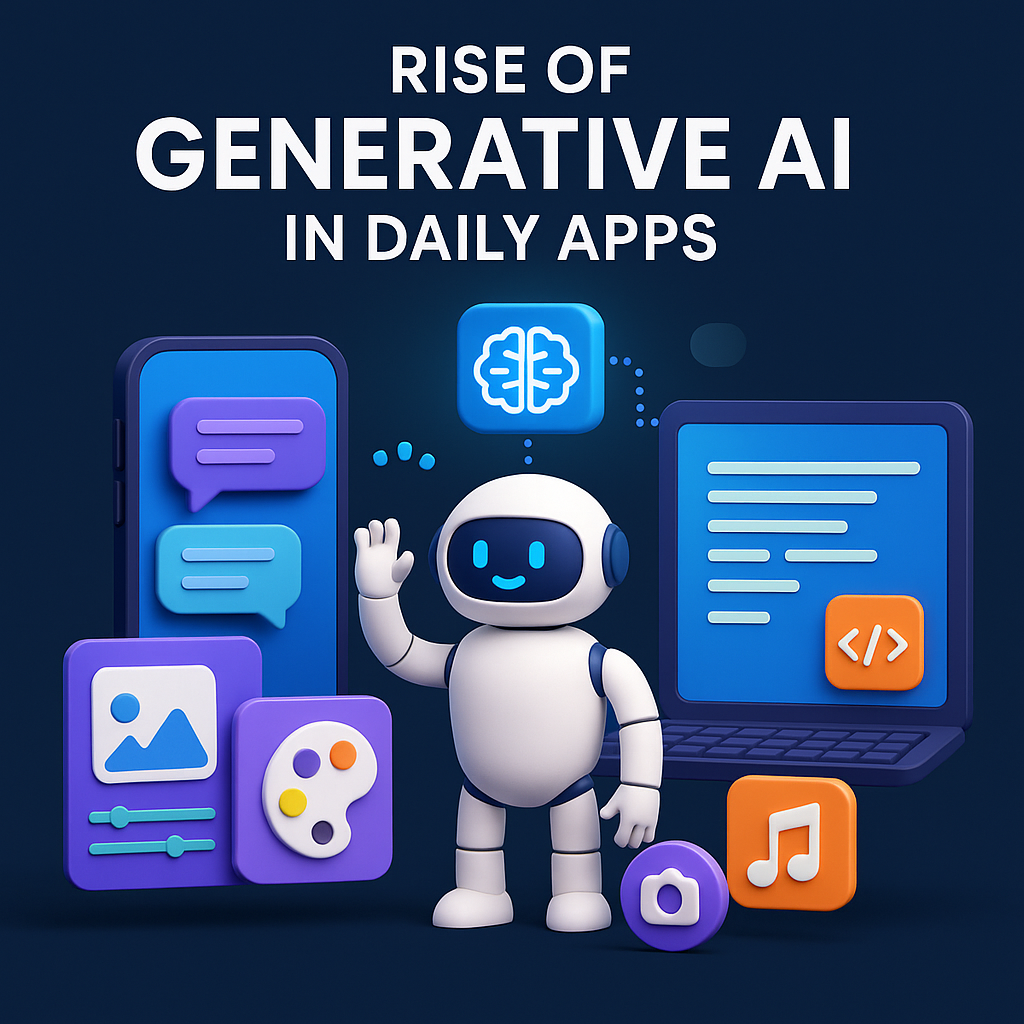
Generative AI has transitioned from research labs into everyday life, becoming a core part of the apps people use daily. Whether it's chat assistants, design tools, productivity software, or entertainment platforms, AI now plays a critical role in shaping user experiences. This new wave of generative technology doesn't just automate tasks—it creates content, ideas, images, text, music, videos, and even code. The accessibility of generative AI has enabled everyday users to experience advanced capabilities that once required expert-level skills. Its integration into day-to-day apps marks a major turning point in how people work, learn, communicate, and create.
One of the biggest changes generative AI brings is the transformation of productivity applications. Tools like Google Workspace, Microsoft 365, Notion, and Slack now include AI-powered writing, summarization, translation, and brainstorming features. Users can generate emails, create presentations, analyze documents, or produce meeting summaries in seconds. These capabilities drastically reduce manual effort and help people complete complex tasks faster. Instead of doing repetitive work, users can focus on creativity and decision-making. This shift demonstrates how generative AI doesn’t replace humans—it amplifies their capabilities and enhances overall efficiency.
Communication apps are also experiencing an AI revolution. Messaging platforms support real-time AI responses, auto-suggestions, and smart corrections. Apps like WhatsApp, Messages, and Instagram have introduced AI assistants that help draft replies, recommend captions, enhance photos, and organize content. Virtual meeting apps like Zoom and Teams use AI to generate transcripts, highlight key points, and clean background noise. These features make digital communication clearer, faster, and more accessible. AI is even enabling real-time language translation, breaking barriers between people across different cultures and regions.
Creative apps have been transformed even more dramatically. Platforms like Canva, Adobe Express, Figma, and Photoshop now feature generative AI tools that help users design images, graphics, layouts, and visual assets with little to no professional skills required. Users can turn text prompts into polished visuals, remove backgrounds, generate unique illustrations, or refine photos instantly. Video apps also benefit from AI automation—tools like CapCut and Adobe Premiere use AI for auto-editing, scene detection, voiceovers, and color correction. The combination of creativity and machine intelligence means anyone can become a designer or video creator with minimal effort.
Entertainment and media have embraced generative AI as well. Music apps allow users to generate custom soundtracks or remix songs using AI. Gaming platforms use AI to create dynamic worlds, lifelike characters, and adaptive gameplay experiences. Streaming services recommend personalized content using advanced AI models that understand user preferences more deeply than ever. Even reading apps, news platforms, and educational tools now offer AI-driven summaries, personalized recommendations, and adaptive learning experiences. Generative AI is reshaping how people consume content across all digital entertainment categories.
E-commerce and digital shopping apps have integrated generative AI to enhance personal experiences and increase conversions. Online stores use AI to generate product descriptions, create personalized recommendations, and customize marketing content for each user. Virtual try-on features powered by AI let customers see how clothes, makeup, or accessories look on them before buying. Chatbots assist shoppers with product queries, creating a smoother and more interactive shopping journey. AI also analyzes user behavior to optimize pricing, product visibility, and engagement, making shopping more intuitive and tailored.
Generative AI is also playing a major role in mobile personal assistants and smart home technology. Systems like Siri, Google Assistant, Alexa, and new on-device AI models offer more natural language processing, contextual awareness, and personalized suggestions. They help users manage schedules, write messages, control smart devices, and answer complex questions. In smart home apps, AI-powered automation predicts user routines—adjusting lighting, temperature, and security settings automatically. These developments show how AI is becoming a silent, ever-present companion in everyday life.
Perhaps the most significant impact of generative AI is its ability to empower non-technical users. What once required expertise—writing code, designing graphics, composing essays, or editing videos—can now be done with simple prompts. Students use AI for homework, professionals for presentations, entrepreneurs for marketing, and creators for content production. This democratization of advanced capabilities reduces barriers to creativity and innovation. Generative AI makes technology more inclusive, enabling people with diverse skills and backgrounds to achieve more with less effort.
Overall, the rise of generative AI in daily apps marks the beginning of a new digital era where intelligent tools work alongside users to simplify tasks, boost creativity, and improve productivity. As AI models continue to evolve, apps will become even more personalized, intuitive, and capable of understanding human intent. Generative AI is no longer a futuristic concept—it is woven into the technology people use every day, transforming ordinary interactions into smart, efficient, and meaningful experiences. The future will only bring deeper integration, more automation, and endless opportunities for creativity and innovation.
One of the biggest changes generative AI brings is the transformation of productivity applications. Tools like Google Workspace, Microsoft 365, Notion, and Slack now include AI-powered writing, summarization, translation, and brainstorming features. Users can generate emails, create presentations, analyze documents, or produce meeting summaries in seconds. These capabilities drastically reduce manual effort and help people complete complex tasks faster. Instead of doing repetitive work, users can focus on creativity and decision-making. This shift demonstrates how generative AI doesn’t replace humans—it amplifies their capabilities and enhances overall efficiency.
Communication apps are also experiencing an AI revolution. Messaging platforms support real-time AI responses, auto-suggestions, and smart corrections. Apps like WhatsApp, Messages, and Instagram have introduced AI assistants that help draft replies, recommend captions, enhance photos, and organize content. Virtual meeting apps like Zoom and Teams use AI to generate transcripts, highlight key points, and clean background noise. These features make digital communication clearer, faster, and more accessible. AI is even enabling real-time language translation, breaking barriers between people across different cultures and regions.
Creative apps have been transformed even more dramatically. Platforms like Canva, Adobe Express, Figma, and Photoshop now feature generative AI tools that help users design images, graphics, layouts, and visual assets with little to no professional skills required. Users can turn text prompts into polished visuals, remove backgrounds, generate unique illustrations, or refine photos instantly. Video apps also benefit from AI automation—tools like CapCut and Adobe Premiere use AI for auto-editing, scene detection, voiceovers, and color correction. The combination of creativity and machine intelligence means anyone can become a designer or video creator with minimal effort.
Entertainment and media have embraced generative AI as well. Music apps allow users to generate custom soundtracks or remix songs using AI. Gaming platforms use AI to create dynamic worlds, lifelike characters, and adaptive gameplay experiences. Streaming services recommend personalized content using advanced AI models that understand user preferences more deeply than ever. Even reading apps, news platforms, and educational tools now offer AI-driven summaries, personalized recommendations, and adaptive learning experiences. Generative AI is reshaping how people consume content across all digital entertainment categories.
E-commerce and digital shopping apps have integrated generative AI to enhance personal experiences and increase conversions. Online stores use AI to generate product descriptions, create personalized recommendations, and customize marketing content for each user. Virtual try-on features powered by AI let customers see how clothes, makeup, or accessories look on them before buying. Chatbots assist shoppers with product queries, creating a smoother and more interactive shopping journey. AI also analyzes user behavior to optimize pricing, product visibility, and engagement, making shopping more intuitive and tailored.
Generative AI is also playing a major role in mobile personal assistants and smart home technology. Systems like Siri, Google Assistant, Alexa, and new on-device AI models offer more natural language processing, contextual awareness, and personalized suggestions. They help users manage schedules, write messages, control smart devices, and answer complex questions. In smart home apps, AI-powered automation predicts user routines—adjusting lighting, temperature, and security settings automatically. These developments show how AI is becoming a silent, ever-present companion in everyday life.
Perhaps the most significant impact of generative AI is its ability to empower non-technical users. What once required expertise—writing code, designing graphics, composing essays, or editing videos—can now be done with simple prompts. Students use AI for homework, professionals for presentations, entrepreneurs for marketing, and creators for content production. This democratization of advanced capabilities reduces barriers to creativity and innovation. Generative AI makes technology more inclusive, enabling people with diverse skills and backgrounds to achieve more with less effort.
Overall, the rise of generative AI in daily apps marks the beginning of a new digital era where intelligent tools work alongside users to simplify tasks, boost creativity, and improve productivity. As AI models continue to evolve, apps will become even more personalized, intuitive, and capable of understanding human intent. Generative AI is no longer a futuristic concept—it is woven into the technology people use every day, transforming ordinary interactions into smart, efficient, and meaningful experiences. The future will only bring deeper integration, more automation, and endless opportunities for creativity and innovation.