
Reducing APK/AAB file size is essential to improve installation rates and compatibility, especially in regions with limited storage or slow internet connectivity. Smaller app packages download faster, consume less space, and increase the likelihood of users completing installation instead of abandoning it midway.
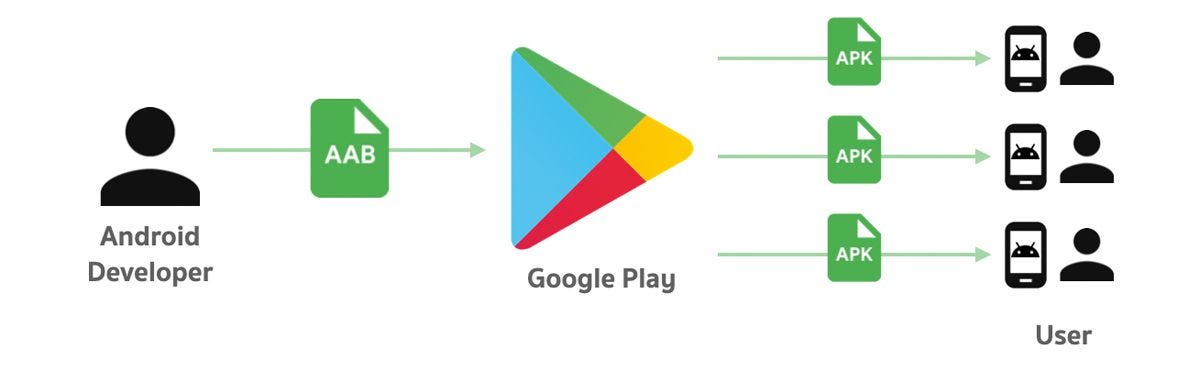
Android App Bundle (AAB) has become the modern packaging standard, allowing Google Play to generate optimized APKs per device configuration. This eliminates unnecessary resources and libraries that would otherwise increase app size for all users.
Resource optimization is one of the biggest contributors to size reduction. Developers should remove unused images, compress media assets, and use vector graphics wherever possible. Tools like WebP help reduce image file size without affecting visual quality.
Code shrinking through ProGuard or R8 helps remove unused methods, classes, and libraries from the final build. Obfuscation further reduces file size and improves app security by making the code harder to reverse-engineer.
Third-party libraries must be chosen carefully because they significantly contribute to binary size. If only a small part of a library is required, developers can replace it with a lightweight, custom implementation. Modularization helps include only the required components.
Language resources also increase file size. By supporting only relevant locales or using split APKs for different languages, developers can eliminate unnecessary translations. Additionally, dynamic feature modules allow users to download optional features only when needed.
Compressing native libraries and using ABI (Application Binary Interface) splits prevent packaging all CPU architecture versions in a single file. This ensures each device receives only compatible binaries.
Continuous monitoring with build analyzers is essential to track file size changes. These tools show which components enlarge the package, so developers can take corrective action before deployment.
A smaller APK/AAB ensures a better user experience from installation to execution. By optimizing resources, code, and build configuration, developers can deliver lightweight apps that reach more users globally with improved performance and higher adoption.
Android App Bundle (AAB) has become the modern packaging standard, allowing Google Play to generate optimized APKs per device configuration. This eliminates unnecessary resources and libraries that would otherwise increase app size for all users.
Resource optimization is one of the biggest contributors to size reduction. Developers should remove unused images, compress media assets, and use vector graphics wherever possible. Tools like WebP help reduce image file size without affecting visual quality.
Code shrinking through ProGuard or R8 helps remove unused methods, classes, and libraries from the final build. Obfuscation further reduces file size and improves app security by making the code harder to reverse-engineer.
Third-party libraries must be chosen carefully because they significantly contribute to binary size. If only a small part of a library is required, developers can replace it with a lightweight, custom implementation. Modularization helps include only the required components.
Language resources also increase file size. By supporting only relevant locales or using split APKs for different languages, developers can eliminate unnecessary translations. Additionally, dynamic feature modules allow users to download optional features only when needed.
Compressing native libraries and using ABI (Application Binary Interface) splits prevent packaging all CPU architecture versions in a single file. This ensures each device receives only compatible binaries.
Continuous monitoring with build analyzers is essential to track file size changes. These tools show which components enlarge the package, so developers can take corrective action before deployment.
A smaller APK/AAB ensures a better user experience from installation to execution. By optimizing resources, code, and build configuration, developers can deliver lightweight apps that reach more users globally with improved performance and higher adoption.