
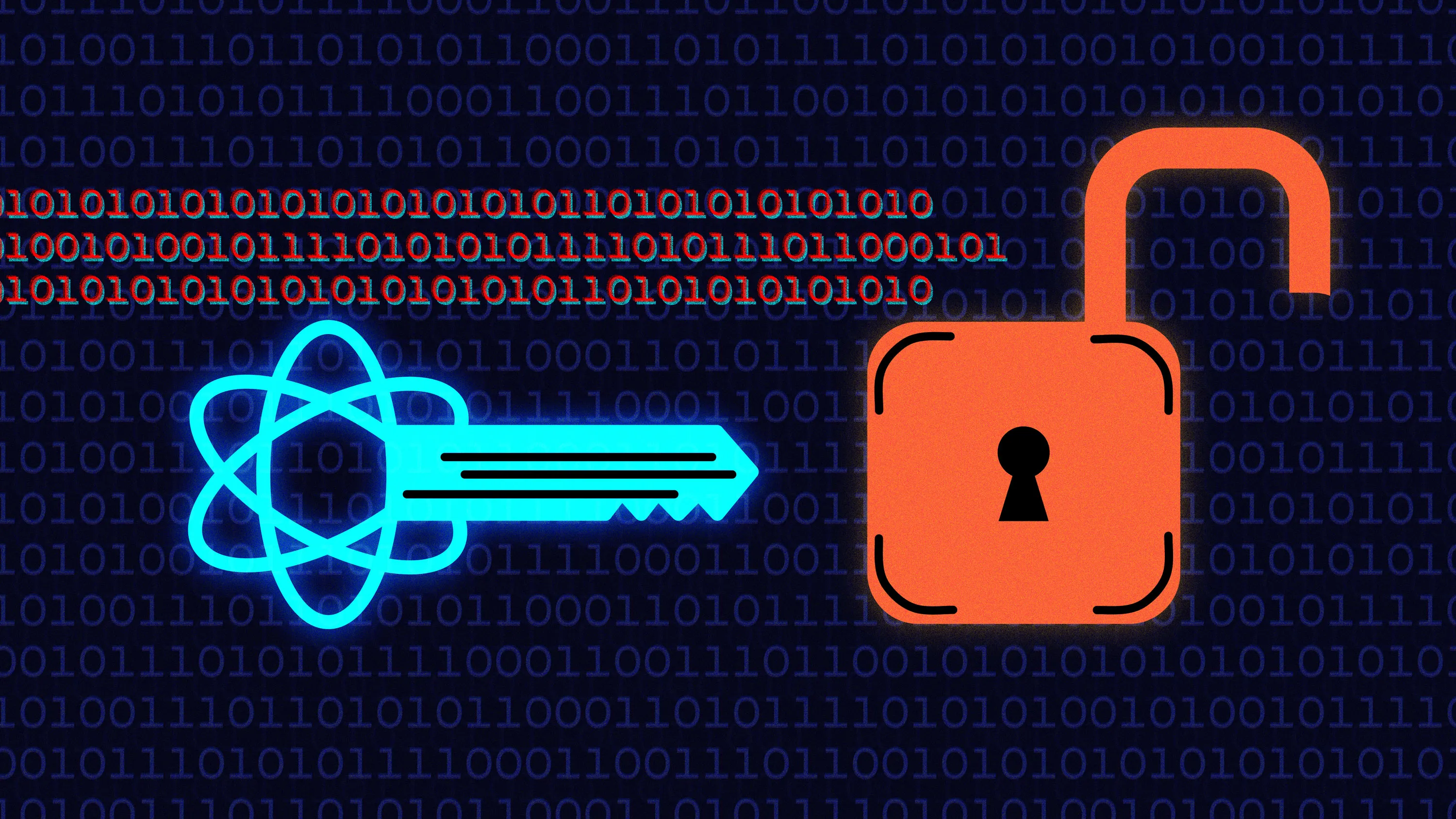
The rise of quantum computing has introduced a new wave of innovation as well as unprecedented security risks. While classical computers struggle with certain computations, quantum machines use qubits, entanglement, and superposition to process information at speeds that could potentially break today’s strongest encryption systems. Algorithms like RSA and ECC—currently securing financial transactions, military communications, online banking, and almost every protocol on the internet—are vulnerable to quantum attacks such as Shor’s algorithm. As quantum computers grow more powerful, the threat becomes more real: encrypted data intercepted today could be decrypted in the future by quantum machines. This phenomenon, known as “store now, decrypt later,” creates urgency for new cryptographic approaches that can withstand quantum-level attacks. This shift toward Quantum-Safe Cryptography, also called Post-Quantum Cryptography (PQC), represents a critical evolution in cybersecurity.
Classical encryption systems rely on mathematical problems that are computationally infeasible to solve with today’s computers. RSA depends on integer factorization, while Elliptic Curve Cryptography relies on the difficulty of solving discrete logarithms. Quantum computers, however, can leverage Shor’s algorithm to solve both problems exponentially faster. A sufficiently powerful quantum machine could crack RSA-2048 or ECC-256 encryption in hours or minutes. Even though such large-scale quantum computers do not yet exist, rapid advancements by companies like Google, IBM, and others suggest that they are not far off. Organizations storing long-term sensitive data—such as medical records, classified government files, or financial archives—must transition now, because once quantum machines arrive, old encrypted data becomes instantly vulnerable.
Quantum-Safe Cryptography refers to algorithms designed to resist attacks from both classical and quantum computers. Unlike traditional cryptography, these algorithms do not rely on factorization or logarithmic hardness. Instead, they rely on mathematical problems believed to be resistant to quantum algorithms. The leading families of PQC include lattice-based cryptography, hash-based cryptography, code-based cryptography, multivariate polynomial cryptography, and isogeny-based cryptography. Lattice-based systems, such as CRYSTALS-Kyber and Dilithium, are currently the most promising and have been selected by NIST (National Institute of Standards and Technology) for standardization. These algorithms form the foundation of future-proof encryption for messaging apps, financial services, IoT devices, and mission-critical systems.
Types of Quantum-Safe Cryptographic Algorithms
Quantum-safe cryptography spans multiple cryptographic families, each built on mathematically complex structures.
Lattice-Based Cryptography is considered the most resilient and practical. It relies on hard lattice problems like Learning With Errors (LWE). NIST’s approved algorithms, Kyber (for key exchange) and Dilithium (for digital signatures), belong to this category.
Hash-Based Cryptography uses cryptographic hash functions to create secure digital signatures. These are simple, secure, and efficient but generally used only for signing, not encryption.
Code-Based Cryptography uses error-correcting codes. McEliece is the most famous example and has remained unbroken since 1978.
Multivariate Cryptography uses multivariate polynomial equations over finite fields, offering fast signing but large key sizes.
Isogeny-Based Cryptography is based on elliptic curve isogenies, once considered promising but now less favored after major attacks against SIKE.
These diverse approaches offer resilience even against powerful quantum algorithms, making them essential for future-proof systems.
Transitioning from Classical to Quantum-Safe Systems
Migrating to post-quantum cryptography is not a plug-and-play process. Organizations must replace deeply integrated cryptographic components across protocols, servers, databases, browsers, IoT devices, and network clients. The transition begins with crypto agility, designing systems flexible enough to switch algorithms easily as standards evolve. Many experts recommend hybrid encryption—combining classical cryptography (e.g., RSA or ECC) with post-quantum algorithms—to ensure compatibility and maximize security during the transition period. Companies must audit all cryptographic assets, update security libraries, redesign APIs, and prepare for larger key sizes and signature formats. This migration mirrors the historical shift from SHA-1 to SHA-256—but on a much larger and more complex scale.
While quantum-safe algorithms offer strong protection, implementing them introduces unique challenges. Many PQC algorithms require significantly larger key sizes and signatures, which can affect bandwidth, memory, and performance—especially on mobile devices and IoT hardware. Integration with existing protocols like TLS, SSH, or VPN infrastructures requires substantial engineering redesign. Some algorithms can be computationally heavy, making them difficult to run on low-power devices. There is also uncertainty about long-term mathematical assumptions: while PQC algorithms are believed to be secure, no one can know for sure until quantum computers become mainstream. Organizations must therefore carefully evaluate risk, performance trade-offs, and compatibility before deploying quantum-safe systems widely.
Governments and industries worldwide have already started transitioning to quantum-safe systems. NIST’s PQC standardization process is leading global adoption, with Kyber and Dilithium becoming the recommended future standards. Cloud providers like Google, Amazon, and Microsoft have begun testing hybrid post-quantum TLS protocols. Financial institutions are upgrading cryptographic systems to protect long-term funds, transactions, and blockchain-based assets. Telecommunication companies are integrating quantum-safe algorithms into 5G and 6G protocols. Even messaging platforms and VPN services are experimenting with PQC-enabled secure communication. As quantum threats grow, adopting quantum-safe solutions becomes strategic for national security, enterprise protection, and long-term data privacy.
The arrival of powerful quantum computers will redefine the security landscape. Encryption will need to evolve continuously with new mathematical breakthroughs, hybrid solutions, and AI-assisted cybersecurity tools. Quantum-safe cryptography will form the backbone of future digital systems—protecting financial networks, cloud platforms, healthcare systems, defense communications, and personal privacy. The shift toward PQC is not just technical; it is a global security transformation. Organizations must begin preparing today, as the transition will take years. Those who adapt early will remain secure in the coming quantum era, while those who delay risk devastating data breaches and long-term exposure.
Quantum-Safe Cryptography represents the next major evolution in digital security. With quantum computers progressing rapidly, traditional encryption systems face unprecedented threats. By adopting post-quantum algorithms, designing crypto-agile systems, and following global standards like NIST’s PQC frameworks, organizations can future-proof their data and infrastructure. The journey to a quantum-secure world has already begun, and the decisions made today will determine whether critical systems remain protected tomorrow. Quantum-safe cryptography is no longer optional—it is the foundation of cybersecurity in the quantum age.
Classical encryption systems rely on mathematical problems that are computationally infeasible to solve with today’s computers. RSA depends on integer factorization, while Elliptic Curve Cryptography relies on the difficulty of solving discrete logarithms. Quantum computers, however, can leverage Shor’s algorithm to solve both problems exponentially faster. A sufficiently powerful quantum machine could crack RSA-2048 or ECC-256 encryption in hours or minutes. Even though such large-scale quantum computers do not yet exist, rapid advancements by companies like Google, IBM, and others suggest that they are not far off. Organizations storing long-term sensitive data—such as medical records, classified government files, or financial archives—must transition now, because once quantum machines arrive, old encrypted data becomes instantly vulnerable.
Quantum-Safe Cryptography refers to algorithms designed to resist attacks from both classical and quantum computers. Unlike traditional cryptography, these algorithms do not rely on factorization or logarithmic hardness. Instead, they rely on mathematical problems believed to be resistant to quantum algorithms. The leading families of PQC include lattice-based cryptography, hash-based cryptography, code-based cryptography, multivariate polynomial cryptography, and isogeny-based cryptography. Lattice-based systems, such as CRYSTALS-Kyber and Dilithium, are currently the most promising and have been selected by NIST (National Institute of Standards and Technology) for standardization. These algorithms form the foundation of future-proof encryption for messaging apps, financial services, IoT devices, and mission-critical systems.
Types of Quantum-Safe Cryptographic Algorithms
Quantum-safe cryptography spans multiple cryptographic families, each built on mathematically complex structures.
Lattice-Based Cryptography is considered the most resilient and practical. It relies on hard lattice problems like Learning With Errors (LWE). NIST’s approved algorithms, Kyber (for key exchange) and Dilithium (for digital signatures), belong to this category.
Hash-Based Cryptography uses cryptographic hash functions to create secure digital signatures. These are simple, secure, and efficient but generally used only for signing, not encryption.
Code-Based Cryptography uses error-correcting codes. McEliece is the most famous example and has remained unbroken since 1978.
Multivariate Cryptography uses multivariate polynomial equations over finite fields, offering fast signing but large key sizes.
Isogeny-Based Cryptography is based on elliptic curve isogenies, once considered promising but now less favored after major attacks against SIKE.
These diverse approaches offer resilience even against powerful quantum algorithms, making them essential for future-proof systems.
Transitioning from Classical to Quantum-Safe Systems
Migrating to post-quantum cryptography is not a plug-and-play process. Organizations must replace deeply integrated cryptographic components across protocols, servers, databases, browsers, IoT devices, and network clients. The transition begins with crypto agility, designing systems flexible enough to switch algorithms easily as standards evolve. Many experts recommend hybrid encryption—combining classical cryptography (e.g., RSA or ECC) with post-quantum algorithms—to ensure compatibility and maximize security during the transition period. Companies must audit all cryptographic assets, update security libraries, redesign APIs, and prepare for larger key sizes and signature formats. This migration mirrors the historical shift from SHA-1 to SHA-256—but on a much larger and more complex scale.
While quantum-safe algorithms offer strong protection, implementing them introduces unique challenges. Many PQC algorithms require significantly larger key sizes and signatures, which can affect bandwidth, memory, and performance—especially on mobile devices and IoT hardware. Integration with existing protocols like TLS, SSH, or VPN infrastructures requires substantial engineering redesign. Some algorithms can be computationally heavy, making them difficult to run on low-power devices. There is also uncertainty about long-term mathematical assumptions: while PQC algorithms are believed to be secure, no one can know for sure until quantum computers become mainstream. Organizations must therefore carefully evaluate risk, performance trade-offs, and compatibility before deploying quantum-safe systems widely.
Governments and industries worldwide have already started transitioning to quantum-safe systems. NIST’s PQC standardization process is leading global adoption, with Kyber and Dilithium becoming the recommended future standards. Cloud providers like Google, Amazon, and Microsoft have begun testing hybrid post-quantum TLS protocols. Financial institutions are upgrading cryptographic systems to protect long-term funds, transactions, and blockchain-based assets. Telecommunication companies are integrating quantum-safe algorithms into 5G and 6G protocols. Even messaging platforms and VPN services are experimenting with PQC-enabled secure communication. As quantum threats grow, adopting quantum-safe solutions becomes strategic for national security, enterprise protection, and long-term data privacy.
The arrival of powerful quantum computers will redefine the security landscape. Encryption will need to evolve continuously with new mathematical breakthroughs, hybrid solutions, and AI-assisted cybersecurity tools. Quantum-safe cryptography will form the backbone of future digital systems—protecting financial networks, cloud platforms, healthcare systems, defense communications, and personal privacy. The shift toward PQC is not just technical; it is a global security transformation. Organizations must begin preparing today, as the transition will take years. Those who adapt early will remain secure in the coming quantum era, while those who delay risk devastating data breaches and long-term exposure.
Quantum-Safe Cryptography represents the next major evolution in digital security. With quantum computers progressing rapidly, traditional encryption systems face unprecedented threats. By adopting post-quantum algorithms, designing crypto-agile systems, and following global standards like NIST’s PQC frameworks, organizations can future-proof their data and infrastructure. The journey to a quantum-secure world has already begun, and the decisions made today will determine whether critical systems remain protected tomorrow. Quantum-safe cryptography is no longer optional—it is the foundation of cybersecurity in the quantum age.