
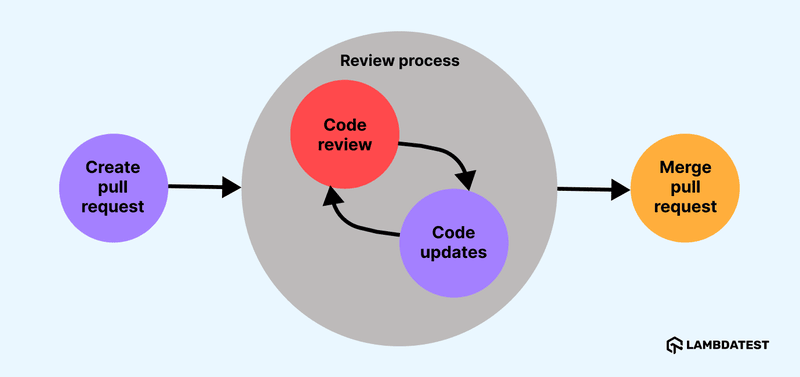
Pull Requests (PRs) and Code Reviews are essential practices in modern software development that improve code quality, ensure team collaboration, and maintain a stable codebase. A Pull Request is a request by a developer to merge their code changes into the main branch of a project. Before merging, other team members review the changes to identify possible issues, improvements, or inconsistencies.
Code reviews ensure that the new code follows project guidelines, adheres to coding standards, and remains easy to maintain. Reviewers check the logic, structure, performance, and security of the submitted code. They also verify that the suggested change does not break existing functionality. This teamwork prevents bugs from entering the production environment and increases the reliability of the software.
Pull Requests act as checkpoints in the development lifecycle. They allow teams to discuss changes openly, share knowledge, and reduce misunderstandings. Developers can comment directly on code lines, suggest fixes, and approve or request modifications. This communication leads to better collaboration and a shared understanding of the system.
A major benefit of code reviews is that they assist in onboarding new team members. By participating in PR discussions, junior developers learn the project structure, best practices, and common patterns used in the team. Code reviews serve as a learning platform where knowledge is continuously exchanged.
Automated checks play a key role in modern PR workflows. Tools like CI/CD pipelines, static code analyzers, and test automation run automatically whenever a Pull Request is created. These tools detect formatting issues, failing tests, and security vulnerabilities early, allowing reviewers to focus more on logic and functionality.
Pull Requests also contribute to maintaining version control history. Changes are grouped logically and documented with meaningful commit messages. This makes debugging, feature tracking, and rollback operations easier in the future. Teams can also reference PR discussions to understand why a particular decision was made.
A well-structured code review process improves both technical quality and team relationships. Review comments should be respectful, constructive, and focused on the code—not the developer. Clear guidelines and standardized templates help make the review process smoother and more consistent.
While code reviews may appear time-consuming, they significantly reduce long-term costs. Early identification of errors prevents major rework and critical failures later. It builds trust among team members and ensures that every piece of code entering the project is beneficial, optimized, and aligned with the overall architecture.
In summary, Pull Requests and Code Reviews strengthen the development process by encouraging team collaboration, increasing code reliability, and promoting continuous improvement. As software systems grow more complex, these practices remain vital in maintaining clean, secure, and scalable codebases.
Code reviews ensure that the new code follows project guidelines, adheres to coding standards, and remains easy to maintain. Reviewers check the logic, structure, performance, and security of the submitted code. They also verify that the suggested change does not break existing functionality. This teamwork prevents bugs from entering the production environment and increases the reliability of the software.
Pull Requests act as checkpoints in the development lifecycle. They allow teams to discuss changes openly, share knowledge, and reduce misunderstandings. Developers can comment directly on code lines, suggest fixes, and approve or request modifications. This communication leads to better collaboration and a shared understanding of the system.
A major benefit of code reviews is that they assist in onboarding new team members. By participating in PR discussions, junior developers learn the project structure, best practices, and common patterns used in the team. Code reviews serve as a learning platform where knowledge is continuously exchanged.
Automated checks play a key role in modern PR workflows. Tools like CI/CD pipelines, static code analyzers, and test automation run automatically whenever a Pull Request is created. These tools detect formatting issues, failing tests, and security vulnerabilities early, allowing reviewers to focus more on logic and functionality.
Pull Requests also contribute to maintaining version control history. Changes are grouped logically and documented with meaningful commit messages. This makes debugging, feature tracking, and rollback operations easier in the future. Teams can also reference PR discussions to understand why a particular decision was made.
A well-structured code review process improves both technical quality and team relationships. Review comments should be respectful, constructive, and focused on the code—not the developer. Clear guidelines and standardized templates help make the review process smoother and more consistent.
While code reviews may appear time-consuming, they significantly reduce long-term costs. Early identification of errors prevents major rework and critical failures later. It builds trust among team members and ensures that every piece of code entering the project is beneficial, optimized, and aligned with the overall architecture.
In summary, Pull Requests and Code Reviews strengthen the development process by encouraging team collaboration, increasing code reliability, and promoting continuous improvement. As software systems grow more complex, these practices remain vital in maintaining clean, secure, and scalable codebases.