
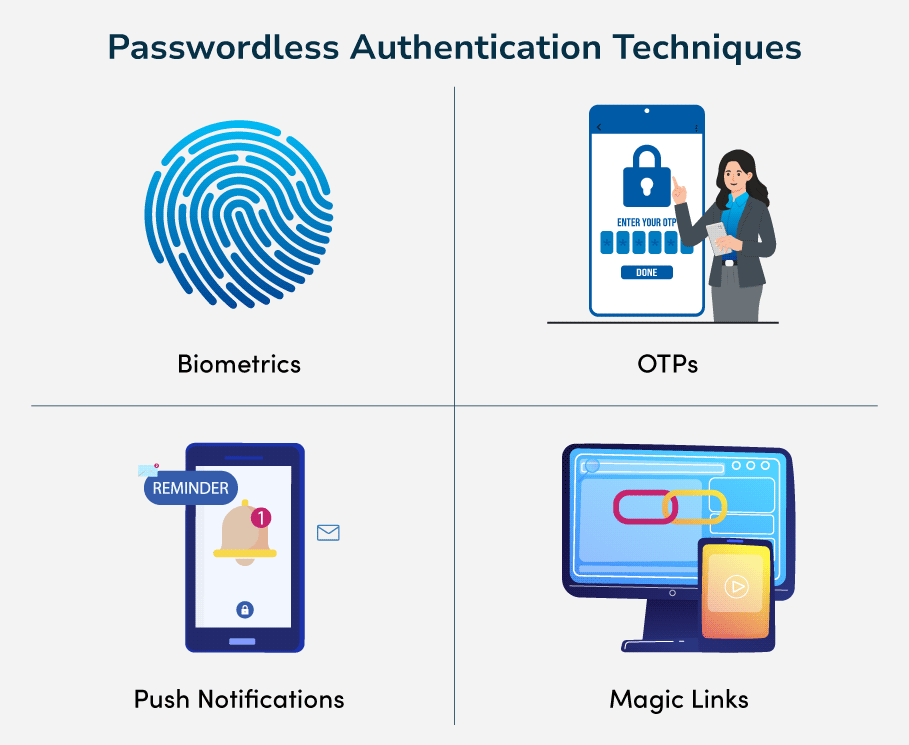
Passwordless authentication is transforming digital security by replacing traditional passwords with more secure and user-friendly login methods. Since passwords are often weak, reused, or stolen through phishing and data breaches, organizations are shifting toward biometrics, cryptographic keys, and secure login tokens. This course explores how passwordless systems work and how they help eliminate one of the biggest cybersecurity risks: human error.
Students begin by examining why passwords fail. Weak password behavior, credential stuffing, brute force attacks, and leaked databases continue to drive cyber incidents worldwide. Passwordless technology reduces attack surfaces by removing secret strings that attackers can easily target. Instead, identity verification relies on who the user is or what they have, rather than what they know.
Biometric authentication plays a major role in this transformation. Learners explore technologies like fingerprint scans, facial recognition, iris authentication, and voice matching. They will understand how biometric identifiers are captured, encrypted, and matched securely on trusted hardware. User experience improvements and device compatibility make biometrics ideal for fast, frictionless access.
FIDO2 and WebAuthn standards are introduced as the global foundation for passwordless authentication. These open frameworks use public-private key cryptography, where private keys stay securely on the user’s device while servers only store public keys. This prevents credential theft even if a server is compromised. Students will learn the architecture and implementation steps for these standards.
Multi-factor passwordless systems combine biometrics, hardware tokens, and secure device enrolment. The course covers authentication factors such as security keys (e.g., YubiKey), smartphone-based authentication, and Bluetooth proximity checks. These methods protect high-value enterprise systems and reduce phishing success to nearly zero.
However, passwordless adoption comes with challenges. Students analyze privacy concerns, replay protection, fallback strategy when devices are lost, and the importance of anti-spoofing defenses in biometric systems. Regulatory compliance and ethical considerations ensure that identity data is handled responsibly at all times.
Passwordless login is expanding into industries like healthcare, e-commerce, finance, and remote work platforms. The course includes case studies showing how eliminating passwords improves security, reduces support costs (no password resets!), and boosts workforce productivity by removing unnecessary authentication friction.
Operational deployment strategies are also covered. Learners discover how organizations transition gradually from legacy passwords to hybrid and then fully passwordless environments. Zero Trust and passwordless systems complement each other, providing identity-based access across devices and networks.
By the end of this course, students will understand why passwordless authentication is becoming a global standard for secure digital access. They will gain practical knowledge to design and deploy passwordless and biometric login experiences that protect users and strengthen enterprise cybersecurity posture.
Students begin by examining why passwords fail. Weak password behavior, credential stuffing, brute force attacks, and leaked databases continue to drive cyber incidents worldwide. Passwordless technology reduces attack surfaces by removing secret strings that attackers can easily target. Instead, identity verification relies on who the user is or what they have, rather than what they know.
Biometric authentication plays a major role in this transformation. Learners explore technologies like fingerprint scans, facial recognition, iris authentication, and voice matching. They will understand how biometric identifiers are captured, encrypted, and matched securely on trusted hardware. User experience improvements and device compatibility make biometrics ideal for fast, frictionless access.
FIDO2 and WebAuthn standards are introduced as the global foundation for passwordless authentication. These open frameworks use public-private key cryptography, where private keys stay securely on the user’s device while servers only store public keys. This prevents credential theft even if a server is compromised. Students will learn the architecture and implementation steps for these standards.
Multi-factor passwordless systems combine biometrics, hardware tokens, and secure device enrolment. The course covers authentication factors such as security keys (e.g., YubiKey), smartphone-based authentication, and Bluetooth proximity checks. These methods protect high-value enterprise systems and reduce phishing success to nearly zero.
However, passwordless adoption comes with challenges. Students analyze privacy concerns, replay protection, fallback strategy when devices are lost, and the importance of anti-spoofing defenses in biometric systems. Regulatory compliance and ethical considerations ensure that identity data is handled responsibly at all times.
Passwordless login is expanding into industries like healthcare, e-commerce, finance, and remote work platforms. The course includes case studies showing how eliminating passwords improves security, reduces support costs (no password resets!), and boosts workforce productivity by removing unnecessary authentication friction.
Operational deployment strategies are also covered. Learners discover how organizations transition gradually from legacy passwords to hybrid and then fully passwordless environments. Zero Trust and passwordless systems complement each other, providing identity-based access across devices and networks.
By the end of this course, students will understand why passwordless authentication is becoming a global standard for secure digital access. They will gain practical knowledge to design and deploy passwordless and biometric login experiences that protect users and strengthen enterprise cybersecurity posture.