
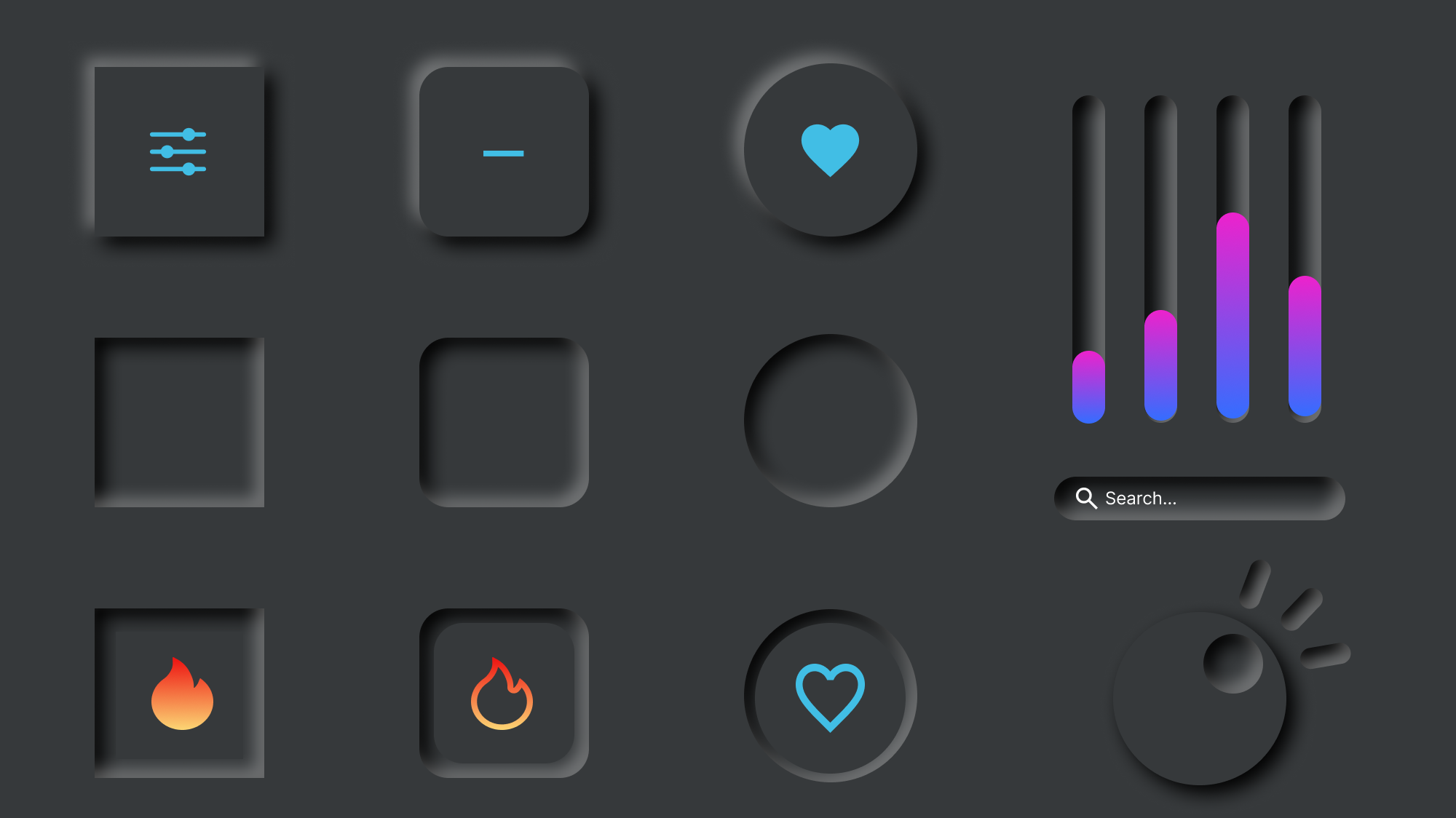
Neumorphism is a modern visual design style that blends flat design and skeuomorphism to create soft, realistic, and visually pleasing user interfaces. The core idea behind neumorphism is subtlety; elements appear as if they are part of the same background, emerging softly through delicate shadows and highlights. This approach helps interfaces feel tactile, gentle, and modern, making them especially attractive in product previews, dashboards, settings screens, and brand-focused applications.
At the heart of neumorphism lies its distinctive use of light and shadow. UI elements are neither flat nor fully realistic; instead, they look like smooth surfaces pressed into or raised from the same material. Designers usually rely on one base color and apply soft inner and outer shadows to create the illusion of depth. This creates a sensory impression as if the user could physically touch or press the interface components, making the experience feel warm and engaging.
Neumorphic designs often feature pastel tones, rounded corners, and minimalistic shapes that enhance the softness of the overall interface. Buttons, switches, cards, and input fields appear cushioned, blending seamlessly into the background. This cohesive appearance reduces visual clutter and allows users to focus on essential tasks while feeling comfortable interacting with the UI. The design avoids extreme vibrancy or harsh contrasts, instead choosing calm, neutral, and soothing palettes.
Despite its beauty, neumorphism is highly dependent on lighting and color consistency. A small shift in shadow direction or intensity can disrupt the intended 3D illusion, making the interface appear inconsistent. Designers must carefully manage shadow blur, distance, and opacity to maintain harmony across components. Because of this precision, neumorphism requires a skilled balance of visual finesse and technical understanding, making it a rewarding but demanding style.
One often discussed aspect of neumorphism is accessibility. Traditional high-contrast elements are easier to identify and interact with, while neumorphic components tend to blend into the background. This subtlety can make buttons and controls harder to recognize, especially for users with low vision or color perception difficulties. To address this, designers often mix neumorphism with clearer indicators like borders, higher contrast text, focused shadows, or hybrid UI styles.
Neumorphism is usually best suited for interfaces where aesthetics play a major role, such as modern dashboards, IoT control apps, luxury brand apps, and creative product showcases. These environments benefit from visual appeal and emotional engagement rather than rapid, high-efficiency interactions. In scenarios where usability and speed are top priority, designers may prefer cleaner or more conventional UI patterns while using neumorphism for key highlights or decorative elements.
The style shines particularly well in dark mode interfaces, where soft shadows and highlights become more prominent and visually rich. Combined with subtle motion effects, neumorphic UIs can create immersive, premium-feeling experiences. Smooth animations of buttons being pressed or cards rising gently enhance the 3D illusion and add a sense of realism that flat design cannot provide. Neumorphism therefore works beautifully when paired with micro-interactions.
Modern design trends often blend neumorphism with flat or neo-brutalist elements to overcome its limitations. Designers sometimes apply neumorphic effects only to certain components like toggles, sliders, or cards, ensuring the interface remains accessible and functional. This hybrid approach maintains visual charm while supporting clear user journeys, making neumorphism a versatile and evolving style.
As UI design continues to evolve, neumorphism remains a memorable and inspiring trend. Its ability to create a soft, elegant, and tactile feel allows products to stand out visually while providing emotional appeal. Although it requires thoughtful execution, combining neumorphism with modern usability practices enables designers to craft interfaces that are both beautiful and practical, capturing the attention of users with its unique blend of subtle illusion and modern simplicity.
At the heart of neumorphism lies its distinctive use of light and shadow. UI elements are neither flat nor fully realistic; instead, they look like smooth surfaces pressed into or raised from the same material. Designers usually rely on one base color and apply soft inner and outer shadows to create the illusion of depth. This creates a sensory impression as if the user could physically touch or press the interface components, making the experience feel warm and engaging.
Neumorphic designs often feature pastel tones, rounded corners, and minimalistic shapes that enhance the softness of the overall interface. Buttons, switches, cards, and input fields appear cushioned, blending seamlessly into the background. This cohesive appearance reduces visual clutter and allows users to focus on essential tasks while feeling comfortable interacting with the UI. The design avoids extreme vibrancy or harsh contrasts, instead choosing calm, neutral, and soothing palettes.
Despite its beauty, neumorphism is highly dependent on lighting and color consistency. A small shift in shadow direction or intensity can disrupt the intended 3D illusion, making the interface appear inconsistent. Designers must carefully manage shadow blur, distance, and opacity to maintain harmony across components. Because of this precision, neumorphism requires a skilled balance of visual finesse and technical understanding, making it a rewarding but demanding style.
One often discussed aspect of neumorphism is accessibility. Traditional high-contrast elements are easier to identify and interact with, while neumorphic components tend to blend into the background. This subtlety can make buttons and controls harder to recognize, especially for users with low vision or color perception difficulties. To address this, designers often mix neumorphism with clearer indicators like borders, higher contrast text, focused shadows, or hybrid UI styles.
Neumorphism is usually best suited for interfaces where aesthetics play a major role, such as modern dashboards, IoT control apps, luxury brand apps, and creative product showcases. These environments benefit from visual appeal and emotional engagement rather than rapid, high-efficiency interactions. In scenarios where usability and speed are top priority, designers may prefer cleaner or more conventional UI patterns while using neumorphism for key highlights or decorative elements.
The style shines particularly well in dark mode interfaces, where soft shadows and highlights become more prominent and visually rich. Combined with subtle motion effects, neumorphic UIs can create immersive, premium-feeling experiences. Smooth animations of buttons being pressed or cards rising gently enhance the 3D illusion and add a sense of realism that flat design cannot provide. Neumorphism therefore works beautifully when paired with micro-interactions.
Modern design trends often blend neumorphism with flat or neo-brutalist elements to overcome its limitations. Designers sometimes apply neumorphic effects only to certain components like toggles, sliders, or cards, ensuring the interface remains accessible and functional. This hybrid approach maintains visual charm while supporting clear user journeys, making neumorphism a versatile and evolving style.
As UI design continues to evolve, neumorphism remains a memorable and inspiring trend. Its ability to create a soft, elegant, and tactile feel allows products to stand out visually while providing emotional appeal. Although it requires thoughtful execution, combining neumorphism with modern usability practices enables designers to craft interfaces that are both beautiful and practical, capturing the attention of users with its unique blend of subtle illusion and modern simplicity.