
Modern web applications have grown significantly in size and complexity, offering richer interactions and more dynamic features than ever before. As this complexity increases, performance optimization becomes essential for delivering fast and responsive user experiences. Users now expect applications to load quickly, respond instantly, and remain smooth across devices and networks. However, large JavaScript bundles can dramatically slow down page load times, especially on mobile devices. This is where lazy loading and code splitting become indispensable techniques. By loading only the essential portions of the application on demand, developers reduce initial load time, optimize runtime performance, and improve overall scalability. Today, these techniques are standard in frameworks like React, Angular, Vue, Next.js, and in modern bundlers such as Webpack, Rollup, and Vite.
As web applications evolve, one of the biggest performance bottlenecks arises from the size of JavaScript bundles. Every feature added—components, libraries, utilities, charts, routing logic—contributes to the bundle size. When the browser is forced to download and parse the entire bundle before the app becomes interactive, it increases the time to first render and slows the app on weaker devices. These heavy bundles impact key performance metrics like First Contentful Paint, Time to Interactive, and Largest Contentful Paint. This challenge becomes even more noticeable for mobile users on slower networks. Lazy loading and code splitting work together to resolve this by dividing the application into smaller, manageable chunks that load only when necessary, ensuring users are not burdened with unnecessary code at startup.
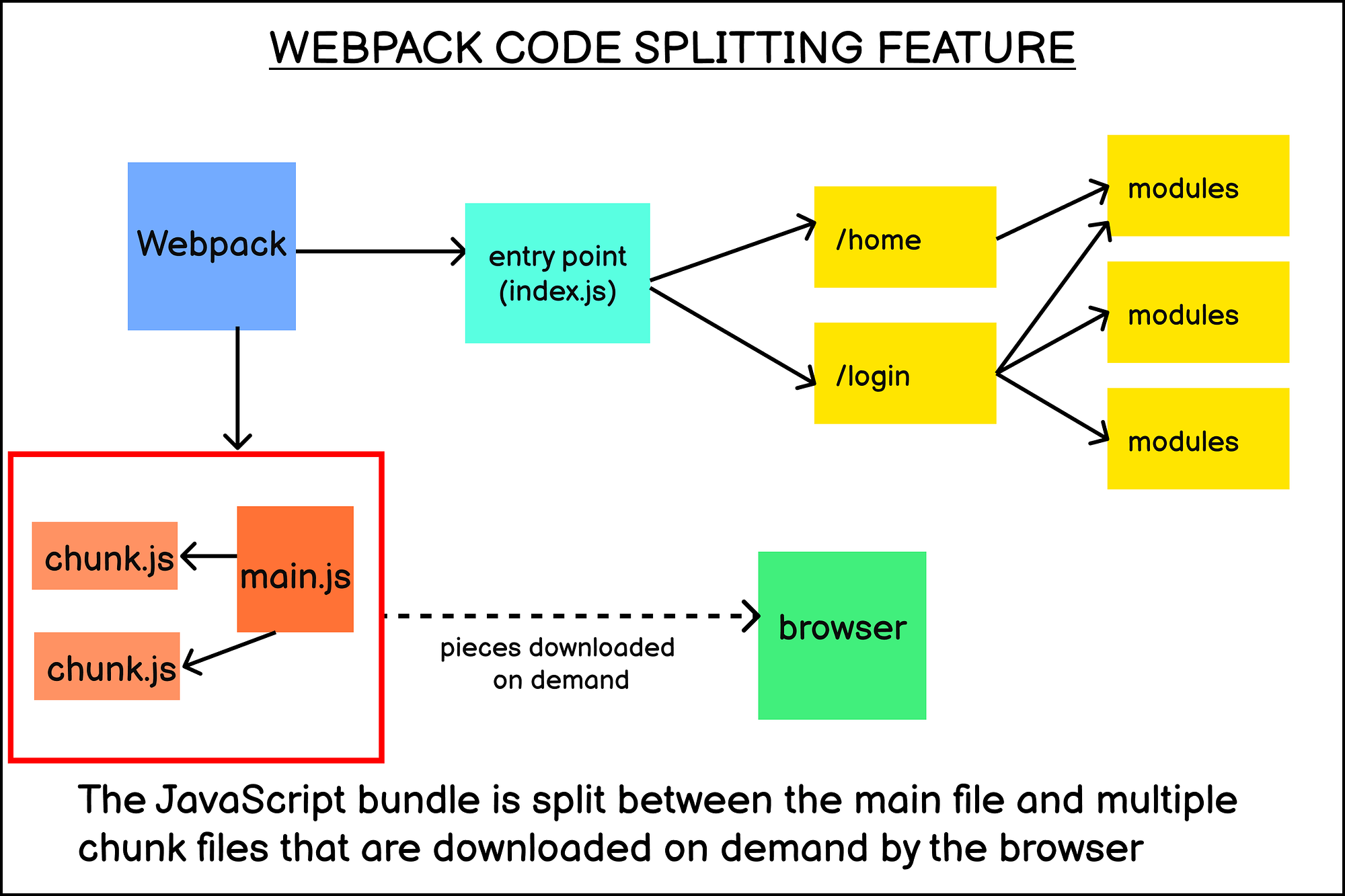
Code splitting plays a crucial role in breaking down monolithic JavaScript bundles into smaller, independent chunks. Instead of shipping the entire application at once, developers can split code based on routes, components, or specific functionality. Bundlers like Webpack automatically generate these chunks through dynamic imports. Large modules—like an admin dashboard, charts, or advanced filters—can be separated and loaded only when the user navigates to those sections. This significantly reduces the initial bundle size and ensures that non-essential features do not slow down the first render. When implemented correctly, code splitting creates a cleaner architecture and improves perceived performance, giving the user faster access to essential content.
Lazy loading complements code splitting by ensuring that resources—whether components, modules, or images—load only when the user needs them. Instead of downloading all JavaScript upfront, the application fetches specific chunks in response to user actions. For example, an e-commerce homepage does not need to load the heavy payment module or product reviews immediately. These can be lazy loaded when the user scrolls to the reviews section or proceeds to checkout. This selective loading dramatically improves startup performance and creates a smoother browsing experience. Lazy loading is also widely used for media elements like images and videos to prevent unnecessary network usage and reduce rendering overhead.
Modern frameworks make lazy loading easy to implement. In React, developers can load components dynamically using React.lazy and handle loading states with Suspense. Vue and Angular support similar features, with Angular offering dedicated route-level lazy loading for modules. Next.js and Nuxt automatically split code by pages, ensuring each route becomes its own bundle. For example, in React, lazy loading a profile component takes just one line using React.lazy(() => import('./Profile')), and the corresponding JavaScript chunk loads only when the component is rendered. These built-in capabilities help developers improve performance without complex configurations.
The benefits of lazy loading and code splitting extend far beyond reducing bundle size. They enable applications to prioritize essential content, resulting in significantly faster initial render times and smoother interactions. By loading only the necessary code first, applications become more responsive, especially on low-end devices. Users benefit from a seamless experience where heavy functionalities load quietly in the background. These techniques also support scalability by helping teams maintain a clean architectural structure where each module is isolated. This modular approach strengthens maintainability, reduces UI lag, and helps businesses create more efficient, SEO-friendly applications.
Like any optimization strategy, lazy loading and code splitting come with challenges. Network latency may cause small delays when a new chunk loads for the first time. If developers create too many tiny chunks, network overhead can increase, reducing performance gains. Poorly planned split points can cause redundant chunks or code duplication. Additionally, users may face temporary blank screens if loading states are not implemented correctly. Debugging can become slightly more complex since the application is separated into multiple files. However, modern frameworks offer solutions to mitigate these concerns, and with thoughtful planning around chunk sizes, caching, and fallback UI, developers can achieve optimal results.
Real-world applications demonstrate the power of these techniques. YouTube lazy loads comments and recommended videos to keep the initial page light. Amazon uses route-based splitting to load product details only when required. Facebook loads chat modules on demand, improving feed performance. Twitter delays loading heavy media features until users interact with them. E-commerce platforms commonly lazy load product images, galleries, and checkout components to ensure the homepage loads instantly. These examples show how effective lazy loading and code splitting are in delivering high performance at scale, even with heavy UI features and massive user bases.
Lazy loading and code splitting have become essential tools in modern web development, fundamentally transforming the way performance is handled. They reduce initial bundle sizes, improve speed, enhance user experience, and create scalable architectures for future growth. With web applications becoming more complex, developers must adopt these techniques to stay competitive and deliver high-quality experiences. When applied thoughtfully, lazy loading and code splitting boost efficiency across all devices and networks, helping teams build faster, smarter, and more user-friendly applications that stand the test of time.
As web applications evolve, one of the biggest performance bottlenecks arises from the size of JavaScript bundles. Every feature added—components, libraries, utilities, charts, routing logic—contributes to the bundle size. When the browser is forced to download and parse the entire bundle before the app becomes interactive, it increases the time to first render and slows the app on weaker devices. These heavy bundles impact key performance metrics like First Contentful Paint, Time to Interactive, and Largest Contentful Paint. This challenge becomes even more noticeable for mobile users on slower networks. Lazy loading and code splitting work together to resolve this by dividing the application into smaller, manageable chunks that load only when necessary, ensuring users are not burdened with unnecessary code at startup.
Code splitting plays a crucial role in breaking down monolithic JavaScript bundles into smaller, independent chunks. Instead of shipping the entire application at once, developers can split code based on routes, components, or specific functionality. Bundlers like Webpack automatically generate these chunks through dynamic imports. Large modules—like an admin dashboard, charts, or advanced filters—can be separated and loaded only when the user navigates to those sections. This significantly reduces the initial bundle size and ensures that non-essential features do not slow down the first render. When implemented correctly, code splitting creates a cleaner architecture and improves perceived performance, giving the user faster access to essential content.
Lazy loading complements code splitting by ensuring that resources—whether components, modules, or images—load only when the user needs them. Instead of downloading all JavaScript upfront, the application fetches specific chunks in response to user actions. For example, an e-commerce homepage does not need to load the heavy payment module or product reviews immediately. These can be lazy loaded when the user scrolls to the reviews section or proceeds to checkout. This selective loading dramatically improves startup performance and creates a smoother browsing experience. Lazy loading is also widely used for media elements like images and videos to prevent unnecessary network usage and reduce rendering overhead.
Modern frameworks make lazy loading easy to implement. In React, developers can load components dynamically using React.lazy and handle loading states with Suspense. Vue and Angular support similar features, with Angular offering dedicated route-level lazy loading for modules. Next.js and Nuxt automatically split code by pages, ensuring each route becomes its own bundle. For example, in React, lazy loading a profile component takes just one line using React.lazy(() => import('./Profile')), and the corresponding JavaScript chunk loads only when the component is rendered. These built-in capabilities help developers improve performance without complex configurations.
The benefits of lazy loading and code splitting extend far beyond reducing bundle size. They enable applications to prioritize essential content, resulting in significantly faster initial render times and smoother interactions. By loading only the necessary code first, applications become more responsive, especially on low-end devices. Users benefit from a seamless experience where heavy functionalities load quietly in the background. These techniques also support scalability by helping teams maintain a clean architectural structure where each module is isolated. This modular approach strengthens maintainability, reduces UI lag, and helps businesses create more efficient, SEO-friendly applications.
Like any optimization strategy, lazy loading and code splitting come with challenges. Network latency may cause small delays when a new chunk loads for the first time. If developers create too many tiny chunks, network overhead can increase, reducing performance gains. Poorly planned split points can cause redundant chunks or code duplication. Additionally, users may face temporary blank screens if loading states are not implemented correctly. Debugging can become slightly more complex since the application is separated into multiple files. However, modern frameworks offer solutions to mitigate these concerns, and with thoughtful planning around chunk sizes, caching, and fallback UI, developers can achieve optimal results.
Real-world applications demonstrate the power of these techniques. YouTube lazy loads comments and recommended videos to keep the initial page light. Amazon uses route-based splitting to load product details only when required. Facebook loads chat modules on demand, improving feed performance. Twitter delays loading heavy media features until users interact with them. E-commerce platforms commonly lazy load product images, galleries, and checkout components to ensure the homepage loads instantly. These examples show how effective lazy loading and code splitting are in delivering high performance at scale, even with heavy UI features and massive user bases.
Lazy loading and code splitting have become essential tools in modern web development, fundamentally transforming the way performance is handled. They reduce initial bundle sizes, improve speed, enhance user experience, and create scalable architectures for future growth. With web applications becoming more complex, developers must adopt these techniques to stay competitive and deliver high-quality experiences. When applied thoughtfully, lazy loading and code splitting boost efficiency across all devices and networks, helping teams build faster, smarter, and more user-friendly applications that stand the test of time.