
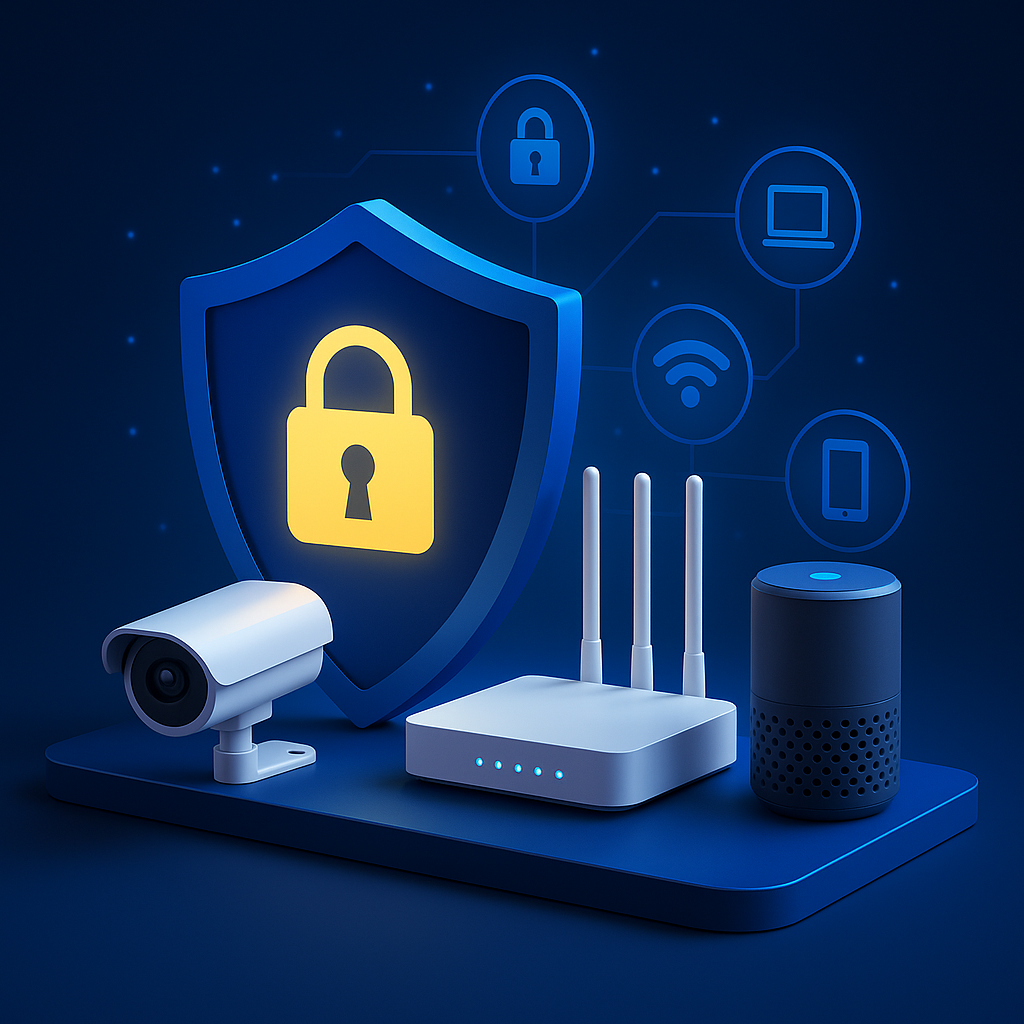
The Internet of Things (IoT) has rapidly expanded into every sector of modern life—homes, healthcare, manufacturing, transportation, agriculture, and smart cities. With billions of interconnected devices exchanging data in real time, IoT has unlocked unprecedented automation, efficiency, and convenience. However, this massive connectivity also presents one of the biggest cybersecurity challenges in history. IoT devices, unlike traditional computers, often operate with limited processing power, outdated firmware, and minimal built-in security. These weaknesses make them prime targets for attackers seeking unauthorized access, data theft, system manipulation, or botnet creation. Well-known incidents like the Mirai botnet demonstrated how easily unsecured devices—CCTV cameras, routers, DVRs—can be hijacked and weaponized for large-scale attacks. Today, organizations face threats from insecure sensors, medical devices, industrial controllers, wearables, and consumer electronics. Attackers exploit vulnerabilities such as weak passwords, insecure communication, unpatched firmware, and exposed APIs. This growing attack surface demands strong IoT security strategies that protect device integrity, ensure reliable communication, and prevent unauthorized access. Without proper security controls, IoT systems risk endangering user privacy, business processes, and even public safety.
IoT devices often ship with default usernames and passwords, which many users never change. Attackers use automated tools to scan the internet for devices with weak or factory-default credentials. Unsecured communication channels, such as plain-text HTTP or unencrypted MQTT, expose data to interception and manipulation. Many IoT devices rely on outdated firmware, allowing attackers to exploit known vulnerabilities. These devices typically lack robust update mechanisms, leaving them unpatched for years. Physical vulnerabilities are also common—IoT devices in public or industrial environments can be accessed, reset, or tampered with. Attackers also target poorly secured mobile apps or cloud dashboards that interact with IoT systems. Once inside an IoT network, attackers may escalate privileges, move laterally, and compromise sensitive systems. For instance, a hacked smart lightbulb can become an entry point to a home Wi-Fi network, and a compromised industrial sensor can disrupt entire production lines. These vulnerabilities make IoT ecosystems highly attractive targets for cybercriminals, hacktivists, ransomware groups, and nation-state attackers.
IoT devices face multiple categories of cyberattacks. Botnet attacks, like Mirai, infect devices and connect them to massive networks used for distributed denial-of-service (DDoS) attacks. Man-in-the-middle (MITM) attacks intercept data between devices and servers when communication is unencrypted. Spoofing attacks allow attackers to impersonate legitimate devices or cloud endpoints. Replay attacks capture valid communication packets and resend them to trigger unauthorized actions. Firmware tampering allows attackers to implant malicious code at the device’s root level. Physical attacks occur when devices are accessed directly to extract data or install malware. Side-channel attacks exploit electromagnetic, acoustic, or power consumption patterns to extract encryption keys. Ransomware attacks are emerging in IoT, particularly in healthcare and industrial environments, where attackers encrypt device firmware or disable operational systems. As IoT expands into critical sectors, the sophistication and frequency of these attacks continue to escalate.
To protect IoT ecosystems, organizations must adopt strong foundational security practices. Changing default credentials and enforcing strong password policies is the most basic step. Device authentication should rely on cryptographic keys rather than simple credentials. Firmware must be updated regularly, and devices must support over-the-air (OTA) updates to ensure quick patching of vulnerabilities. Communication between devices should always be encrypted using TLS, DTLS, VPN tunnels, or secure IoT protocols. Device-side firewalls, network segmentation, and intrusion prevention systems should isolate IoT devices from main networks. Implementing secure coding practices, penetration testing, and vulnerability scanning helps detect flaws before deployment. Zero Trust principles ensure no device is inherently trusted; every connection must be verified. Manufacturers must adopt secure-by-design principles, providing secure boot, encrypted storage, and continuous update support. Without these foundational layers, IoT deployments remain exposed to fundamental cyber risks.
Communication protocols like MQTT, CoAP, and HTTP are widely used in IoT. However, without encryption, they expose sensitive data to attackers. Secure versions—MQTT-S, CoAP with DTLS, and HTTPS/TLS—ensure confidentiality and integrity of transmitted data. IoT networks often transmit critical information such as health metrics, industrial sensor readings, and home surveillance footage. If attackers intercept or alter this data, it could lead to severe consequences. Secure communication is especially vital in industrial IoT, where sensor data controls machinery or energy systems. Attackers could sabotage operations simply by modifying communication packets. As IoT expands over 5G and Wi-Fi 6, high-speed networks must incorporate advanced encryption and mutual authentication. Without secure communication protocols, the entire IoT ecosystem becomes vulnerable to eavesdropping, spoofing, and command injection attacks.
Access control is essential for preventing unauthorized devices and users from controlling IoT systems. Certificate-based authentication (mTLS), secure elements, TPM chips, and hardware-rooted cryptographic keys ensure that devices are uniquely and securely identified. Role-based access control (RBAC) and attribute-based access control (ABAC) limit the permissions available to each device or user. A motion sensor should not have the same access level as a smart lock. Secure onboarding protocols ensure that rogue devices cannot infiltrate the network. As IoT deployments scale, manual authentication becomes impossible; centralized identity management platforms help manage millions of connected devices. This shift from weak password-based systems to hardware-backed identity is a major evolution in IoT security.
IoT devices must support secure firmware updates to remain protected against newly discovered vulnerabilities. Secure boot prevents devices from running tampered firmware. Signed and encrypted firmware updates ensure authenticity. OTA update systems allow manufacturers to push patches to thousands of devices instantly. Without OTA updates, outdated firmware becomes a permanent security hole. Legacy IoT devices that cannot receive updates pose long-term risks and must be replaced or isolated. Vulnerability management systems help track device versions, update compliance, and active threats. Ensuring firmware integrity is one of the most crucial elements of IoT security because firmware-level compromises can grant attackers full control over devices.
Large IoT deployments require real-time monitoring to detect abnormal activity. SIEM, SOAR, and IoT-specific monitoring platforms analyze traffic, device behavior, CPU usage, memory consumption, and firmware integrity. Machine learning models can identify unusual patterns—like sudden data spikes, unexpected communication destinations or unauthorized commands—and flag them as potential threats. Automated response mechanisms can quarantine compromised devices, block malicious IPs, or shut down vulnerable processes. Without continuous monitoring, IoT networks can harbor undetected threats for months, allowing attackers to move laterally or steal sensitive data. Real-time analytics transforms IoT security from reactive to proactive.
IoT environments differ greatly across industries. Smart homes rely on consumer devices like smart locks, speakers, cameras, and thermostats. If compromised, these devices can lead to privacy invasions or unauthorized surveillance. Smart cities use IoT for public services—traffic control systems, CCTV cameras, waste management, and emergency response. Attacks on these systems can disrupt city operations or compromise public safety. Healthcare IoT (IoMT) involves life-critical devices such as pacemakers, insulin pumps, ventilators, and patient monitors. Security failures here can endanger human lives. Industrial IoT (IIoT) includes SCADA systems, PLCs, and sensors controlling factories and energy grids. Compromises can cause shutdowns, equipment damage, or large-scale outages. Each domain requires specialized protection frameworks, regulatory compliance, and strict security monitoring.
The future of IoT security depends on advanced technologies like AI, blockchain, and quantum-resistant encryption. AI-powered detection systems will autonomously identify threats and perform self-healing actions. Blockchain can provide decentralized and tamper-proof identity management for IoT devices, preventing spoofing. As quantum computing evolves, traditional encryption becomes vulnerable; post-quantum cryptography will protect IoT networks against quantum attacks. Zero Trust IoT architectures—where every device, packet, and connection is continuously verified—will become standard. With 5G enabling faster and larger IoT deployments, edge computing will process data locally for faster responses and enhanced security. The next decade of IoT security will focus on automation, decentralization, and cryptographic resilience.
IoT devices often ship with default usernames and passwords, which many users never change. Attackers use automated tools to scan the internet for devices with weak or factory-default credentials. Unsecured communication channels, such as plain-text HTTP or unencrypted MQTT, expose data to interception and manipulation. Many IoT devices rely on outdated firmware, allowing attackers to exploit known vulnerabilities. These devices typically lack robust update mechanisms, leaving them unpatched for years. Physical vulnerabilities are also common—IoT devices in public or industrial environments can be accessed, reset, or tampered with. Attackers also target poorly secured mobile apps or cloud dashboards that interact with IoT systems. Once inside an IoT network, attackers may escalate privileges, move laterally, and compromise sensitive systems. For instance, a hacked smart lightbulb can become an entry point to a home Wi-Fi network, and a compromised industrial sensor can disrupt entire production lines. These vulnerabilities make IoT ecosystems highly attractive targets for cybercriminals, hacktivists, ransomware groups, and nation-state attackers.
IoT devices face multiple categories of cyberattacks. Botnet attacks, like Mirai, infect devices and connect them to massive networks used for distributed denial-of-service (DDoS) attacks. Man-in-the-middle (MITM) attacks intercept data between devices and servers when communication is unencrypted. Spoofing attacks allow attackers to impersonate legitimate devices or cloud endpoints. Replay attacks capture valid communication packets and resend them to trigger unauthorized actions. Firmware tampering allows attackers to implant malicious code at the device’s root level. Physical attacks occur when devices are accessed directly to extract data or install malware. Side-channel attacks exploit electromagnetic, acoustic, or power consumption patterns to extract encryption keys. Ransomware attacks are emerging in IoT, particularly in healthcare and industrial environments, where attackers encrypt device firmware or disable operational systems. As IoT expands into critical sectors, the sophistication and frequency of these attacks continue to escalate.
To protect IoT ecosystems, organizations must adopt strong foundational security practices. Changing default credentials and enforcing strong password policies is the most basic step. Device authentication should rely on cryptographic keys rather than simple credentials. Firmware must be updated regularly, and devices must support over-the-air (OTA) updates to ensure quick patching of vulnerabilities. Communication between devices should always be encrypted using TLS, DTLS, VPN tunnels, or secure IoT protocols. Device-side firewalls, network segmentation, and intrusion prevention systems should isolate IoT devices from main networks. Implementing secure coding practices, penetration testing, and vulnerability scanning helps detect flaws before deployment. Zero Trust principles ensure no device is inherently trusted; every connection must be verified. Manufacturers must adopt secure-by-design principles, providing secure boot, encrypted storage, and continuous update support. Without these foundational layers, IoT deployments remain exposed to fundamental cyber risks.
Communication protocols like MQTT, CoAP, and HTTP are widely used in IoT. However, without encryption, they expose sensitive data to attackers. Secure versions—MQTT-S, CoAP with DTLS, and HTTPS/TLS—ensure confidentiality and integrity of transmitted data. IoT networks often transmit critical information such as health metrics, industrial sensor readings, and home surveillance footage. If attackers intercept or alter this data, it could lead to severe consequences. Secure communication is especially vital in industrial IoT, where sensor data controls machinery or energy systems. Attackers could sabotage operations simply by modifying communication packets. As IoT expands over 5G and Wi-Fi 6, high-speed networks must incorporate advanced encryption and mutual authentication. Without secure communication protocols, the entire IoT ecosystem becomes vulnerable to eavesdropping, spoofing, and command injection attacks.
Access control is essential for preventing unauthorized devices and users from controlling IoT systems. Certificate-based authentication (mTLS), secure elements, TPM chips, and hardware-rooted cryptographic keys ensure that devices are uniquely and securely identified. Role-based access control (RBAC) and attribute-based access control (ABAC) limit the permissions available to each device or user. A motion sensor should not have the same access level as a smart lock. Secure onboarding protocols ensure that rogue devices cannot infiltrate the network. As IoT deployments scale, manual authentication becomes impossible; centralized identity management platforms help manage millions of connected devices. This shift from weak password-based systems to hardware-backed identity is a major evolution in IoT security.
IoT devices must support secure firmware updates to remain protected against newly discovered vulnerabilities. Secure boot prevents devices from running tampered firmware. Signed and encrypted firmware updates ensure authenticity. OTA update systems allow manufacturers to push patches to thousands of devices instantly. Without OTA updates, outdated firmware becomes a permanent security hole. Legacy IoT devices that cannot receive updates pose long-term risks and must be replaced or isolated. Vulnerability management systems help track device versions, update compliance, and active threats. Ensuring firmware integrity is one of the most crucial elements of IoT security because firmware-level compromises can grant attackers full control over devices.
Large IoT deployments require real-time monitoring to detect abnormal activity. SIEM, SOAR, and IoT-specific monitoring platforms analyze traffic, device behavior, CPU usage, memory consumption, and firmware integrity. Machine learning models can identify unusual patterns—like sudden data spikes, unexpected communication destinations or unauthorized commands—and flag them as potential threats. Automated response mechanisms can quarantine compromised devices, block malicious IPs, or shut down vulnerable processes. Without continuous monitoring, IoT networks can harbor undetected threats for months, allowing attackers to move laterally or steal sensitive data. Real-time analytics transforms IoT security from reactive to proactive.
IoT environments differ greatly across industries. Smart homes rely on consumer devices like smart locks, speakers, cameras, and thermostats. If compromised, these devices can lead to privacy invasions or unauthorized surveillance. Smart cities use IoT for public services—traffic control systems, CCTV cameras, waste management, and emergency response. Attacks on these systems can disrupt city operations or compromise public safety. Healthcare IoT (IoMT) involves life-critical devices such as pacemakers, insulin pumps, ventilators, and patient monitors. Security failures here can endanger human lives. Industrial IoT (IIoT) includes SCADA systems, PLCs, and sensors controlling factories and energy grids. Compromises can cause shutdowns, equipment damage, or large-scale outages. Each domain requires specialized protection frameworks, regulatory compliance, and strict security monitoring.
The future of IoT security depends on advanced technologies like AI, blockchain, and quantum-resistant encryption. AI-powered detection systems will autonomously identify threats and perform self-healing actions. Blockchain can provide decentralized and tamper-proof identity management for IoT devices, preventing spoofing. As quantum computing evolves, traditional encryption becomes vulnerable; post-quantum cryptography will protect IoT networks against quantum attacks. Zero Trust IoT architectures—where every device, packet, and connection is continuously verified—will become standard. With 5G enabling faster and larger IoT deployments, edge computing will process data locally for faster responses and enhanced security. The next decade of IoT security will focus on automation, decentralization, and cryptographic resilience.