
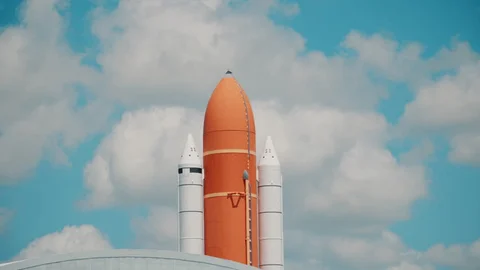
Interplanetary cloud networking is an emerging concept that aims to extend cloud computing and communications beyond Earth, enabling data exchange across planets, satellites, and spacecraft. NASA, SpaceX, and other space agencies are developing architectures to support long-distance, delay-tolerant networks powered by cloud-based infrastructure.
Traditional internet protocols fail in space due to extreme latency, signal disruption, and limited bandwidth. To address this, NASA developed Delay/Disruption Tolerant Networking (DTN), which uses store-and-forward techniques to ensure messages eventually reach their destination. Cloud systems can help manage, route, and analyze interplanetary data efficiently.
Space missions generate large amounts of information—images, telemetry, sensor readings—that must be processed quickly. Instead of analyzing everything on Earth, interplanetary cloud nodes can perform edge computing on spacecraft, lunar bases, or Mars habitats. This reduces bandwidth usage and provides faster scientific insights.
SpaceX’s Starlink satellites already form a massive low-Earth-orbit communication network. Future iterations may support interplanetary communication, linking spacecraft with Earth-based cloud systems for real-time mission management, navigation, and system health monitoring.
NASA’s Artemis missions and planned Mars expeditions rely heavily on autonomous systems. Cloud-assisted networking enables remote operation, AI-based anomaly detection, and dynamic resource allocation across space habitats. Data can sync between planetary bases and Earth-based mission control.
Energy efficiency is a major challenge. Computing hardware in space must withstand radiation, extreme temperatures, and limited power. Interplanetary cloud systems require specialized hardware optimized for low-power AI inference and secure data transmission.
Security plays a critical role. Space networks are vulnerable to interception, signal spoofing, and cyber threats. Quantum-safe encryption and resilient protocols are essential to protect critical mission data.
Interplanetary cloud networking will enable new space industries, including asteroid mining, satellite servicing, and extraterrestrial agriculture. Cloud platforms can coordinate robotic fleets, process scientific data, and manage logistics between planets.
This technology represents humanity’s next leap in digital infrastructure. As exploration expands beyond Earth, interplanetary cloud computing will become the backbone of communication, automation, and intelligent decision-making across the solar system.
Traditional internet protocols fail in space due to extreme latency, signal disruption, and limited bandwidth. To address this, NASA developed Delay/Disruption Tolerant Networking (DTN), which uses store-and-forward techniques to ensure messages eventually reach their destination. Cloud systems can help manage, route, and analyze interplanetary data efficiently.
Space missions generate large amounts of information—images, telemetry, sensor readings—that must be processed quickly. Instead of analyzing everything on Earth, interplanetary cloud nodes can perform edge computing on spacecraft, lunar bases, or Mars habitats. This reduces bandwidth usage and provides faster scientific insights.
SpaceX’s Starlink satellites already form a massive low-Earth-orbit communication network. Future iterations may support interplanetary communication, linking spacecraft with Earth-based cloud systems for real-time mission management, navigation, and system health monitoring.
NASA’s Artemis missions and planned Mars expeditions rely heavily on autonomous systems. Cloud-assisted networking enables remote operation, AI-based anomaly detection, and dynamic resource allocation across space habitats. Data can sync between planetary bases and Earth-based mission control.
Energy efficiency is a major challenge. Computing hardware in space must withstand radiation, extreme temperatures, and limited power. Interplanetary cloud systems require specialized hardware optimized for low-power AI inference and secure data transmission.
Security plays a critical role. Space networks are vulnerable to interception, signal spoofing, and cyber threats. Quantum-safe encryption and resilient protocols are essential to protect critical mission data.
Interplanetary cloud networking will enable new space industries, including asteroid mining, satellite servicing, and extraterrestrial agriculture. Cloud platforms can coordinate robotic fleets, process scientific data, and manage logistics between planets.
This technology represents humanity’s next leap in digital infrastructure. As exploration expands beyond Earth, interplanetary cloud computing will become the backbone of communication, automation, and intelligent decision-making across the solar system.