
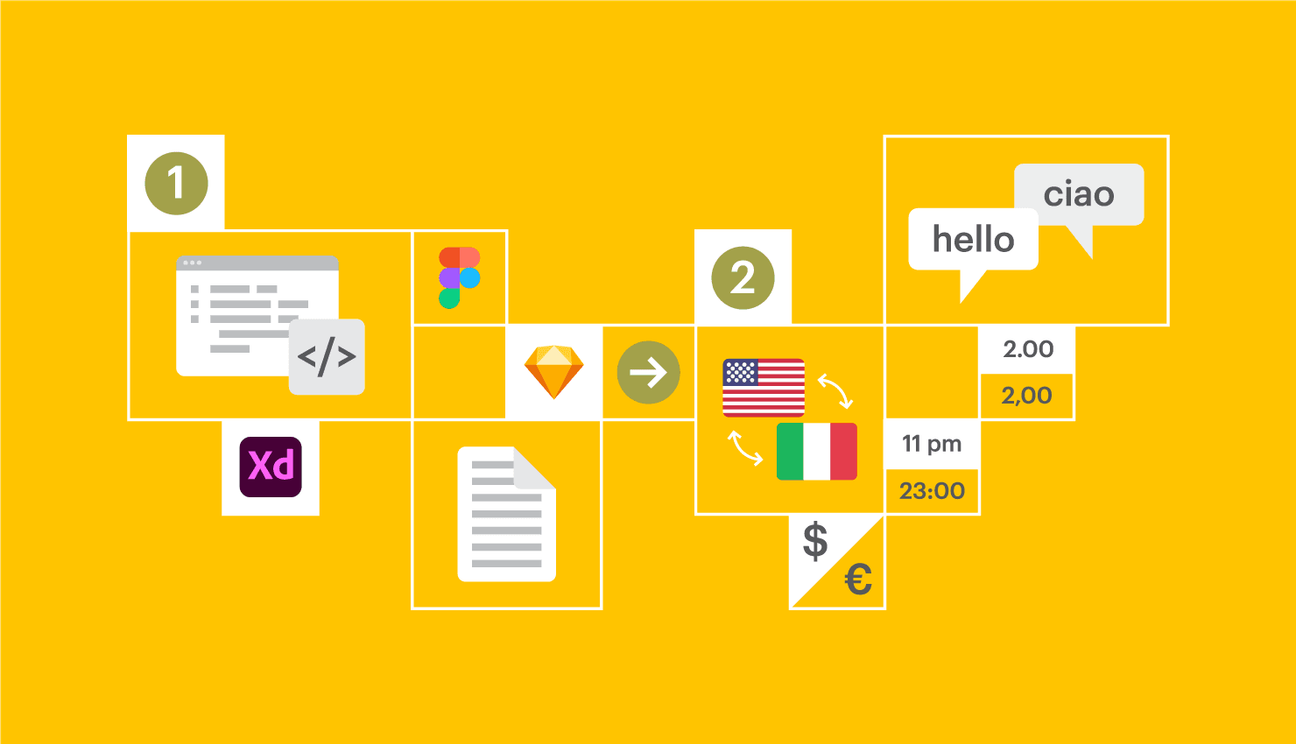
Internationalization (i18n) is the process of designing a product so it can easily adapt to multiple languages, regions, and cultural formats without engineering changes. Localization (L10n) is the actual adaptation—translating text, adjusting date formats, numbers, currency, reading direction, cultural context, and even images. Together, i18n and L10n help businesses provide inclusive experiences for global users and expand into international markets with minimal friction.
Good i18n begins at the design and code architecture stage. All user-facing text should be externalized into resource files instead of being hardcoded. Developers rely on translation keys, placeholders, and string interpolation to dynamically load language-specific content. This ensures translators can work independently of engineers, and languages can be added without refactoring code. Proper locale detection and fallback mechanisms ensure smooth user experience.
Localization goes beyond translation. Apps must handle pluralization rules, gendered language structures, time zones, calendars, and numeric separators. For example, “1 file uploaded” vs “2 files uploaded” is handled differently in various languages. Some languages require right-to-left layout support (Arabic, Hebrew), which demands mirrored UI components, icons, and alignment. Cultural sensitivity such as avoiding inappropriate imagery or color symbolism is also crucial.
An effective i18n architecture uses locale identifiers like en-US, es-MX, or hi-IN to define region-specific content. Frameworks like React Intl, Angular i18n, Flutter Intl, and ICU MessageFormat simplify dynamic translations and formatting. Translation files are usually stored in JSON, ARB, or YAML formats and loaded at runtime or build time depending on application scale.
Automated translation workflows are essential for large products. Companies integrate translation platforms like Lokalise, Crowdin, Smartling, or PhraseApp to streamline the pipeline. These tools support machine translation suggestions, translation memory, and quality checks, reducing human error and speeding up rollout. Continuous localization ensures translations deploy simultaneously with new product features.
Testing localized content is an important step. Pseudo-localization helps identify issues before real translations arrive. For example, elongated characters can expose UI overflow bugs. Switching locales should be instant and persistent using local storage or server-side preferences. Automated UI tests must ensure that layout, fonts, and controls behave correctly across all languages.
One major challenge is managing dynamic content, such as user-generated text, which must be displayed correctly irrespective of language. Handling Unicode, combining characters, and emoji rendering requires proper encoding. Developers must also handle bi-directional text (BiDi), combining RTL words with LTR numbers, which often causes alignment inconsistencies.
From a business perspective, localization increases user trust, reduces bounce rates, and boosts global engagement. Markets like Europe, the Middle East, and Asia expect localized products, and companies that fail to offer native experiences lose customers to competitors who do.
Ultimately, i18n and L10n are not optional—they are strategic investments that expand global reach and ensure software products respect linguistic and cultural diversity. A well-planned localization architecture saves engineering time and significantly improves user satisfaction across international audiences.
Good i18n begins at the design and code architecture stage. All user-facing text should be externalized into resource files instead of being hardcoded. Developers rely on translation keys, placeholders, and string interpolation to dynamically load language-specific content. This ensures translators can work independently of engineers, and languages can be added without refactoring code. Proper locale detection and fallback mechanisms ensure smooth user experience.
Localization goes beyond translation. Apps must handle pluralization rules, gendered language structures, time zones, calendars, and numeric separators. For example, “1 file uploaded” vs “2 files uploaded” is handled differently in various languages. Some languages require right-to-left layout support (Arabic, Hebrew), which demands mirrored UI components, icons, and alignment. Cultural sensitivity such as avoiding inappropriate imagery or color symbolism is also crucial.
An effective i18n architecture uses locale identifiers like en-US, es-MX, or hi-IN to define region-specific content. Frameworks like React Intl, Angular i18n, Flutter Intl, and ICU MessageFormat simplify dynamic translations and formatting. Translation files are usually stored in JSON, ARB, or YAML formats and loaded at runtime or build time depending on application scale.
Automated translation workflows are essential for large products. Companies integrate translation platforms like Lokalise, Crowdin, Smartling, or PhraseApp to streamline the pipeline. These tools support machine translation suggestions, translation memory, and quality checks, reducing human error and speeding up rollout. Continuous localization ensures translations deploy simultaneously with new product features.
Testing localized content is an important step. Pseudo-localization helps identify issues before real translations arrive. For example, elongated characters can expose UI overflow bugs. Switching locales should be instant and persistent using local storage or server-side preferences. Automated UI tests must ensure that layout, fonts, and controls behave correctly across all languages.
One major challenge is managing dynamic content, such as user-generated text, which must be displayed correctly irrespective of language. Handling Unicode, combining characters, and emoji rendering requires proper encoding. Developers must also handle bi-directional text (BiDi), combining RTL words with LTR numbers, which often causes alignment inconsistencies.
From a business perspective, localization increases user trust, reduces bounce rates, and boosts global engagement. Markets like Europe, the Middle East, and Asia expect localized products, and companies that fail to offer native experiences lose customers to competitors who do.
Ultimately, i18n and L10n are not optional—they are strategic investments that expand global reach and ensure software products respect linguistic and cultural diversity. A well-planned localization architecture saves engineering time and significantly improves user satisfaction across international audiences.