
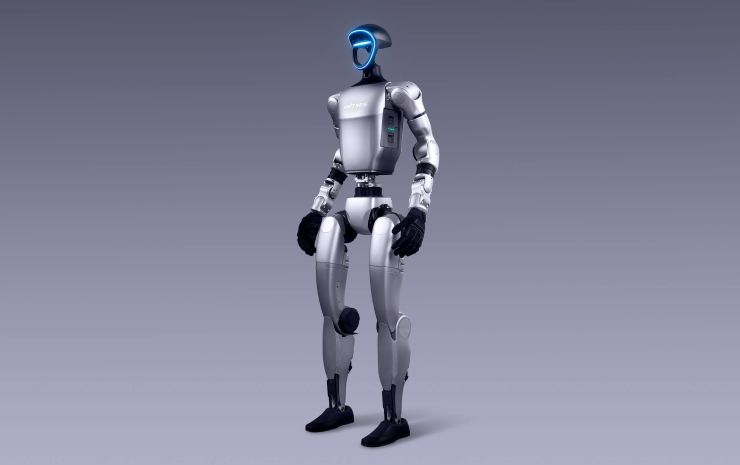
Humanoid robots have rapidly advanced in recent years, driven by breakthroughs in AI, machine learning, mechatronics, and materials science. These robots are designed to mimic human movement, behavior, and decision-making. Their goal is to operate safely in human environments—factories, hospitals, offices, and homes—performing tasks previously limited to people.
Modern humanoid robots use high-precision actuators, multi-axis joints, and balance algorithms to walk, run, and navigate uneven terrain. Companies like Boston Dynamics, Tesla, Figure AI, and Agility Robotics are pioneering robots that can lift objects, climb stairs, and recover from slips without external support. These capabilities mark a major leap from earlier robots that required fixed platforms or support frames.
AI is central to the evolution of humanoids. Large language models and reinforcement learning enable robots to understand instructions, recognize objects, and adapt to dynamic environments. Vision systems powered by neural networks give robots the ability to identify humans, avoid obstacles, and manipulate objects with increasing dexterity and accuracy.
Power efficiency and battery technology are critical factors. New lightweight materials and compact motors allow humanoid robots to operate longer without overheating or draining energy. Some models integrate swappable battery packs, while others explore wireless charging to enable continuous operation in industrial settings.
Humanoid robots are increasingly used in manufacturing. They can fill labor shortages, perform repetitive or hazardous tasks, and collaborate with human workers. Because they share human-like proportions, factories do not need major redesigns to accommodate them. This makes humanoid robots an attractive solution for industries transitioning to automation.
In healthcare, humanoid robots assist with elder care, physical therapy, and patient monitoring. They can help lift patients, guide them during mobility exercises, and provide companionship. Their human-like form makes interactions more intuitive, especially for elderly users who may not be comfortable with tablet interfaces or voice assistants.
Service industries are also adopting humanoid robots. Hotels, restaurants, and retail stores use them for customer greeting, navigation assistance, and light tasks. These robots reduce operational costs while improving customer experiences through interactive, AI-driven communication.
Despite rapid progress, challenges remain: high cost, safety regulations, limited strength compared to humans, and ethical concerns about replacing human jobs. Research continues toward making robots more affordable, energy-efficient, and socially acceptable.
Humanoid robot advancements represent a major shift toward a future where collaborative robots work alongside humans, improving productivity, safety, and quality of life. As AI continues to evolve, humanoids will become more capable, autonomous, and integrated into everyday environments.
Modern humanoid robots use high-precision actuators, multi-axis joints, and balance algorithms to walk, run, and navigate uneven terrain. Companies like Boston Dynamics, Tesla, Figure AI, and Agility Robotics are pioneering robots that can lift objects, climb stairs, and recover from slips without external support. These capabilities mark a major leap from earlier robots that required fixed platforms or support frames.
AI is central to the evolution of humanoids. Large language models and reinforcement learning enable robots to understand instructions, recognize objects, and adapt to dynamic environments. Vision systems powered by neural networks give robots the ability to identify humans, avoid obstacles, and manipulate objects with increasing dexterity and accuracy.
Power efficiency and battery technology are critical factors. New lightweight materials and compact motors allow humanoid robots to operate longer without overheating or draining energy. Some models integrate swappable battery packs, while others explore wireless charging to enable continuous operation in industrial settings.
Humanoid robots are increasingly used in manufacturing. They can fill labor shortages, perform repetitive or hazardous tasks, and collaborate with human workers. Because they share human-like proportions, factories do not need major redesigns to accommodate them. This makes humanoid robots an attractive solution for industries transitioning to automation.
In healthcare, humanoid robots assist with elder care, physical therapy, and patient monitoring. They can help lift patients, guide them during mobility exercises, and provide companionship. Their human-like form makes interactions more intuitive, especially for elderly users who may not be comfortable with tablet interfaces or voice assistants.
Service industries are also adopting humanoid robots. Hotels, restaurants, and retail stores use them for customer greeting, navigation assistance, and light tasks. These robots reduce operational costs while improving customer experiences through interactive, AI-driven communication.
Despite rapid progress, challenges remain: high cost, safety regulations, limited strength compared to humans, and ethical concerns about replacing human jobs. Research continues toward making robots more affordable, energy-efficient, and socially acceptable.
Humanoid robot advancements represent a major shift toward a future where collaborative robots work alongside humans, improving productivity, safety, and quality of life. As AI continues to evolve, humanoids will become more capable, autonomous, and integrated into everyday environments.