
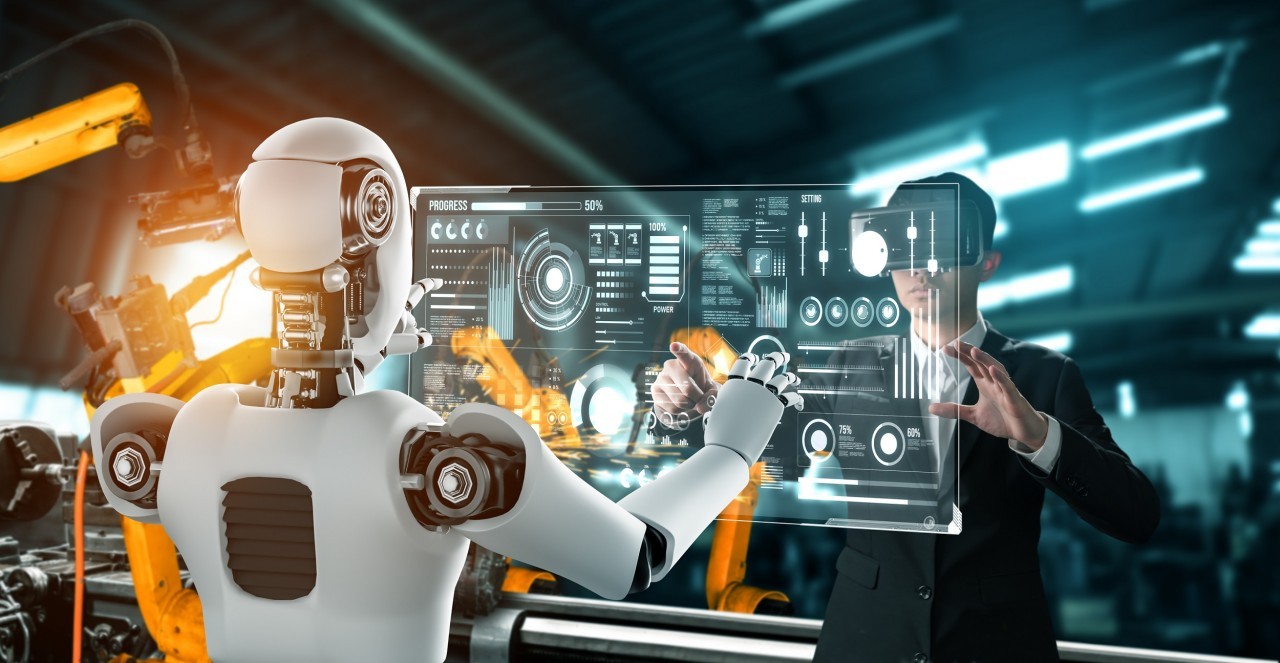
Human-Robot Collaboration (HRC) focuses on enabling humans and robots to work together safely and efficiently in shared environments such as factories, hospitals, and homes. Traditional industrial robots were isolated behind cages for safety, but modern collaborative robots — known as cobots — are designed to operate side-by-side with humans without causing harm.
Safety is the foundation of effective collaboration. Cobots incorporate advanced sensing technologies like vision cameras, proximity sensors, force-torque sensors, and tactile skins to detect human presence and adjust behavior. Safety-rated monitored stops, speed limitations, and collision detection help prevent accidents. International standards such as ISO 10218 and ISO/TS 15066 provide guidelines for safe HRC implementation.
Perception and understanding of human intent are critical for collaboration. Robots use AI-based motion prediction, gesture recognition, and natural language interfaces to understand what humans are doing and proactively assist with tasks. Context-aware systems allow robots to dynamically adapt their speed, posture, and force based on human proximity and engagement level.
HRC enhances productivity in manufacturing by letting robots handle repetitive, heavy, or hazardous tasks while humans focus on complex decision-making and fine-motor skills. This combination increases efficiency, reduces worker fatigue, and greatly lowers workplace injuries. In healthcare, collaborative robots assist with patient lifting, rehabilitation guidance, and surgical assistance while maintaining safe physical interaction.
Trust and usability greatly influence adoption. Robots must provide predictable and transparent actions so humans feel confident working alongside them. Clear communication through visual cues, sounds, and haptic feedback helps humans understand the robot’s next move. Designing intuitive interfaces ensures minimal training effort for operators.
Ergonomics plays a vital role. Well-designed collaboration reduces strain and repetitive stress injuries for humans. Robots can position parts for assembly, hold tools, or stabilize heavy components — enabling workers to maintain comfortable postures while performing precision tasks. This leads to improved workforce well-being and job satisfaction.
However, challenges remain. Dynamic environments and unpredictable human behavior require robust perception and decision-making. Any sensor failures or software bugs could lead to dangerous interactions. Continuous validation, risk assessments, and real-time monitoring are essential for maintaining safety.
As AI improves, human-robot teamwork will expand into logistics, agriculture, construction, and personal service roles. The future of collaboration lies in creating robots that are highly adaptive, socially aware, and emotionally intelligent, ensuring that they support human strengths rather than replace them. HRC transforms robots into trustworthy partners in both industrial and everyday life.
Safety is the foundation of effective collaboration. Cobots incorporate advanced sensing technologies like vision cameras, proximity sensors, force-torque sensors, and tactile skins to detect human presence and adjust behavior. Safety-rated monitored stops, speed limitations, and collision detection help prevent accidents. International standards such as ISO 10218 and ISO/TS 15066 provide guidelines for safe HRC implementation.
Perception and understanding of human intent are critical for collaboration. Robots use AI-based motion prediction, gesture recognition, and natural language interfaces to understand what humans are doing and proactively assist with tasks. Context-aware systems allow robots to dynamically adapt their speed, posture, and force based on human proximity and engagement level.
HRC enhances productivity in manufacturing by letting robots handle repetitive, heavy, or hazardous tasks while humans focus on complex decision-making and fine-motor skills. This combination increases efficiency, reduces worker fatigue, and greatly lowers workplace injuries. In healthcare, collaborative robots assist with patient lifting, rehabilitation guidance, and surgical assistance while maintaining safe physical interaction.
Trust and usability greatly influence adoption. Robots must provide predictable and transparent actions so humans feel confident working alongside them. Clear communication through visual cues, sounds, and haptic feedback helps humans understand the robot’s next move. Designing intuitive interfaces ensures minimal training effort for operators.
Ergonomics plays a vital role. Well-designed collaboration reduces strain and repetitive stress injuries for humans. Robots can position parts for assembly, hold tools, or stabilize heavy components — enabling workers to maintain comfortable postures while performing precision tasks. This leads to improved workforce well-being and job satisfaction.
However, challenges remain. Dynamic environments and unpredictable human behavior require robust perception and decision-making. Any sensor failures or software bugs could lead to dangerous interactions. Continuous validation, risk assessments, and real-time monitoring are essential for maintaining safety.
As AI improves, human-robot teamwork will expand into logistics, agriculture, construction, and personal service roles. The future of collaboration lies in creating robots that are highly adaptive, socially aware, and emotionally intelligent, ensuring that they support human strengths rather than replace them. HRC transforms robots into trustworthy partners in both industrial and everyday life.