
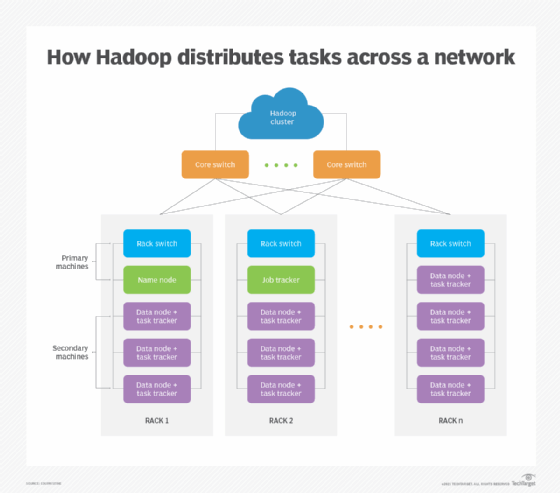
High-Performance Computing (HPC) in cloud data centers enables organizations to run complex, compute-intensive workloads without owning expensive supercomputers. HPC workloads include scientific simulations, weather forecasting, financial risk modeling, genome sequencing, and AI training — tasks that demand massive processing power, parallel computation, and high-speed networking. Cloud providers now offer scalable HPC clusters that can be deployed in minutes instead of years of infrastructure investment.
Traditionally, HPC used on-premise supercomputers built with specialized hardware like high-core CPUs, GPUs, and InfiniBand networks. These systems are costly to maintain, require cooling infrastructure, and quickly become outdated. Cloud HPC removes these limitations by providing elastic resources where organizations only pay for what they use, ensuring cost-effective and future-ready infrastructure.
Cloud data centers offer a variety of compute instances optimized for HPC workloads — including GPU nodes, FPGA-enabled servers, and high-frequency CPU cores. Providers like AWS (ParallelCluster), Azure (CycleCloud), and Google Cloud (HPC VM families) support high-bandwidth, low-latency interconnects that are essential for tightly-coupled parallel processing.
Scalability is a major advantage of cloud HPC. Software can scale up to thousands of nodes during peak demand and scale down afterward, ensuring users are never limited by local hardware capacity. This is especially useful for research institutes and startups that require occasional bursts of compute power.
HPC in cloud enables democratization of supercomputing. Smaller organizations, universities, and scientific communities can access world-class compute infrastructure without massive capital expense. This accelerates innovation in fields such as climate research, earthquake prediction, and vaccine development.
Hybrid HPC environments are also becoming common. Organizations run frequent workloads on on-premise systems while bursting into the cloud for additional compute when needed. This hybrid strategy maintains control over sensitive data while leveraging cloud elasticity and global cluster availability.
Data transfer and storage performance are key considerations. HPC job results often involve large datasets, making throughput optimization critical. Cloud-native file systems and high-speed storage solutions such as FSx for Lustre and Azure NetApp Files ensure fast read/write operations across compute nodes, preventing bottlenecks during simulation runs.
Security and compliance must be maintained as sensitive workloads move to the cloud. Cloud providers offer secure access controls, encryption, and isolated networks to protect scientific and industrial research from unauthorized access. Governance and role-based access ensure that critical workload execution remains controlled.
In summary, HPC in cloud data centers combines the power of supercomputing with the flexibility of cloud services. It accelerates discovery, reduces cost barriers, and supports global collaboration on complex problems. As cloud technology advances with quantum computing integration, specialized accelerators, and AI-based orchestration, the future of high-performance computing becomes faster, smarter, and more accessible to the world.
Traditionally, HPC used on-premise supercomputers built with specialized hardware like high-core CPUs, GPUs, and InfiniBand networks. These systems are costly to maintain, require cooling infrastructure, and quickly become outdated. Cloud HPC removes these limitations by providing elastic resources where organizations only pay for what they use, ensuring cost-effective and future-ready infrastructure.
Cloud data centers offer a variety of compute instances optimized for HPC workloads — including GPU nodes, FPGA-enabled servers, and high-frequency CPU cores. Providers like AWS (ParallelCluster), Azure (CycleCloud), and Google Cloud (HPC VM families) support high-bandwidth, low-latency interconnects that are essential for tightly-coupled parallel processing.
Scalability is a major advantage of cloud HPC. Software can scale up to thousands of nodes during peak demand and scale down afterward, ensuring users are never limited by local hardware capacity. This is especially useful for research institutes and startups that require occasional bursts of compute power.
HPC in cloud enables democratization of supercomputing. Smaller organizations, universities, and scientific communities can access world-class compute infrastructure without massive capital expense. This accelerates innovation in fields such as climate research, earthquake prediction, and vaccine development.
Hybrid HPC environments are also becoming common. Organizations run frequent workloads on on-premise systems while bursting into the cloud for additional compute when needed. This hybrid strategy maintains control over sensitive data while leveraging cloud elasticity and global cluster availability.
Data transfer and storage performance are key considerations. HPC job results often involve large datasets, making throughput optimization critical. Cloud-native file systems and high-speed storage solutions such as FSx for Lustre and Azure NetApp Files ensure fast read/write operations across compute nodes, preventing bottlenecks during simulation runs.
Security and compliance must be maintained as sensitive workloads move to the cloud. Cloud providers offer secure access controls, encryption, and isolated networks to protect scientific and industrial research from unauthorized access. Governance and role-based access ensure that critical workload execution remains controlled.
In summary, HPC in cloud data centers combines the power of supercomputing with the flexibility of cloud services. It accelerates discovery, reduces cost barriers, and supports global collaboration on complex problems. As cloud technology advances with quantum computing integration, specialized accelerators, and AI-based orchestration, the future of high-performance computing becomes faster, smarter, and more accessible to the world.