
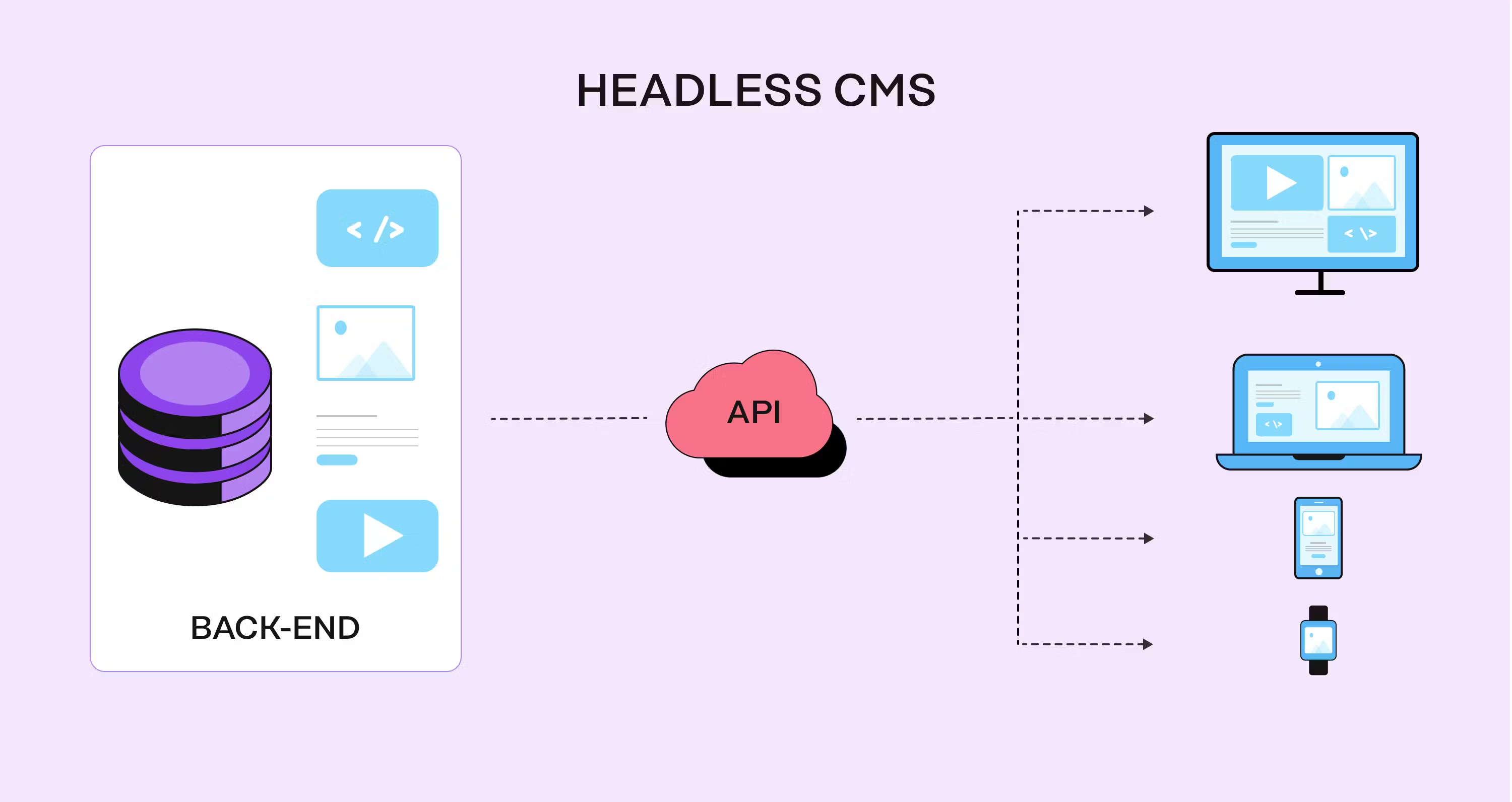
Headless CMS and Jamstack development represent a modern and efficient approach to building fast, scalable, and flexible websites and applications. Unlike traditional content management systems, a headless CMS decouples content creation and storage from the presentation layer. This separation allows teams to manage content independently while developers focus on delivering highly customized user interfaces using modern frameworks.
In a headless architecture, content is delivered through APIs rather than tightly coupled templates. This enables developers to use any frontend technology such as React, Vue, Angular, or Svelte while accessing the same content source. As a result, projects gain greater flexibility, easier customization, and the ability to evolve frontend technologies without disrupting content workflows.
Jamstack architecture emphasizes pre-rendered pages, static assets, and API-driven dynamic functionality. By serving pre-built content directly from a CDN, Jamstack sites achieve significantly faster load times and improved reliability. Dynamic features such as forms, authentication, and search are handled through APIs, reducing dependency on traditional backend servers.
Static site generators play a central role in Jamstack development by converting content into static files at build time. These generators pull content from a headless CMS and produce optimized HTML, CSS, and JavaScript files. This process results in near-instant page loads, better performance scores, and reduced complexity during runtime.
Headless CMS platforms support content reuse across multiple channels, making them ideal for omnichannel experiences. The same content can be published to websites, mobile applications, kiosks, smart devices, and digital displays without duplication. This centralized content management approach improves consistency, reduces maintenance effort, and streamlines content updates.
Search engine optimization benefits greatly from Jamstack architecture due to improved speed and performance metrics. Faster page load times, better core web vitals, and clean markup help search engines crawl and rank pages more effectively. Users also benefit from smoother navigation, which reduces bounce rates and increases engagement.
Deployment workflows in Jamstack are simplified through modern DevOps practices such as continuous integration and version control. Every change triggers an automated build and deployment process, ensuring consistent releases and minimizing human error. Rollbacks are easy to manage, making deployments safer and more predictable.
Security is significantly enhanced in Jamstack and headless setups because there is minimal server-side logic exposed to users. With fewer moving parts and no traditional backend rendering, the attack surface is reduced. This makes applications more resistant to common vulnerabilities such as SQL injection and server exploits.
Overall, Headless CMS and Jamstack development provide a future-proof solution for building high-performance web applications. By combining speed, flexibility, scalability, and security, this approach empowers businesses and developers to create modern digital experiences that are easier to maintain and ready for long-term growth.
In a headless architecture, content is delivered through APIs rather than tightly coupled templates. This enables developers to use any frontend technology such as React, Vue, Angular, or Svelte while accessing the same content source. As a result, projects gain greater flexibility, easier customization, and the ability to evolve frontend technologies without disrupting content workflows.
Jamstack architecture emphasizes pre-rendered pages, static assets, and API-driven dynamic functionality. By serving pre-built content directly from a CDN, Jamstack sites achieve significantly faster load times and improved reliability. Dynamic features such as forms, authentication, and search are handled through APIs, reducing dependency on traditional backend servers.
Static site generators play a central role in Jamstack development by converting content into static files at build time. These generators pull content from a headless CMS and produce optimized HTML, CSS, and JavaScript files. This process results in near-instant page loads, better performance scores, and reduced complexity during runtime.
Headless CMS platforms support content reuse across multiple channels, making them ideal for omnichannel experiences. The same content can be published to websites, mobile applications, kiosks, smart devices, and digital displays without duplication. This centralized content management approach improves consistency, reduces maintenance effort, and streamlines content updates.
Search engine optimization benefits greatly from Jamstack architecture due to improved speed and performance metrics. Faster page load times, better core web vitals, and clean markup help search engines crawl and rank pages more effectively. Users also benefit from smoother navigation, which reduces bounce rates and increases engagement.
Deployment workflows in Jamstack are simplified through modern DevOps practices such as continuous integration and version control. Every change triggers an automated build and deployment process, ensuring consistent releases and minimizing human error. Rollbacks are easy to manage, making deployments safer and more predictable.
Security is significantly enhanced in Jamstack and headless setups because there is minimal server-side logic exposed to users. With fewer moving parts and no traditional backend rendering, the attack surface is reduced. This makes applications more resistant to common vulnerabilities such as SQL injection and server exploits.
Overall, Headless CMS and Jamstack development provide a future-proof solution for building high-performance web applications. By combining speed, flexibility, scalability, and security, this approach empowers businesses and developers to create modern digital experiences that are easier to maintain and ready for long-term growth.