
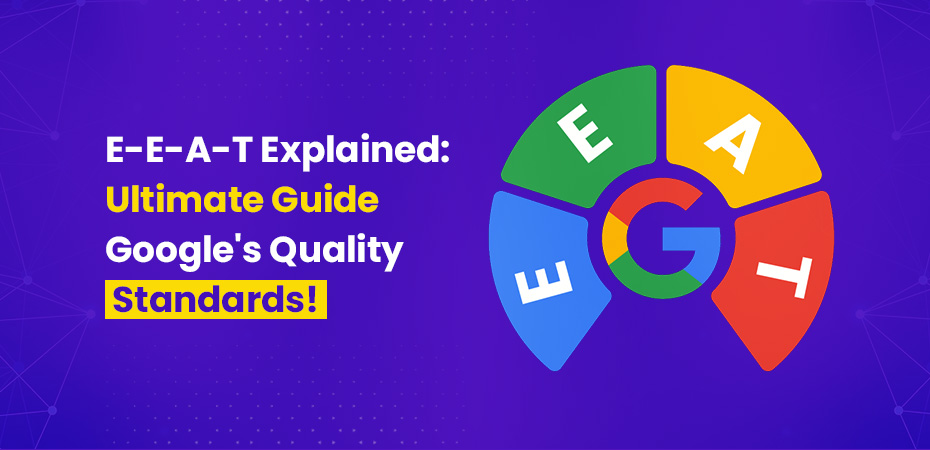
Google’s E-E-A-T Guidelines—Experience, Expertise, Authoritativeness, and Trustworthiness—are the foundation of how Google evaluates content quality and assigns search rankings. These guidelines are taken from Google’s Search Quality Evaluator Guidelines (SQEG), used by human evaluators to judge whether content provides real value to users. Although E-E-A-T is not a direct ranking factor, it strongly influences how Google’s algorithms interpret content quality, reputation, and user trust. Websites with strong E-E-A-T signals consistently rank higher, especially in sensitive industries such as finance, health, law, and e-commerce. In the modern digital landscape—where misinformation spreads quickly—Google’s priority is to reward reliable, well-researched, and trustworthy content.
The first element, Experience, was added by Google in 2022 to emphasize the importance of real-world involvement. Experience refers to the creator’s personal use, hands-on knowledge, or first-hand insights related to the topic. For example, a person reviewing a camera should ideally have actually used the camera. A traveler writing a travel guide should have real travel experience. Experience allows creators to share authentic details that AI-generated or generic content cannot replicate. Google considers first-hand experience especially valuable in product reviews, tutorials, and lifestyle content. It helps users make decisions based on real interactions rather than theoretical information.
The second element, Expertise, refers to the content creator’s depth of knowledge in the subject area. Expertise is crucial for YMYL (Your Money, Your Life) topics—such as medical advice, legal guidance, financial investments, or safety-related content—because incorrect or misleading information can harm users. Google rewards content written by qualified experts, certified professionals, or individuals with substantial experience in the field. Expertise can be demonstrated through credentials, certifications, years of experience, detailed explanations, and references to credible sources. High-quality websites prominently display author bios, qualifications, citations, and transparent sourcing to strengthen perceived expertise.
The third core element, Authoritativeness, refers to the reputation of the creator or website within the industry. A website is considered authoritative when other experts, reputable sites, and industry leaders trust and reference its content. Backlinks from well-known sites, mentions in news articles, and participation in recognized organizations all contribute to authoritativeness. For example, a health website endorsed by medical associations or frequently referenced in scientific reports will be seen as more authoritative. Google evaluates both the reputation of the individual author and the overall reputation of the website. Maintaining a consistent track record of reliable, accurate content builds long-term authority.
At the center of E-E-A-T lies Trustworthiness, the most important factor of all. Trust involves the accuracy, transparency, and safety of the content and website. Google prioritizes websites that are honest, secure, and user-focused. Key signals of trustworthiness include HTTPS security, transparent contact information, clear ownership, privacy policies, editorial standards, and factual accuracy. Websites that mislead users, hide information, or make exaggerated claims are penalized. For e-commerce sites, trust also includes secure payment methods, verified reviews, refund policies, and customer support visibility. Whether or not a site demonstrates trust directly affects how Google ranks it.
E-E-A-T is especially critical for YMYL (Your Money, Your Life) pages, which cover topics that could impact a user’s health, safety, finances, or personal well-being. These topics include:
1)Medical or nutritional advice
2)Legal guidance
3)Financial investments and taxes
4)News, politics, and public information
E-commerce transactions
For YMYL topics, Google applies higher scrutiny because inaccurate information can cause real harm. Websites in these niches must be extra rigorous—backing claims with citations, ensuring expert authorship, avoiding misleading claims, and maintaining editorial oversight. Strong E-E-A-T is not optional for YMYL websites; it is mandatory for maintaining visibility and credibility.
Implementing E-E-A-T requires a combination of technical optimization, content improvement, reputation building, and transparency. Websites can strengthen E-E-A-T by publishing high-quality articles that demonstrate real experience, adding detailed author bios with credentials, citing reputable sources, and updating outdated content. Reputation management is equally important—responding to reviews, correcting errors, and actively promoting thought leadership increases authority. Link building through trusted websites reinforces credibility. Ensuring technical trust signals—like HTTPS, secure forms, and structured data—helps Google verify a site’s legitimacy. Together, these efforts create a strong E-E-A-T foundation that improves search rankings and user trust.
Google’s E-E-A-T framework also aligns closely with modern SEO strategies. Search engines increasingly rely on semantic understanding, topic authority, and user intent satisfaction. Content that aligns with E-E-A-T naturally performs better across core updates, product reviews updates, and helpful content systems. Websites that focus solely on keyword stuffing, thin content, or AI-generated articles without value find themselves losing traffic during algorithm updates. In contrast, sites that build genuine expertise, provide structured knowledge, and prioritize user needs thrive in the long run. E-E-A-T encourages sustainable SEO practices that align with Google’s mission to deliver the best content to users.
In conclusion, the Google E-E-A-T Guidelines serve as the backbone of high-quality, trustworthy, and user-focused content. They ensure that search results amplify reliable information, protect users from harm, and reward content creators who provide genuine value. By embracing Experience, Expertise, Authoritativeness, and Trustworthiness, businesses and creators can build resilient websites that withstand algorithm updates, attract loyal audiences, and dominate search results. E-E-A-T is not just an SEO strategy—it is a blueprint for building long-term credibility in the digital world.
The first element, Experience, was added by Google in 2022 to emphasize the importance of real-world involvement. Experience refers to the creator’s personal use, hands-on knowledge, or first-hand insights related to the topic. For example, a person reviewing a camera should ideally have actually used the camera. A traveler writing a travel guide should have real travel experience. Experience allows creators to share authentic details that AI-generated or generic content cannot replicate. Google considers first-hand experience especially valuable in product reviews, tutorials, and lifestyle content. It helps users make decisions based on real interactions rather than theoretical information.
The second element, Expertise, refers to the content creator’s depth of knowledge in the subject area. Expertise is crucial for YMYL (Your Money, Your Life) topics—such as medical advice, legal guidance, financial investments, or safety-related content—because incorrect or misleading information can harm users. Google rewards content written by qualified experts, certified professionals, or individuals with substantial experience in the field. Expertise can be demonstrated through credentials, certifications, years of experience, detailed explanations, and references to credible sources. High-quality websites prominently display author bios, qualifications, citations, and transparent sourcing to strengthen perceived expertise.
The third core element, Authoritativeness, refers to the reputation of the creator or website within the industry. A website is considered authoritative when other experts, reputable sites, and industry leaders trust and reference its content. Backlinks from well-known sites, mentions in news articles, and participation in recognized organizations all contribute to authoritativeness. For example, a health website endorsed by medical associations or frequently referenced in scientific reports will be seen as more authoritative. Google evaluates both the reputation of the individual author and the overall reputation of the website. Maintaining a consistent track record of reliable, accurate content builds long-term authority.
At the center of E-E-A-T lies Trustworthiness, the most important factor of all. Trust involves the accuracy, transparency, and safety of the content and website. Google prioritizes websites that are honest, secure, and user-focused. Key signals of trustworthiness include HTTPS security, transparent contact information, clear ownership, privacy policies, editorial standards, and factual accuracy. Websites that mislead users, hide information, or make exaggerated claims are penalized. For e-commerce sites, trust also includes secure payment methods, verified reviews, refund policies, and customer support visibility. Whether or not a site demonstrates trust directly affects how Google ranks it.
E-E-A-T is especially critical for YMYL (Your Money, Your Life) pages, which cover topics that could impact a user’s health, safety, finances, or personal well-being. These topics include:
1)Medical or nutritional advice
2)Legal guidance
3)Financial investments and taxes
4)News, politics, and public information
E-commerce transactions
For YMYL topics, Google applies higher scrutiny because inaccurate information can cause real harm. Websites in these niches must be extra rigorous—backing claims with citations, ensuring expert authorship, avoiding misleading claims, and maintaining editorial oversight. Strong E-E-A-T is not optional for YMYL websites; it is mandatory for maintaining visibility and credibility.
Implementing E-E-A-T requires a combination of technical optimization, content improvement, reputation building, and transparency. Websites can strengthen E-E-A-T by publishing high-quality articles that demonstrate real experience, adding detailed author bios with credentials, citing reputable sources, and updating outdated content. Reputation management is equally important—responding to reviews, correcting errors, and actively promoting thought leadership increases authority. Link building through trusted websites reinforces credibility. Ensuring technical trust signals—like HTTPS, secure forms, and structured data—helps Google verify a site’s legitimacy. Together, these efforts create a strong E-E-A-T foundation that improves search rankings and user trust.
Google’s E-E-A-T framework also aligns closely with modern SEO strategies. Search engines increasingly rely on semantic understanding, topic authority, and user intent satisfaction. Content that aligns with E-E-A-T naturally performs better across core updates, product reviews updates, and helpful content systems. Websites that focus solely on keyword stuffing, thin content, or AI-generated articles without value find themselves losing traffic during algorithm updates. In contrast, sites that build genuine expertise, provide structured knowledge, and prioritize user needs thrive in the long run. E-E-A-T encourages sustainable SEO practices that align with Google’s mission to deliver the best content to users.
In conclusion, the Google E-E-A-T Guidelines serve as the backbone of high-quality, trustworthy, and user-focused content. They ensure that search results amplify reliable information, protect users from harm, and reward content creators who provide genuine value. By embracing Experience, Expertise, Authoritativeness, and Trustworthiness, businesses and creators can build resilient websites that withstand algorithm updates, attract loyal audiences, and dominate search results. E-E-A-T is not just an SEO strategy—it is a blueprint for building long-term credibility in the digital world.