
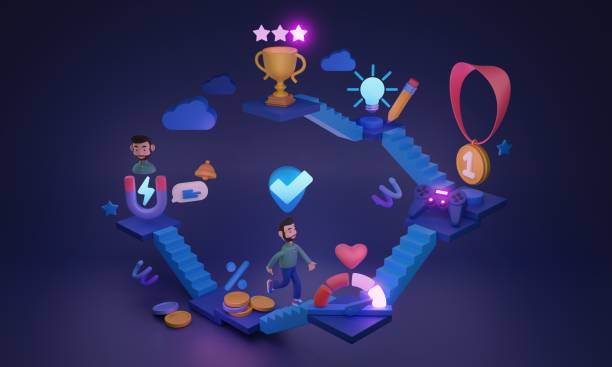
Gamification applies game design principles to non-game environments to motivate users, boost engagement, and improve long-term retention. It leverages human psychology—reward cycles, curiosity, achievement, and social interaction—to transform routine tasks into enjoyable experiences. When applied thoughtfully, gamification enhances usability without overwhelming the core purpose of the product.
A successful gamification strategy begins with understanding user motivations. Some users seek competition, others prefer mastery, progress, or social validation. Frameworks like Bartle’s Player Types help categorize user motivations into achievers, explorers, socializers, and competitors. Designing with these motivations in mind ensures gamification mechanics resonate with diverse audiences.
Gamification elements include points, badges, leaderboards, levels, quests, streaks, progress bars, and challenges. These elements work best when tied to meaningful tasks. For instance, a fitness app may award badges for step goals, while a language learning app like Duolingo uses streaks and XP levels to reinforce daily practice.
Progress visualization is one of the strongest engagement tools. Progress bars, achievement dashboards, and leveling systems tap into the human desire for completion. These mechanisms provide quick feedback loops, encouraging users to continue interacting with the product.
Social engagement is another powerful strategy. Features such as team challenges, shared progress, group goals, and friend leaderboards foster community-driven motivation. When users see others achieving milestones, it creates positive peer pressure and boosts retention.
However, over-gamification can backfire. Users may feel manipulated or overwhelmed if rewards overshadow actual value. Ethical UX requires balancing gamification with genuine usefulness. Designers must ensure rewards feel earned and meaningful rather than gimmicky.
Gamification should always support business goals. For example, increasing learning frequency, improving healthy habits, reducing churn, or boosting productivity. Measurement frameworks help track the success of gamification features using metrics like engagement rate, return frequency, and task completion.
When applied correctly, gamification elevates the user experience by making tasks more enjoyable and satisfying. It transforms passive users into active participants and supports long-term engagement in digital products across industries.
A successful gamification strategy begins with understanding user motivations. Some users seek competition, others prefer mastery, progress, or social validation. Frameworks like Bartle’s Player Types help categorize user motivations into achievers, explorers, socializers, and competitors. Designing with these motivations in mind ensures gamification mechanics resonate with diverse audiences.
Gamification elements include points, badges, leaderboards, levels, quests, streaks, progress bars, and challenges. These elements work best when tied to meaningful tasks. For instance, a fitness app may award badges for step goals, while a language learning app like Duolingo uses streaks and XP levels to reinforce daily practice.
Progress visualization is one of the strongest engagement tools. Progress bars, achievement dashboards, and leveling systems tap into the human desire for completion. These mechanisms provide quick feedback loops, encouraging users to continue interacting with the product.
Social engagement is another powerful strategy. Features such as team challenges, shared progress, group goals, and friend leaderboards foster community-driven motivation. When users see others achieving milestones, it creates positive peer pressure and boosts retention.
However, over-gamification can backfire. Users may feel manipulated or overwhelmed if rewards overshadow actual value. Ethical UX requires balancing gamification with genuine usefulness. Designers must ensure rewards feel earned and meaningful rather than gimmicky.
Gamification should always support business goals. For example, increasing learning frequency, improving healthy habits, reducing churn, or boosting productivity. Measurement frameworks help track the success of gamification features using metrics like engagement rate, return frequency, and task completion.
When applied correctly, gamification elevates the user experience by making tasks more enjoyable and satisfying. It transforms passive users into active participants and supports long-term engagement in digital products across industries.