
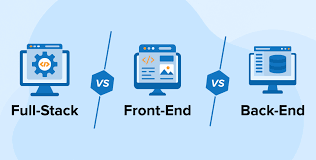
Web development is commonly divided into three main areas: frontend development, backend development, and full-stack development, with each role focusing on a specific part of a web application while working together to create a complete and seamless user experience. This division helps organize responsibilities, improves development efficiency, and allows teams to specialize in different aspects of building modern web applications.
Frontend development focuses on the client-side of a website, which is everything users see and interact with directly. This includes page layouts, navigation menus, buttons, forms, animations, images, and overall responsiveness across devices. Frontend developers use core technologies such as HTML for structure, CSS for styling, and JavaScript for interactivity, along with modern frameworks and libraries like React, Angular, or Vue to build dynamic and scalable user interfaces.
The primary goal of frontend development is to deliver an intuitive, attractive, and user-friendly interface. Frontend developers are responsible for ensuring fast loading times, smooth interactions, accessibility for users with disabilities, and consistency in design across different browsers and screen sizes. They work closely with designers to translate visual designs into functional interfaces while maintaining performance and usability.
Backend development handles the server-side operations that power a web application. Backend developers focus on writing application logic, managing databases, handling user authentication and authorization, processing requests, and ensuring data security. They work with technologies such as Node.js, Java, Python, PHP, or .NET, and databases like MySQL, PostgreSQL, MongoDB, or Redis to store and manage data efficiently.
Unlike frontend components, backend systems operate behind the scenes and are not directly visible to users. When a user performs an action on the frontend, such as submitting a form or logging in, the backend processes the request, applies business rules, interacts with the database if needed, and sends a response back to the frontend. This interaction ensures the application functions correctly and reliably.
Full-stack development combines both frontend and backend development skills into a single role. A full-stack developer understands how user interfaces connect with server logic and databases, allowing them to work across the entire technology stack. This holistic understanding enables them to design complete solutions and troubleshoot issues that span both sides of an application.
Full-stack developers are especially valuable in startups and small teams where flexibility is important. They can handle multiple responsibilities, speed up development, and act as a bridge between frontend and backend teams. Their broad skill set allows for better communication, faster problem-solving, and a deeper understanding of how changes in one layer affect the entire system.
Choosing between frontend, backend, or full-stack development depends on personal interests and career goals. Some developers enjoy creating visual designs and interactive experiences, others prefer working with logic, data, and system architecture, while many choose full-stack development for its versatility and broader career opportunities.
Understanding the differences between frontend, backend, and full-stack development helps learners and professionals choose the right specialization and build well-structured, scalable, and maintainable web applications that deliver high-quality user experiences.
Frontend development focuses on the client-side of a website, which is everything users see and interact with directly. This includes page layouts, navigation menus, buttons, forms, animations, images, and overall responsiveness across devices. Frontend developers use core technologies such as HTML for structure, CSS for styling, and JavaScript for interactivity, along with modern frameworks and libraries like React, Angular, or Vue to build dynamic and scalable user interfaces.
The primary goal of frontend development is to deliver an intuitive, attractive, and user-friendly interface. Frontend developers are responsible for ensuring fast loading times, smooth interactions, accessibility for users with disabilities, and consistency in design across different browsers and screen sizes. They work closely with designers to translate visual designs into functional interfaces while maintaining performance and usability.
Backend development handles the server-side operations that power a web application. Backend developers focus on writing application logic, managing databases, handling user authentication and authorization, processing requests, and ensuring data security. They work with technologies such as Node.js, Java, Python, PHP, or .NET, and databases like MySQL, PostgreSQL, MongoDB, or Redis to store and manage data efficiently.
Unlike frontend components, backend systems operate behind the scenes and are not directly visible to users. When a user performs an action on the frontend, such as submitting a form or logging in, the backend processes the request, applies business rules, interacts with the database if needed, and sends a response back to the frontend. This interaction ensures the application functions correctly and reliably.
Full-stack development combines both frontend and backend development skills into a single role. A full-stack developer understands how user interfaces connect with server logic and databases, allowing them to work across the entire technology stack. This holistic understanding enables them to design complete solutions and troubleshoot issues that span both sides of an application.
Full-stack developers are especially valuable in startups and small teams where flexibility is important. They can handle multiple responsibilities, speed up development, and act as a bridge between frontend and backend teams. Their broad skill set allows for better communication, faster problem-solving, and a deeper understanding of how changes in one layer affect the entire system.
Choosing between frontend, backend, or full-stack development depends on personal interests and career goals. Some developers enjoy creating visual designs and interactive experiences, others prefer working with logic, data, and system architecture, while many choose full-stack development for its versatility and broader career opportunities.
Understanding the differences between frontend, backend, and full-stack development helps learners and professionals choose the right specialization and build well-structured, scalable, and maintainable web applications that deliver high-quality user experiences.