
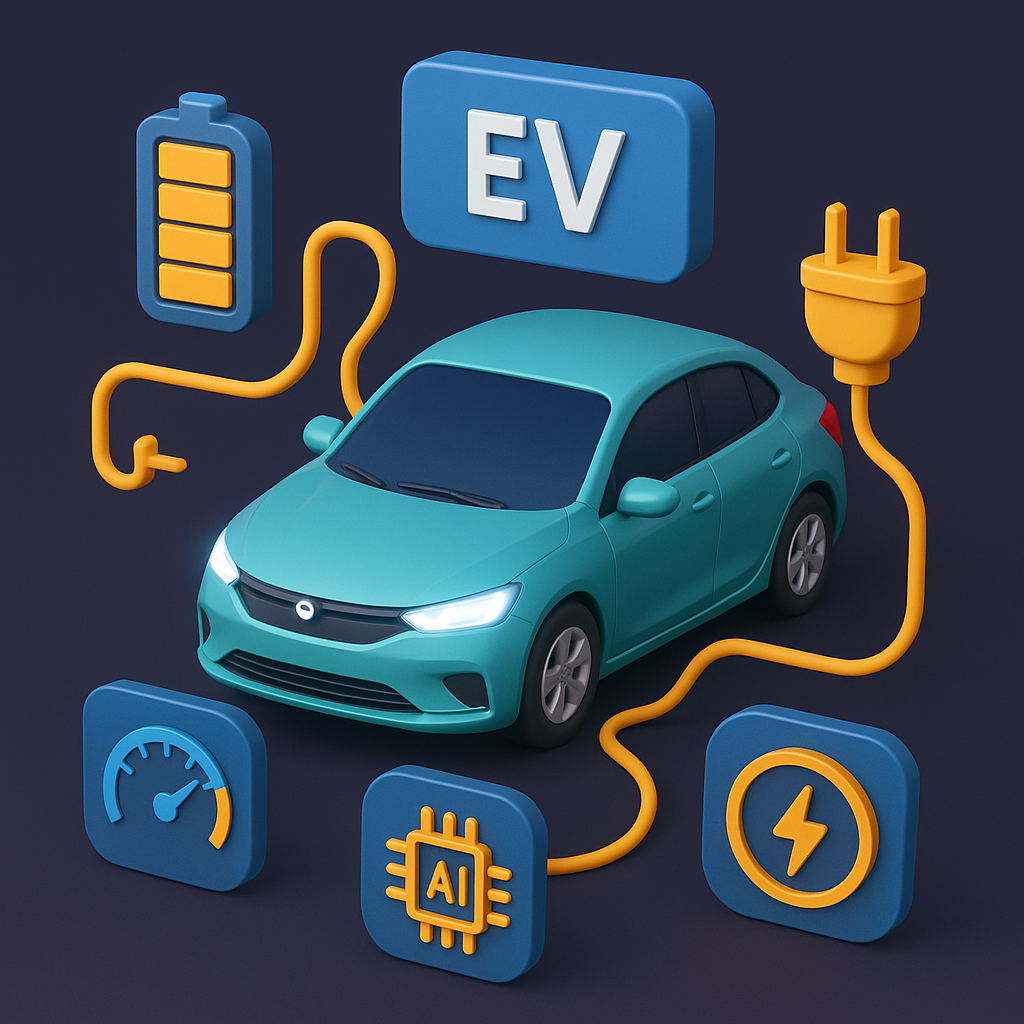
Electric Vehicles (EVs) have moved from niche products to mainstream transportation solutions within a decade. Governments worldwide are encouraging EV adoption to reduce carbon emissions, dependence on fossil fuels, and pollution in urban areas. Along with environmental benefits, major technological advancements have positioned EVs as powerful, efficient, and futuristic machines. The EV revolution touches multiple sectors—automotive engineering, battery technology, renewable energy, artificial intelligence, manufacturing, and transportation infrastructure. Understanding the advancements shaping modern EVs gives a clear picture of how mobility is evolving in the digital age.
Battery technology remains the core of electric vehicle innovation. Modern EVs benefit from advancements in Lithium-ion chemistry, offering higher energy density, faster charging, and improved safety. Companies are now exploring solid-state batteries, which replace liquid electrolytes with solid materials to deliver longer range, faster charging, and enhanced thermal stability. These batteries can potentially store double the energy of traditional Li-ion cells. Innovations like silicon anodes, lithium-iron-phosphate (LFP) cells, and recyclable battery materials contribute to lower costs and sustainability. Better thermal management systems also help maximize performance and extend battery lifespan.
Charging infrastructure is improving at a remarkable pace. Today’s EVs can charge from 10% to 80% in under 20–30 minutes using high-powered DC fast chargers. Companies are developing 350 kW–500 kW chargers that dramatically reduce charging time. Wireless charging pads are emerging, allowing vehicles to charge simply by parking over special surfaces. Some countries are testing charging roads, where embedded coils transfer power to moving EVs. Battery swapping—where depleted batteries are replaced within minutes—offers another approach being used in parts of Asia. These advancements aim to eliminate “charging anxiety” and make EV use as convenient as fueling a petrol car.
Modern EVs feature intelligent power management systems enhanced by AI. These systems optimize how energy flows between the motor, battery, electronics, and regenerative braking units. Regenerative braking captures kinetic energy and converts it into battery power, significantly improving range. Advanced energy algorithms predict driver behavior, terrain, and climate conditions to optimize efficiency in real time. Heat pumps reduce energy loss during extreme temperatures. These technologies allow EVs to travel farther on a single charge while maintaining consistent performance.
Electric motors have become more powerful, efficient, and compact. Modern EVs use permanent magnet motors, induction motors, or the latest switched reluctance motors, each offering unique advantages. Many EVs now include dual- or tri-motor setups for enhanced torque, all-wheel drive, and improved traction control. Torque vectoring systems enable precise power distribution, improving handling and safety at high speeds. Manufacturers are also designing motors with fewer rare-earth materials to reduce environmental impact and production costs.
Most EVs integrate advanced software systems that enable driver-assistance features such as autopilot, adaptive cruise control, lane-keeping, and automated parking. These features rely heavily on sensors, cameras, radar, and AI algorithms. As technology evolves, EVs are becoming more connected—sharing data with cloud systems for navigation, diagnostics, maintenance reminders, and performance updates. Over-the-air (OTA) software updates allow manufacturers to improve EV performance, add new features, and fix bugs remotely. This software-driven architecture is reshaping EVs into intelligent, evolving digital products.
To maximize efficiency, automakers are investing in lightweight materials like aluminum alloys, carbon fiber composites, and high-strength steel. These materials reduce vehicle weight without compromising safety. Aerodynamic designs, such as smooth underbodies, flush door handles, and optimized airflow channels, help EVs achieve better range and performance. The sleek design of many EVs is not just aesthetic—it directly influences energy consumption and driving efficiency.
EV technology is increasingly integrated with renewable energy systems like solar and wind. Many homeowners now charge EVs using rooftop solar panels, reducing reliance on the grid. The concept of Vehicle-to-Grid (V2G) enables EVs to send excess power back to homes or the grid, helping stabilize energy networks during peak demand. Similarly, Vehicle-to-Home (V2H) and Vehicle-to-Load (V2L) capabilities allow EVs to power appliances and serve as portable energy sources. These innovations turn EVs into mobile energy storage units, contributing to a more sustainable renewable energy ecosystem.
EV technology continues to evolve rapidly. With advancements in batteries, charging technology, autonomous systems, and sustainable materials, electric vehicles are poised to become the dominant mode of transportation. The future promises longer ranges, faster charging, smarter navigation, and deeper integration with renewable energy. As governments invest heavily in EV infrastructure and manufacturers compete to develop next-gen innovations, the global shift towards electric mobility will accelerate even faster. EVs represent more than just cleaner transportation—they sym
Battery technology remains the core of electric vehicle innovation. Modern EVs benefit from advancements in Lithium-ion chemistry, offering higher energy density, faster charging, and improved safety. Companies are now exploring solid-state batteries, which replace liquid electrolytes with solid materials to deliver longer range, faster charging, and enhanced thermal stability. These batteries can potentially store double the energy of traditional Li-ion cells. Innovations like silicon anodes, lithium-iron-phosphate (LFP) cells, and recyclable battery materials contribute to lower costs and sustainability. Better thermal management systems also help maximize performance and extend battery lifespan.
Charging infrastructure is improving at a remarkable pace. Today’s EVs can charge from 10% to 80% in under 20–30 minutes using high-powered DC fast chargers. Companies are developing 350 kW–500 kW chargers that dramatically reduce charging time. Wireless charging pads are emerging, allowing vehicles to charge simply by parking over special surfaces. Some countries are testing charging roads, where embedded coils transfer power to moving EVs. Battery swapping—where depleted batteries are replaced within minutes—offers another approach being used in parts of Asia. These advancements aim to eliminate “charging anxiety” and make EV use as convenient as fueling a petrol car.
Modern EVs feature intelligent power management systems enhanced by AI. These systems optimize how energy flows between the motor, battery, electronics, and regenerative braking units. Regenerative braking captures kinetic energy and converts it into battery power, significantly improving range. Advanced energy algorithms predict driver behavior, terrain, and climate conditions to optimize efficiency in real time. Heat pumps reduce energy loss during extreme temperatures. These technologies allow EVs to travel farther on a single charge while maintaining consistent performance.
Electric motors have become more powerful, efficient, and compact. Modern EVs use permanent magnet motors, induction motors, or the latest switched reluctance motors, each offering unique advantages. Many EVs now include dual- or tri-motor setups for enhanced torque, all-wheel drive, and improved traction control. Torque vectoring systems enable precise power distribution, improving handling and safety at high speeds. Manufacturers are also designing motors with fewer rare-earth materials to reduce environmental impact and production costs.
Most EVs integrate advanced software systems that enable driver-assistance features such as autopilot, adaptive cruise control, lane-keeping, and automated parking. These features rely heavily on sensors, cameras, radar, and AI algorithms. As technology evolves, EVs are becoming more connected—sharing data with cloud systems for navigation, diagnostics, maintenance reminders, and performance updates. Over-the-air (OTA) software updates allow manufacturers to improve EV performance, add new features, and fix bugs remotely. This software-driven architecture is reshaping EVs into intelligent, evolving digital products.
To maximize efficiency, automakers are investing in lightweight materials like aluminum alloys, carbon fiber composites, and high-strength steel. These materials reduce vehicle weight without compromising safety. Aerodynamic designs, such as smooth underbodies, flush door handles, and optimized airflow channels, help EVs achieve better range and performance. The sleek design of many EVs is not just aesthetic—it directly influences energy consumption and driving efficiency.
EV technology is increasingly integrated with renewable energy systems like solar and wind. Many homeowners now charge EVs using rooftop solar panels, reducing reliance on the grid. The concept of Vehicle-to-Grid (V2G) enables EVs to send excess power back to homes or the grid, helping stabilize energy networks during peak demand. Similarly, Vehicle-to-Home (V2H) and Vehicle-to-Load (V2L) capabilities allow EVs to power appliances and serve as portable energy sources. These innovations turn EVs into mobile energy storage units, contributing to a more sustainable renewable energy ecosystem.
EV technology continues to evolve rapidly. With advancements in batteries, charging technology, autonomous systems, and sustainable materials, electric vehicles are poised to become the dominant mode of transportation. The future promises longer ranges, faster charging, smarter navigation, and deeper integration with renewable energy. As governments invest heavily in EV infrastructure and manufacturers compete to develop next-gen innovations, the global shift towards electric mobility will accelerate even faster. EVs represent more than just cleaner transportation—they sym