
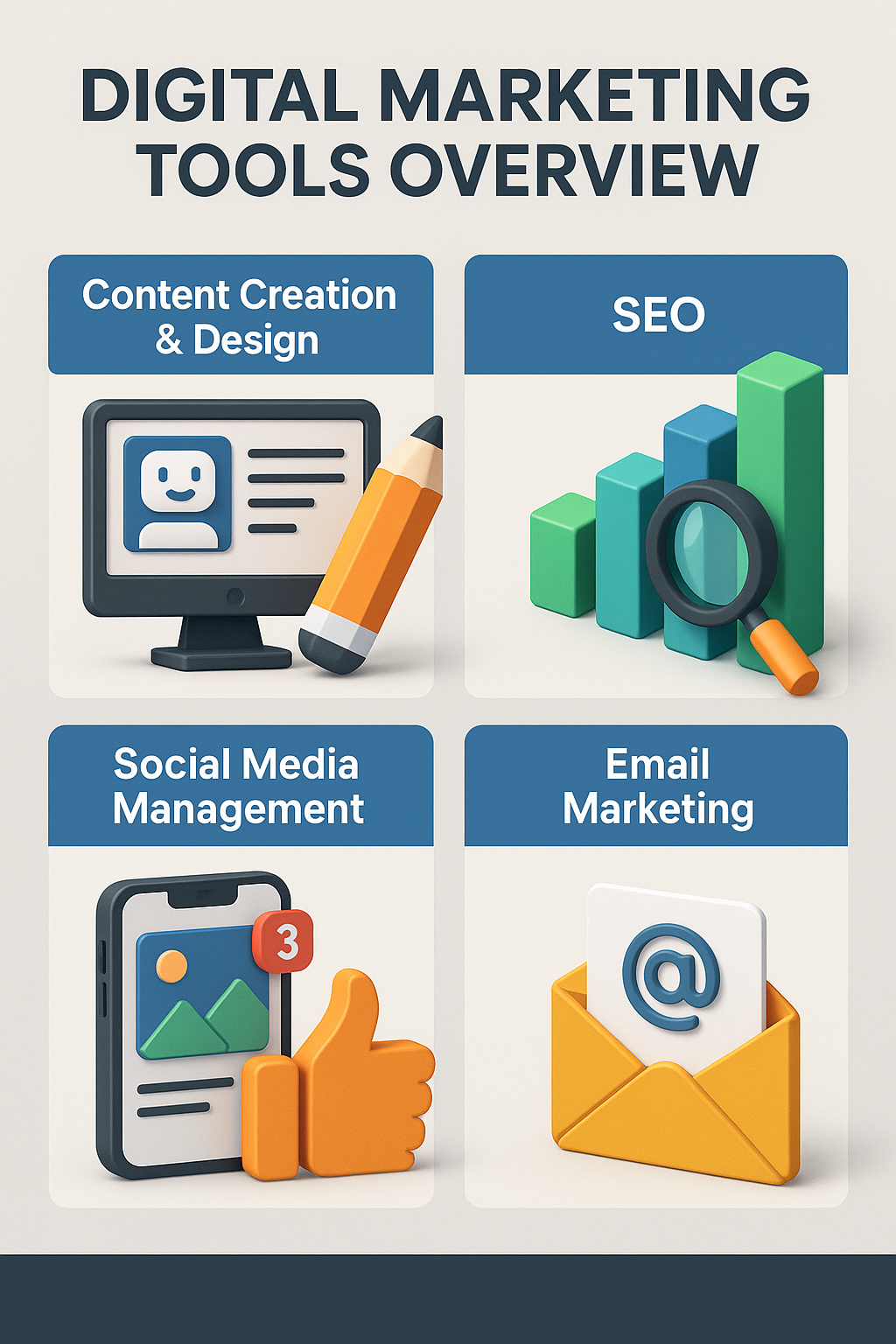
Digital marketing tools play a crucial role in helping businesses create, manage, and optimize online marketing campaigns. As the digital landscape evolves, these tools provide structure, automation, analytics, and creative support that brands need to stay competitive. Whether a small business owner, freelancer, or marketing professional, having the right tools can boost productivity, streamline campaigns, improve customer engagement, and maximize ROI. From content creation and SEO optimization to email automation and social media analytics, digital marketing tools make complex tasks more manageable and efficient. Understanding what each tool does and how to use it effectively is essential for anyone working in digital marketing.
Content is the backbone of digital marketing, and high-quality visuals and written content significantly improve user engagement. Tools like Canva, Adobe Express, Figma, and Photoshop help marketers design banners, posters, reels, infographics, and thumbnails. Canva’s drag-and-drop interface makes it ideal for beginners, while Adobe tools offer professional-grade features. For written content, Grammarly, Hemingway Editor, and AI-writing assistants help refine tone, correctness, and clarity. Video content—one of the most powerful digital formats—can be created using CapCut, Filmora, Premiere Pro, or DaVinci Resolve. These tools allow marketers to maintain brand consistency, produce creative assets, and stand out in crowded online spaces.
SEO tools help businesses analyze keywords, track ranking positions, audit websites, and study competitors. Ahrefs, Semrush, Moz, and Ubersuggest are widely used for keyword research, backlink analysis, and content optimization. Tools like Google Search Console and Google Trends provide free insights into search performance, indexing, and keyword popularity. SEO tools guide marketers in understanding what people search for, which keywords bring the most traffic, and how to optimize website content to achieve higher rankings on Google. They also flag technical SEO issues such as broken links, slow-loading pages, and crawl errors.
Managing social media manually is time-consuming. Tools like Buffer, Hootsuite, Later, and Sprout Social help schedule posts, analyze performance, and manage multiple social accounts. These tools provide insights into follower behavior, engagement patterns, and the best posting times. Platforms like Meta Business Suite, YouTube Studio, and TikTok Analytics give platform-specific insights. Social listening tools such as Brandwatch and Mention help brands track online conversations and brand sentiment. This combination of scheduling, analytics, and monitoring tools helps marketers create consistent posting strategies and improve engagement.
Email remains one of the highest-performing digital marketing channels. Tools like Mailchimp, Klaviyo, HubSpot, ** MailerLite**, and Sendinblue help marketers send automated campaigns, segment audiences, design email templates, and track engagement metrics. These tools are essential for newsletter campaigns, product announcements, lead nurturing, and remarketing sequences. Automation features—such as abandoned cart emails, welcome sequences, and re-engagement flows—help businesses save time while maintaining personalized communication. Advanced email platforms also integrate with CRM systems to deliver behavior-based targeting.
To run paid ads on platforms like Google, YouTube, Facebook, or Instagram, businesses rely heavily on advertising tools. Google Ads Manager and Meta Ads Manager allow marketers to create, manage, and optimize ad campaigns. For measuring performance, Google Analytics 4 (GA4) provides deep insights into user behavior, conversion tracking, traffic sources, and campaign performance. Tools like Hotjar and Microsoft Clarity provide heatmaps and user session recordings, helping marketers improve website UX and conversions. For advanced campaign tracking, tools like Voluum, Hyros, and ClickMagick are used by professional affiliate and performance marketers.
CRM tools help businesses track leads, manage customer data, nurture relationships, and improve sales performance. Popular CRM platforms include HubSpot CRM, Salesforce, Zoho CRM, and Freshworks CRM. These tools store customer interactions, automate follow-ups, and help sales teams prioritize leads based on their scoring. When integrated with marketing tools, CRMs allow for personalized marketing campaigns, better segmentation, and enhanced customer experience. CRM systems are essential for businesses aiming to scale and maintain long-term relationships with their customers.
For online stores, tools like Shopify, WooCommerce, BigCommerce, and Wix provide complete e-commerce solutions. These tools manage inventory, payments, product listings, and checkout processes. For funnel building, platforms like ClickFunnels, Systeme.io, Leadpages, and Kartra help marketers create high-converting landing pages and sales funnels. These tools often include built-in analytics, email automation, A/B testing features, and integrations to simplify the entire marketing workflow. E-commerce and funnel tools make it easier for businesses to guide users through the buying journey with minimal friction.
Digital marketing tools form the foundation of modern marketing strategies. They empower marketers to create better content, optimize for search engines, engage on social media, automate communication, run paid ads, and maintain customer relationships. Choosing the right tools depends on the size of the business, goals, budget, and marketing experience. Whether you are a beginner exploring basic tools or a professional managing complex campaigns, understanding these digital tools helps you work smarter, improve results, and stay competitive in a rapidly changing digital world. With the right combination of creativity, strategy, and tools, businesses can achieve significant growth and long-lasting customer engagement.
Content is the backbone of digital marketing, and high-quality visuals and written content significantly improve user engagement. Tools like Canva, Adobe Express, Figma, and Photoshop help marketers design banners, posters, reels, infographics, and thumbnails. Canva’s drag-and-drop interface makes it ideal for beginners, while Adobe tools offer professional-grade features. For written content, Grammarly, Hemingway Editor, and AI-writing assistants help refine tone, correctness, and clarity. Video content—one of the most powerful digital formats—can be created using CapCut, Filmora, Premiere Pro, or DaVinci Resolve. These tools allow marketers to maintain brand consistency, produce creative assets, and stand out in crowded online spaces.
SEO tools help businesses analyze keywords, track ranking positions, audit websites, and study competitors. Ahrefs, Semrush, Moz, and Ubersuggest are widely used for keyword research, backlink analysis, and content optimization. Tools like Google Search Console and Google Trends provide free insights into search performance, indexing, and keyword popularity. SEO tools guide marketers in understanding what people search for, which keywords bring the most traffic, and how to optimize website content to achieve higher rankings on Google. They also flag technical SEO issues such as broken links, slow-loading pages, and crawl errors.
Managing social media manually is time-consuming. Tools like Buffer, Hootsuite, Later, and Sprout Social help schedule posts, analyze performance, and manage multiple social accounts. These tools provide insights into follower behavior, engagement patterns, and the best posting times. Platforms like Meta Business Suite, YouTube Studio, and TikTok Analytics give platform-specific insights. Social listening tools such as Brandwatch and Mention help brands track online conversations and brand sentiment. This combination of scheduling, analytics, and monitoring tools helps marketers create consistent posting strategies and improve engagement.
Email remains one of the highest-performing digital marketing channels. Tools like Mailchimp, Klaviyo, HubSpot, ** MailerLite**, and Sendinblue help marketers send automated campaigns, segment audiences, design email templates, and track engagement metrics. These tools are essential for newsletter campaigns, product announcements, lead nurturing, and remarketing sequences. Automation features—such as abandoned cart emails, welcome sequences, and re-engagement flows—help businesses save time while maintaining personalized communication. Advanced email platforms also integrate with CRM systems to deliver behavior-based targeting.
To run paid ads on platforms like Google, YouTube, Facebook, or Instagram, businesses rely heavily on advertising tools. Google Ads Manager and Meta Ads Manager allow marketers to create, manage, and optimize ad campaigns. For measuring performance, Google Analytics 4 (GA4) provides deep insights into user behavior, conversion tracking, traffic sources, and campaign performance. Tools like Hotjar and Microsoft Clarity provide heatmaps and user session recordings, helping marketers improve website UX and conversions. For advanced campaign tracking, tools like Voluum, Hyros, and ClickMagick are used by professional affiliate and performance marketers.
CRM tools help businesses track leads, manage customer data, nurture relationships, and improve sales performance. Popular CRM platforms include HubSpot CRM, Salesforce, Zoho CRM, and Freshworks CRM. These tools store customer interactions, automate follow-ups, and help sales teams prioritize leads based on their scoring. When integrated with marketing tools, CRMs allow for personalized marketing campaigns, better segmentation, and enhanced customer experience. CRM systems are essential for businesses aiming to scale and maintain long-term relationships with their customers.
For online stores, tools like Shopify, WooCommerce, BigCommerce, and Wix provide complete e-commerce solutions. These tools manage inventory, payments, product listings, and checkout processes. For funnel building, platforms like ClickFunnels, Systeme.io, Leadpages, and Kartra help marketers create high-converting landing pages and sales funnels. These tools often include built-in analytics, email automation, A/B testing features, and integrations to simplify the entire marketing workflow. E-commerce and funnel tools make it easier for businesses to guide users through the buying journey with minimal friction.
Digital marketing tools form the foundation of modern marketing strategies. They empower marketers to create better content, optimize for search engines, engage on social media, automate communication, run paid ads, and maintain customer relationships. Choosing the right tools depends on the size of the business, goals, budget, and marketing experience. Whether you are a beginner exploring basic tools or a professional managing complex campaigns, understanding these digital tools helps you work smarter, improve results, and stay competitive in a rapidly changing digital world. With the right combination of creativity, strategy, and tools, businesses can achieve significant growth and long-lasting customer engagement.