
The development of 6G wireless standards represents the next revolutionary phase in global telecommunications, aiming to transcend the capabilities of 5G by introducing ultra-high-speed connectivity, intelligent networks, and a deeply integrated digital–physical world. While 5G focused on enhanced mobile broadband, massive IoT, and low-latency communications, 6G envisions a hyperconnected world where AI-driven networking, spatial computing, holographic communications, XR immersion, and digital twin ecosystems become the norm. Research initiatives across the United States, Europe, China, Japan, and South Korea have already begun defining the conceptual framework of 6G. The projected rollout around 2030 positions 6G as the backbone of future societies, enabling smart cities, autonomous machines, precision healthcare, and space–air–ground integrated networks. Early whitepapers from major organizations reveal that 6G aims to achieve unprecedented bandwidth, extremely low latency, intelligent automation, and seamless global connectivity, fueled by innovations in sensing, AI, spectrum management, and networking paradigms.
A defining characteristic of 6G is its focus on sub-terahertz (sub-THz) and terahertz (THz) communication bands, which promise data rates in the range of 1 Tbps—roughly 50 times faster than 5G. These higher frequencies allow transmission of enormous amounts of data but introduce challenges such as limited range, susceptibility to atmospheric attenuation, and difficult hardware design. To overcome these barriers, researchers are exploring advanced beamforming, massive MIMO architectures, and reconfigurable intelligent surfaces (RIS). RIS consists of smart electromagnetic surfaces that dynamically reflect, refract, or focus signals to overcome obstacles and improve coverage. THz communication is expected to support futuristic applications such as real-time holographic telepresence, ultra-HD 16K streaming, and lifelike metaverse interactions. The ongoing standardization efforts aim to create globally harmonized spectrum policies allowing nations to collaborate on shared frequency allocations.
One of the most transformative aspects of 6G development is the integration of native artificial intelligence (AI) and machine learning into every layer of the communication stack. Unlike 5G, where AI supports optimization, 6G envisions AI as an intrinsic component of the network’s architecture. This includes AI-enabled signal processing, autonomous spectrum allocation, predictive maintenance, self-optimizing networks (SON), and intelligent routing across terrestrial, aerial, and satellite nodes. AI-driven networking enables adaptive resource allocation based on user behavior, environmental conditions, and network load. Edge intelligence will allow devices and base stations to process data locally, reducing latency and energy consumption. With billions of interconnected devices, AI-based anomaly detection and cybersecurity frameworks will safeguard networks from large-scale, automated threats.
Another core trend in 6G development is the fusion of communication and sensing, enabling networks that not only transmit data but also perceive their surroundings. 6G networks may function as distributed sensors capable of detecting objects, estimating distances, measuring movement, and mapping environments. These features enable applications in autonomous vehicles, robotics navigation, disaster detection, environmental monitoring, and indoor localization. For example, 6G-equipped self-driving cars could communicate and sense simultaneously, collaborating in real time to avoid accidents during adverse conditions. This integration of sensing and communication will form the foundation of smart infrastructure, enabling next-generation smart cities where transportation, energy grids, public safety, and communication systems seamlessly interoperate.
6G also aims to unify terrestrial, aerial, and satellite communications into a fully integrated system known as Space–Air–Ground Integrated Networks (SAGIN). This vision includes LEO satellites, drones (UAVs), balloons, and ground networks collaborating to provide universal connectivity. SAGIN is essential for bridging remote areas, supporting military operations, enabling emergency communications, and delivering high-speed coverage in oceans, deserts, and mountains. Companies like SpaceX (Starlink), OneWeb, Amazon Kuiper, and China SatNet are expected to contribute to this new architecture. 6G standards will define protocols for seamless handovers between satellites, airborne base stations, and terrestrial towers—creating a truly global network. Such integrated systems also support real-time surveillance, precision agriculture, environmental sensing, and unmanned aerial operations.
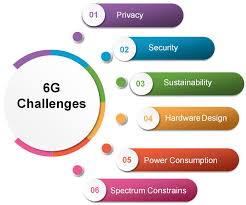
Security and privacy will be fundamental pillars in the development of 6G standards. As networks become more complex and AI-driven, the risks associated with cyberattacks, data interception, and algorithmic manipulation increase. 6G research focuses heavily on quantum-resistant encryption, blockchain-enabled trust management, AI-based threat detection, and end-to-end privacy-preserving technologies. Quantum computing is expected to become a real-world threat by the 2030s, and current encryption systems may become obsolete. Therefore, 6G will incorporate post-quantum cryptography to shield data against advanced computational attacks. Additionally, distributed ledger technologies may govern identity, access control, and secure device communication. With billions of IoT devices forming a pervasive computing environment, 6G security frameworks will be designed to operate autonomously and adaptively at scale.
6G will also enable the rise of immersive technologies including holographic communication, real-time 3D telepresence, full-sensory XR, and advanced metaverse ecosystems. These experiences require extremely high bandwidth, ultra-low latency, synchronized multi-sensory data transmission, and edge computing integration. For example, future 6G-powered holographic calls could project life-sized 3D images with near-zero lag, transforming communication in education, medicine, entertainment, and remote work. Telemedicine could involve robotic-assisted remote surgeries with tactile feedback. Industrial metaverse platforms may allow engineers to collaborate on digital twins of factories, infrastructure, and vehicles. These applications are currently constrained by 5G bandwidth limits but will thrive with 6G’s enhanced speed and distributed computing capabilities.
Sustainability is another major driver guiding 6G standards. The goal is to create carbon-neutral networks powered by renewable energy, energy-efficient hardware, and intelligent power-saving algorithms. As global data consumption continues to rise, telecom infrastructure generates increasing carbon emissions. 6G research strongly emphasizes green communication strategies such as energy-harvesting systems, AI-based power optimization, sleep scheduling for base stations, and materials that minimize heat generation. Autonomous drones powered by solar wings, self-repairing satellites, and recyclable telecom hardware are also part of long-term sustainability goals. Governments and telecom operators are expected to include environmental impact assessments as part of the 6G deployment roadmap.
In summary, the development of 6G wireless standards marks a monumental evolution in global communications, with transformative impacts across every industry—from healthcare and manufacturing to space exploration and smart cities. 6G will combine THz communication, AI-native networking, integrated sensing, global satellite collaboration, hyper-immersive experiences, and sustainable infrastructure to create the world’s most advanced connectivity ecosystem. As research accelerates between 2024 and 2030, leading nations, telecom operators, universities, and tech companies will compete and collaborate to shape the universal standards governing this future network. Ultimately, 6G aims to connect not only people and devices but entire physical and digital worlds—creating an intelligent, autonomous, and fully integrated global communication fabric for the decades ahead.
A defining characteristic of 6G is its focus on sub-terahertz (sub-THz) and terahertz (THz) communication bands, which promise data rates in the range of 1 Tbps—roughly 50 times faster than 5G. These higher frequencies allow transmission of enormous amounts of data but introduce challenges such as limited range, susceptibility to atmospheric attenuation, and difficult hardware design. To overcome these barriers, researchers are exploring advanced beamforming, massive MIMO architectures, and reconfigurable intelligent surfaces (RIS). RIS consists of smart electromagnetic surfaces that dynamically reflect, refract, or focus signals to overcome obstacles and improve coverage. THz communication is expected to support futuristic applications such as real-time holographic telepresence, ultra-HD 16K streaming, and lifelike metaverse interactions. The ongoing standardization efforts aim to create globally harmonized spectrum policies allowing nations to collaborate on shared frequency allocations.
One of the most transformative aspects of 6G development is the integration of native artificial intelligence (AI) and machine learning into every layer of the communication stack. Unlike 5G, where AI supports optimization, 6G envisions AI as an intrinsic component of the network’s architecture. This includes AI-enabled signal processing, autonomous spectrum allocation, predictive maintenance, self-optimizing networks (SON), and intelligent routing across terrestrial, aerial, and satellite nodes. AI-driven networking enables adaptive resource allocation based on user behavior, environmental conditions, and network load. Edge intelligence will allow devices and base stations to process data locally, reducing latency and energy consumption. With billions of interconnected devices, AI-based anomaly detection and cybersecurity frameworks will safeguard networks from large-scale, automated threats.
Another core trend in 6G development is the fusion of communication and sensing, enabling networks that not only transmit data but also perceive their surroundings. 6G networks may function as distributed sensors capable of detecting objects, estimating distances, measuring movement, and mapping environments. These features enable applications in autonomous vehicles, robotics navigation, disaster detection, environmental monitoring, and indoor localization. For example, 6G-equipped self-driving cars could communicate and sense simultaneously, collaborating in real time to avoid accidents during adverse conditions. This integration of sensing and communication will form the foundation of smart infrastructure, enabling next-generation smart cities where transportation, energy grids, public safety, and communication systems seamlessly interoperate.
6G also aims to unify terrestrial, aerial, and satellite communications into a fully integrated system known as Space–Air–Ground Integrated Networks (SAGIN). This vision includes LEO satellites, drones (UAVs), balloons, and ground networks collaborating to provide universal connectivity. SAGIN is essential for bridging remote areas, supporting military operations, enabling emergency communications, and delivering high-speed coverage in oceans, deserts, and mountains. Companies like SpaceX (Starlink), OneWeb, Amazon Kuiper, and China SatNet are expected to contribute to this new architecture. 6G standards will define protocols for seamless handovers between satellites, airborne base stations, and terrestrial towers—creating a truly global network. Such integrated systems also support real-time surveillance, precision agriculture, environmental sensing, and unmanned aerial operations.
Security and privacy will be fundamental pillars in the development of 6G standards. As networks become more complex and AI-driven, the risks associated with cyberattacks, data interception, and algorithmic manipulation increase. 6G research focuses heavily on quantum-resistant encryption, blockchain-enabled trust management, AI-based threat detection, and end-to-end privacy-preserving technologies. Quantum computing is expected to become a real-world threat by the 2030s, and current encryption systems may become obsolete. Therefore, 6G will incorporate post-quantum cryptography to shield data against advanced computational attacks. Additionally, distributed ledger technologies may govern identity, access control, and secure device communication. With billions of IoT devices forming a pervasive computing environment, 6G security frameworks will be designed to operate autonomously and adaptively at scale.
6G will also enable the rise of immersive technologies including holographic communication, real-time 3D telepresence, full-sensory XR, and advanced metaverse ecosystems. These experiences require extremely high bandwidth, ultra-low latency, synchronized multi-sensory data transmission, and edge computing integration. For example, future 6G-powered holographic calls could project life-sized 3D images with near-zero lag, transforming communication in education, medicine, entertainment, and remote work. Telemedicine could involve robotic-assisted remote surgeries with tactile feedback. Industrial metaverse platforms may allow engineers to collaborate on digital twins of factories, infrastructure, and vehicles. These applications are currently constrained by 5G bandwidth limits but will thrive with 6G’s enhanced speed and distributed computing capabilities.
Sustainability is another major driver guiding 6G standards. The goal is to create carbon-neutral networks powered by renewable energy, energy-efficient hardware, and intelligent power-saving algorithms. As global data consumption continues to rise, telecom infrastructure generates increasing carbon emissions. 6G research strongly emphasizes green communication strategies such as energy-harvesting systems, AI-based power optimization, sleep scheduling for base stations, and materials that minimize heat generation. Autonomous drones powered by solar wings, self-repairing satellites, and recyclable telecom hardware are also part of long-term sustainability goals. Governments and telecom operators are expected to include environmental impact assessments as part of the 6G deployment roadmap.
In summary, the development of 6G wireless standards marks a monumental evolution in global communications, with transformative impacts across every industry—from healthcare and manufacturing to space exploration and smart cities. 6G will combine THz communication, AI-native networking, integrated sensing, global satellite collaboration, hyper-immersive experiences, and sustainable infrastructure to create the world’s most advanced connectivity ecosystem. As research accelerates between 2024 and 2030, leading nations, telecom operators, universities, and tech companies will compete and collaborate to shape the universal standards governing this future network. Ultimately, 6G aims to connect not only people and devices but entire physical and digital worlds—creating an intelligent, autonomous, and fully integrated global communication fabric for the decades ahead.