
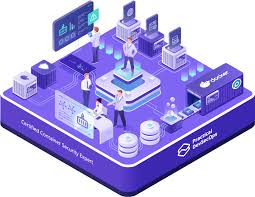
Container security automation refers to using automated tools and workflows to secure containerized applications throughout their lifecycle — from build to deployment. Since containers are lightweight and frequently updated, manual security is impractical. Automation ensures vulnerabilities are detected early, configurations are consistent, and threats are minimized without slowing development speed.
A major practice is automated vulnerability scanning. Container images are checked for outdated packages, known CVEs (Common Vulnerabilities & Exposures), and insecure dependencies before they reach production. Tools like Trivy, Clair, and Anchore continuously scan registries to detect high-risk issues in real time, enabling developers to act quickly.
Runtime security is equally important. Automated monitoring tools such as Falco and Aqua Security track container behavior for anomalies like unauthorized file access, suspicious network connections, or privilege escalation. If malicious activity is detected, automated policies can isolate or stop compromised containers instantly to prevent lateral spread.
Secure configuration automation ensures that containers follow best practices — including least privilege principles, read-only file systems, and dropped root capabilities. Policy-as-code frameworks like Open Policy Agent (OPA) and Kyverno automatically enforce rules across all deployments, eliminating human errors and misconfigurations.
CI/CD pipeline integration is essential for proactive security. Automation inserts security checks — such as code scanning, secret detection, and compliance validation — into early pipeline stages. This DevSecOps approach ensures only secure and approved images reach production environments, enhancing overall software quality.
Image signing and verification provide automated trust control. Cryptographic signatures validate container integrity before execution, blocking images that are tampered with or unverified. This protects companies from supply-chain attacks and unauthorized deployments.
Automated patching and updates keep container environments resilient. When vulnerabilities are discovered, orchestration platforms like Kubernetes automatically replace old containers with patched images through rolling updates. This maintains security without downtime or manual intervention.
In summary, container security automation empowers organizations to scale safely in cloud-native environments. Automated scanning, runtime protection, policy enforcement, and CI/CD integration create a continuous defense mechanism that keeps evolving applications secure from persistent cyber threats.
A major practice is automated vulnerability scanning. Container images are checked for outdated packages, known CVEs (Common Vulnerabilities & Exposures), and insecure dependencies before they reach production. Tools like Trivy, Clair, and Anchore continuously scan registries to detect high-risk issues in real time, enabling developers to act quickly.
Runtime security is equally important. Automated monitoring tools such as Falco and Aqua Security track container behavior for anomalies like unauthorized file access, suspicious network connections, or privilege escalation. If malicious activity is detected, automated policies can isolate or stop compromised containers instantly to prevent lateral spread.
Secure configuration automation ensures that containers follow best practices — including least privilege principles, read-only file systems, and dropped root capabilities. Policy-as-code frameworks like Open Policy Agent (OPA) and Kyverno automatically enforce rules across all deployments, eliminating human errors and misconfigurations.
CI/CD pipeline integration is essential for proactive security. Automation inserts security checks — such as code scanning, secret detection, and compliance validation — into early pipeline stages. This DevSecOps approach ensures only secure and approved images reach production environments, enhancing overall software quality.
Image signing and verification provide automated trust control. Cryptographic signatures validate container integrity before execution, blocking images that are tampered with or unverified. This protects companies from supply-chain attacks and unauthorized deployments.
Automated patching and updates keep container environments resilient. When vulnerabilities are discovered, orchestration platforms like Kubernetes automatically replace old containers with patched images through rolling updates. This maintains security without downtime or manual intervention.
In summary, container security automation empowers organizations to scale safely in cloud-native environments. Automated scanning, runtime protection, policy enforcement, and CI/CD integration create a continuous defense mechanism that keeps evolving applications secure from persistent cyber threats.