
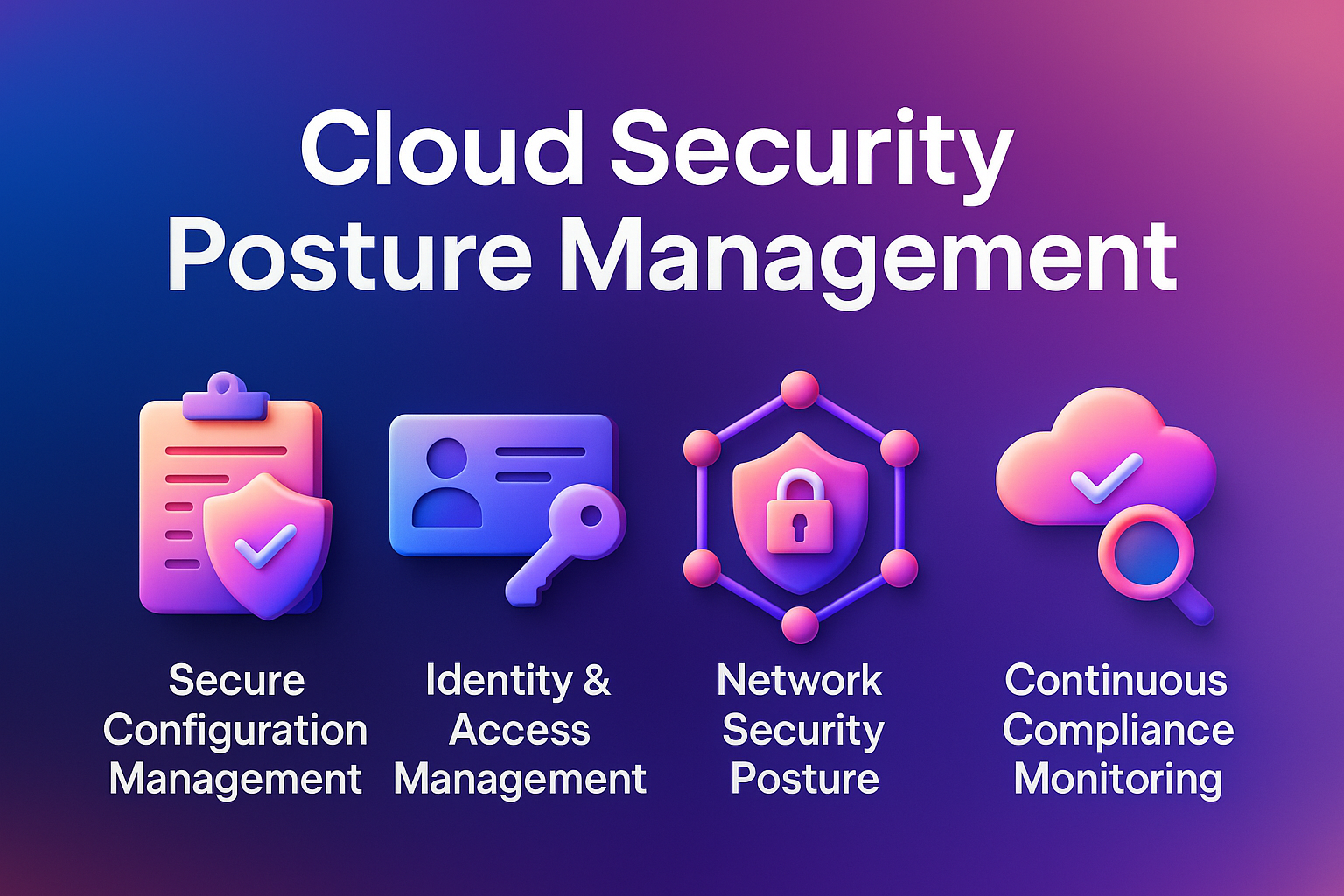
Cloud Security Posture Management (CSPM) has become one of the most critical pillars of modern cloud security. As organizations migrate to public, private, hybrid, and multi-cloud environments, the complexity of managing security increases dramatically. Cloud resources are dynamic—containers scale automatically, developers push frequent updates, and new services appear daily. Amid this rapid change, misconfigurations have become the leading cause of cloud breaches. CSPM tools address this challenge by continuously monitoring cloud configurations, detecting risks, and enforcing security best practices across all cloud assets.
One of the primary functions of CSPM is to ensure secure configuration management. Misconfigured storage buckets, open databases, weak encryption settings, and exposed endpoints are among the top vulnerabilities attackers exploit. CSPM solutions scan these configurations in real time and compare them with standards like CIS Benchmarks, NIST, HIPAA, ISO 27001, and organizational policies. When deviations occur, CSPM alerts security teams or automatically fixes issues, ensuring that cloud environments remain compliant and secure.
Another major capability of CSPM is identity and access management (IAM) monitoring. Cloud environments depend heavily on IAM roles, service accounts, API keys, and permission policies. If even one account becomes over-privileged, attackers can exploit it for lateral movement or privilege escalation. CSPM tools map all identities, analyze permissions, and highlight risky patterns—such as unused keys, overly broad roles, or misconfigured trust policies. This helps organizations implement the principle of least privilege across all cloud platforms.
CSPM also enhances network security posture by analyzing VPC structures, firewall rules, routing tables, and inbound/outbound access controls. In cloud-native architectures where microservices constantly interact, network exposure can easily expand without notice. CSPM continuously scans for open ports, public IPs, unrestricted traffic flows, and weak segmentation. It helps ensure that workloads remain protected behind secure network boundaries.
Data protection is another critical element. As cloud storage grows—data lakes, object storage, backups, and databases—so does the risk of unintentional public access. CSPM tools verify encryption status, access policies, replication settings, and sensitive data exposure. They can identify risky configurations, such as publicly accessible buckets or databases with no encryption. This ensures that sensitive information like PII, PHI, and financial data is always protected.
One of the most powerful aspects of CSPM is continuous compliance monitoring. Instead of waiting for quarterly audits, organizations receive real-time compliance reports across all cloud environments. CSPM tracks changes, logs every configuration update, and provides automated audit trails. This helps businesses stay compliant with global regulations while avoiding costly penalties and operational risks.
CSPM also integrates seamlessly with DevOps and cloud-native workflows. It scans Infrastructure-as-Code (IaC) templates—such as Terraform, CloudFormation, and ARM—to ensure that configurations are secure before deployment. This “shift-left” approach prevents vulnerabilities from ever reaching production. CSPM can also integrate with SIEM, SOAR, and endpoint security tools, allowing organizations to centralize security operations and incident responses.
Automation elevates CSPM beyond traditional monitoring. Instead of relying solely on manual fixes, CSPM tools can automatically enforce encryption, restrict public access, disable unused credentials, and correct misconfigured firewall rules. Automated remediation reduces human error, speeds up incident response, and ensures consistent policy application across all cloud environments.
As cloud adoption continues to accelerate, CSPM will evolve even further. Modern solutions are becoming part of CNAPP (Cloud-Native Application Protection Platforms), integrating workload protection, identity management, API security, and data posture management. Combined with AI-driven threat detection, CSPM is moving toward autonomous cloud security governance. In the years ahead, CSPM will remain essential for protecting cloud infrastructure, ensuring compliance, and enabling secure, scalable digital transformation.
One of the primary functions of CSPM is to ensure secure configuration management. Misconfigured storage buckets, open databases, weak encryption settings, and exposed endpoints are among the top vulnerabilities attackers exploit. CSPM solutions scan these configurations in real time and compare them with standards like CIS Benchmarks, NIST, HIPAA, ISO 27001, and organizational policies. When deviations occur, CSPM alerts security teams or automatically fixes issues, ensuring that cloud environments remain compliant and secure.
Another major capability of CSPM is identity and access management (IAM) monitoring. Cloud environments depend heavily on IAM roles, service accounts, API keys, and permission policies. If even one account becomes over-privileged, attackers can exploit it for lateral movement or privilege escalation. CSPM tools map all identities, analyze permissions, and highlight risky patterns—such as unused keys, overly broad roles, or misconfigured trust policies. This helps organizations implement the principle of least privilege across all cloud platforms.
CSPM also enhances network security posture by analyzing VPC structures, firewall rules, routing tables, and inbound/outbound access controls. In cloud-native architectures where microservices constantly interact, network exposure can easily expand without notice. CSPM continuously scans for open ports, public IPs, unrestricted traffic flows, and weak segmentation. It helps ensure that workloads remain protected behind secure network boundaries.
Data protection is another critical element. As cloud storage grows—data lakes, object storage, backups, and databases—so does the risk of unintentional public access. CSPM tools verify encryption status, access policies, replication settings, and sensitive data exposure. They can identify risky configurations, such as publicly accessible buckets or databases with no encryption. This ensures that sensitive information like PII, PHI, and financial data is always protected.
One of the most powerful aspects of CSPM is continuous compliance monitoring. Instead of waiting for quarterly audits, organizations receive real-time compliance reports across all cloud environments. CSPM tracks changes, logs every configuration update, and provides automated audit trails. This helps businesses stay compliant with global regulations while avoiding costly penalties and operational risks.
CSPM also integrates seamlessly with DevOps and cloud-native workflows. It scans Infrastructure-as-Code (IaC) templates—such as Terraform, CloudFormation, and ARM—to ensure that configurations are secure before deployment. This “shift-left” approach prevents vulnerabilities from ever reaching production. CSPM can also integrate with SIEM, SOAR, and endpoint security tools, allowing organizations to centralize security operations and incident responses.
Automation elevates CSPM beyond traditional monitoring. Instead of relying solely on manual fixes, CSPM tools can automatically enforce encryption, restrict public access, disable unused credentials, and correct misconfigured firewall rules. Automated remediation reduces human error, speeds up incident response, and ensures consistent policy application across all cloud environments.
As cloud adoption continues to accelerate, CSPM will evolve even further. Modern solutions are becoming part of CNAPP (Cloud-Native Application Protection Platforms), integrating workload protection, identity management, API security, and data posture management. Combined with AI-driven threat detection, CSPM is moving toward autonomous cloud security governance. In the years ahead, CSPM will remain essential for protecting cloud infrastructure, ensuring compliance, and enabling secure, scalable digital transformation.