
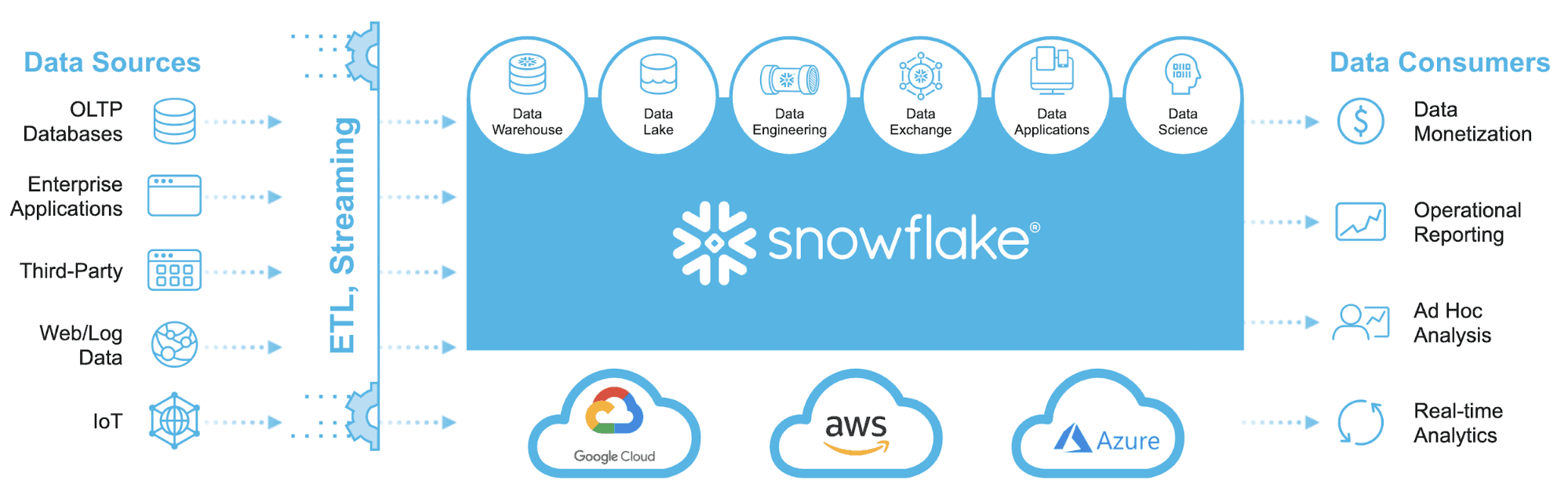
Cloud-based data warehouses represent one of the most transformative developments in the modern data ecosystem. Traditional on-premise data warehouses were expensive to scale, difficult to maintain, and required heavy upfront investment in hardware and storage. With the rise of cloud computing, organizations discovered a more flexible, cost-effective, and highly scalable way to store, process, and analyze massive volumes of structured and semi-structured data. Cloud-based data warehouses such as Snowflake, Google BigQuery, Amazon Redshift, and Azure Synapse Analytics allow companies to collect data from diverse sources and turn it into actionable insights without worrying about infrastructure constraints. They have become essential in supporting analytics, business intelligence, machine learning, and real-time decision-making in data-driven organizations.
A cloud data warehouse operates by separating storage from compute, a fundamental shift from traditional systems. In legacy architectures, storage and compute were tightly coupled, meaning scaling compute power also required scaling storage even if it wasn’t necessary. Cloud platforms introduced the idea of elastic compute clusters and independent storage layers, enabling users to scale each component according to workload. This separation of concerns allows teams to run intensive analytical queries without affecting other workloads or being limited by hardware resources. For example, Snowflake’s multi-cluster architecture enables multiple users to query data simultaneously without contention, while BigQuery uses a serverless model where Google handles all infrastructure and performance tuning behind the scenes.
Another defining feature of cloud-based data warehouses is their ability to handle multi-structured data. Modern organizations generate data from many sources: web logs, mobile apps, IoT devices, social media platforms, CRM tools, financial systems, and more. Cloud warehouses support structured SQL tables, semi-structured formats like JSON or Parquet, and sometimes even unstructured data through integration layers. This flexibility enables data engineers to ingest raw data quickly and refine it later through transformations and modeling. Tools like Snowflake’s VARIANT type and BigQuery’s nested fields allow developers to query semi-structured data using standard SQL without complex parsing. The result is faster data onboarding, easier data exploration, and more comprehensive insights.
Performance optimization is another advantage of cloud data warehouses. Traditional systems struggled to maintain performance as data volumes grew, often requiring costly hardware upgrades. Cloud warehouses use distributed computing to break large queries into smaller tasks executed across many nodes. This massively parallel processing (MPP) ensures faster execution of analytical workloads, even when processing terabytes or petabytes of data. Adaptive caching, query optimization engines, and automatic clustering further enhance performance by minimizing data scans and intelligently distributing workloads. Because these performance enhancements are built into the cloud platform, organizations no longer need specialized administrators to tune databases manually. The system dynamically adjusts based on workload, user behavior, and data distribution.
Cost efficiency is one of the most compelling reasons organizations adopt cloud warehouses. Instead of purchasing physical hardware, businesses pay only for what they use. Cloud providers offer on-demand compute pricing, storage-based pricing, or serverless models where costs are tied directly to query execution. This eliminates overprovisioning and ensures that expenses align with real usage. Organizations can pause compute clusters during inactivity, scale down during off-peak hours, or choose lower-cost storage tiers to manage budgets effectively. While costs can rise with misuse or high query volumes, proper governance and monitoring tools allow teams to track usage, enforce quotas, and optimize query patterns. This pay-as-you-go model democratizes data analytics by making advanced data warehousing accessible to companies of all sizes.
Cloud-based data warehouses also excel at integration and connectivity. They easily connect with ETL/ELT tools like dbt, Fivetran, Informatica, and Airflow, enabling seamless data ingestion and transformation. They support real-time streaming data from Kafka, Kinesis, and Pub/Sub for near real-time analytics. Their compatibility with BI tools like Tableau, Power BI, Looker, and Qlik empowers analysts to build dashboards and insights on top of a single, unified source of truth. This ecosystem of integrations reduces the complexity of building data pipelines and accelerates the time-to-insight for analytics teams. The centralized model ensures consistent, clean, and governed datasets that support organization-wide decision-making.
Data governance, security, and compliance are top priorities in cloud-based data warehouses. Cloud providers offer enterprise-grade security features such as end-to-end encryption, identity and access management, network isolation, automated backups, role-based access control, and multi-factor authentication. Many warehouses support advanced security models like row-level and column-level security, data masking, and tokenization. These capabilities ensure that sensitive data remains protected while allowing controlled access to users based on roles or departments. Cloud warehouses also adhere to global compliance standards such as GDPR, HIPAA, SOC 2, and ISO certifications. This makes them suitable for industries that handle sensitive or regulated data while still benefiting from scalable analytics.
Scalability and elasticity are core strengths underpinning the value of cloud data warehouses. As data volumes grow, organizations can scale storage instantly without migrations or downtime. Compute resources can scale automatically in response to workload demands, enabling smooth handling of unpredictable spikes in usage. Businesses can run hundreds of simultaneous analytical queries without performance degradation, supporting large teams of analysts, data scientists, and engineers. This elasticity fuels innovation by allowing companies to experiment with new use cases, run heavy simulations, or power AI-driven analytics without being limited by resource constraints.
In conclusion, cloud-based data warehouses represent the future of data analytics and enterprise intelligence. They provide the scalability, performance, flexibility, and cost efficiency that modern businesses need to compete in a data-driven world. By separating compute and storage, supporting multi-structured data, enabling real-time insights, and maintaining robust security standards, cloud warehouses empower organizations to transform raw information into strategic advantage. Whether powering dashboards, machine learning models, predictive analytics, or operational intelligence, cloud-based data warehouses have become indispensable tools in the digital economy. Their continued evolution promises even greater automation, smarter optimization, deeper integration with AI, and more democratized access to analytics across organizations.
A cloud data warehouse operates by separating storage from compute, a fundamental shift from traditional systems. In legacy architectures, storage and compute were tightly coupled, meaning scaling compute power also required scaling storage even if it wasn’t necessary. Cloud platforms introduced the idea of elastic compute clusters and independent storage layers, enabling users to scale each component according to workload. This separation of concerns allows teams to run intensive analytical queries without affecting other workloads or being limited by hardware resources. For example, Snowflake’s multi-cluster architecture enables multiple users to query data simultaneously without contention, while BigQuery uses a serverless model where Google handles all infrastructure and performance tuning behind the scenes.
Another defining feature of cloud-based data warehouses is their ability to handle multi-structured data. Modern organizations generate data from many sources: web logs, mobile apps, IoT devices, social media platforms, CRM tools, financial systems, and more. Cloud warehouses support structured SQL tables, semi-structured formats like JSON or Parquet, and sometimes even unstructured data through integration layers. This flexibility enables data engineers to ingest raw data quickly and refine it later through transformations and modeling. Tools like Snowflake’s VARIANT type and BigQuery’s nested fields allow developers to query semi-structured data using standard SQL without complex parsing. The result is faster data onboarding, easier data exploration, and more comprehensive insights.
Performance optimization is another advantage of cloud data warehouses. Traditional systems struggled to maintain performance as data volumes grew, often requiring costly hardware upgrades. Cloud warehouses use distributed computing to break large queries into smaller tasks executed across many nodes. This massively parallel processing (MPP) ensures faster execution of analytical workloads, even when processing terabytes or petabytes of data. Adaptive caching, query optimization engines, and automatic clustering further enhance performance by minimizing data scans and intelligently distributing workloads. Because these performance enhancements are built into the cloud platform, organizations no longer need specialized administrators to tune databases manually. The system dynamically adjusts based on workload, user behavior, and data distribution.
Cost efficiency is one of the most compelling reasons organizations adopt cloud warehouses. Instead of purchasing physical hardware, businesses pay only for what they use. Cloud providers offer on-demand compute pricing, storage-based pricing, or serverless models where costs are tied directly to query execution. This eliminates overprovisioning and ensures that expenses align with real usage. Organizations can pause compute clusters during inactivity, scale down during off-peak hours, or choose lower-cost storage tiers to manage budgets effectively. While costs can rise with misuse or high query volumes, proper governance and monitoring tools allow teams to track usage, enforce quotas, and optimize query patterns. This pay-as-you-go model democratizes data analytics by making advanced data warehousing accessible to companies of all sizes.
Cloud-based data warehouses also excel at integration and connectivity. They easily connect with ETL/ELT tools like dbt, Fivetran, Informatica, and Airflow, enabling seamless data ingestion and transformation. They support real-time streaming data from Kafka, Kinesis, and Pub/Sub for near real-time analytics. Their compatibility with BI tools like Tableau, Power BI, Looker, and Qlik empowers analysts to build dashboards and insights on top of a single, unified source of truth. This ecosystem of integrations reduces the complexity of building data pipelines and accelerates the time-to-insight for analytics teams. The centralized model ensures consistent, clean, and governed datasets that support organization-wide decision-making.
Data governance, security, and compliance are top priorities in cloud-based data warehouses. Cloud providers offer enterprise-grade security features such as end-to-end encryption, identity and access management, network isolation, automated backups, role-based access control, and multi-factor authentication. Many warehouses support advanced security models like row-level and column-level security, data masking, and tokenization. These capabilities ensure that sensitive data remains protected while allowing controlled access to users based on roles or departments. Cloud warehouses also adhere to global compliance standards such as GDPR, HIPAA, SOC 2, and ISO certifications. This makes them suitable for industries that handle sensitive or regulated data while still benefiting from scalable analytics.
Scalability and elasticity are core strengths underpinning the value of cloud data warehouses. As data volumes grow, organizations can scale storage instantly without migrations or downtime. Compute resources can scale automatically in response to workload demands, enabling smooth handling of unpredictable spikes in usage. Businesses can run hundreds of simultaneous analytical queries without performance degradation, supporting large teams of analysts, data scientists, and engineers. This elasticity fuels innovation by allowing companies to experiment with new use cases, run heavy simulations, or power AI-driven analytics without being limited by resource constraints.
In conclusion, cloud-based data warehouses represent the future of data analytics and enterprise intelligence. They provide the scalability, performance, flexibility, and cost efficiency that modern businesses need to compete in a data-driven world. By separating compute and storage, supporting multi-structured data, enabling real-time insights, and maintaining robust security standards, cloud warehouses empower organizations to transform raw information into strategic advantage. Whether powering dashboards, machine learning models, predictive analytics, or operational intelligence, cloud-based data warehouses have become indispensable tools in the digital economy. Their continued evolution promises even greater automation, smarter optimization, deeper integration with AI, and more democratized access to analytics across organizations.