
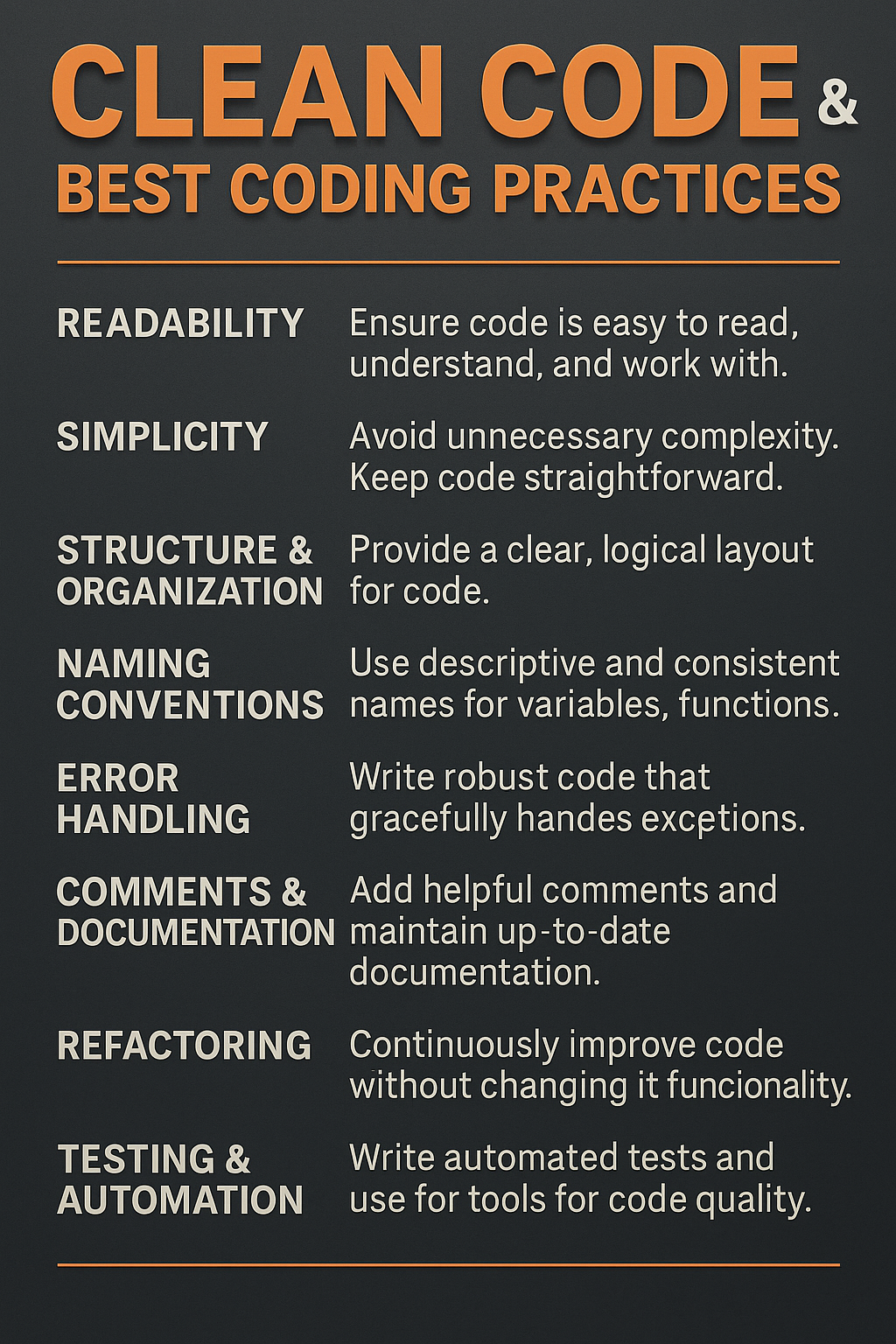
Writing code is easy. Writing clean, maintainable, and scalable code is what separates a beginner from a true software engineer. Clean code isn’t just about making a program work—it’s about writing software that can grow, evolve, and be understood by anyone months or even years later. The concept of clean code prioritizes readability, simplicity, consistency, and performance. This article explores the principles, habits, and practices that help developers produce professional-grade code that stands the test of time.
Clean code begins with readability, the foundation of all good software. When others—or even the original author—look back at the code later, they should be able to understand the logic without deciphering cryptic variable names, massive functions, or inconsistent formatting. Readability means writing self-explanatory code, using clear structures, and following a consistent style guide. For example, a variable named totalEmployees is far more meaningful than te. Writing code that “reads like a sentence” reduces the cognitive load on the developer reviewing it and makes future changes easier. As developers work in teams, readable code prevents misunderstandings, reduces bugs, and boosts collaboration.
Another essential pillar of clean code is simplicity. Many developers mistakenly believe that complex logic equals expert-level programming. In reality, simpler solutions are more reliable, easier to maintain, and less prone to errors. The goal is always to reduce complexity, break large problems into smaller functions, and avoid overengineering. The famous KISS principle—Keep It Simple, Stupid—captures this perfectly. Simplicity also involves eliminating redundant code, avoiding deep nesting when possible, and creating reusable components. Writing a function that does only one thing but does it well is a hallmark of professional-quality clean code.
Writing clean code also requires strong attention to structure and organization. Every program should have a clear flow, logical grouping of related functionalities, and predictable file structure. Proper modularization ensures that the codebase remains manageable as the project expands. Concepts like separation of concerns, single-responsibility principle, and layered architecture help developers create maintainable systems. Proper structuring also makes it easier to test individual components and reduces the risk of introducing bugs when adding new features. Whether creating a mobile app, backend system, or microservice, organization is key to ensuring long-term scalability.
Naming conventions play a significant role in making code self-documenting. The names of classes, methods, and variables should clearly describe their purpose. Avoid abbreviations unless they are universally known (e.g., API, URL). Method names should express actions (calculateTotal(), fetchUserData()), while variables should describe data (userList, orderCount). Using consistent casing (camelCase, PascalCase, snake_case) across the entire project also improves readability. Good naming conventions eliminate the need for unnecessary comments and help new developers immediately understand the system.
Error handling and defensive programming are also integral to clean code. A robust application must anticipate potential failures and handle them gracefully. Proper error messages, meaningful exceptions, and well-structured error handling blocks help developers understand what went wrong. Clean code avoids silent failures, swallowing exceptions, or returning inconsistent error formats. Instead, developers should design predictable error responses, implement logging strategically, and avoid cluttering business logic with unnecessary try-catch blocks. A clean and reliable codebase not only works well but also fails well.
Comments and documentation should complement clean code—not replace it. Clean code relies on writing logic so clear that minimal explanation is needed. However, comments still play a critical role in describing intentions, complex algorithms, and decisions that aren’t immediately obvious. The key is to write comments that explain “why,” not “what.” Documentation, such as READMEs, API references, and architecture diagrams, helps onboard team members quickly and reduces dependency on oral explanations. High-quality documentation paired with clean code makes the entire development process more efficient.
Another vital practice is refactoring, the continuous improvement of existing code without changing its functionality. Over time, technical debt accumulates—shortcuts, temporary hacks, duplicated code, and outdated logic can clutter the codebase. Regular refactoring helps maintain code quality, improve performance, and eliminate inefficiencies. Professional teams treat refactoring as an essential part of every development cycle rather than an optional afterthought. Techniques such as extracting methods, removing dead code, and improving structure ensure that the software remains healthy and easy to extend.
Finally, clean code thrives when supported by testing and automation. Unit tests, integration tests, and automated pipelines ensure that the code works as intended and remains stable during updates. Clean code is designed with testing in mind—small, modular functions are easier to test, and consistent design patterns reduce edge cases. Continuous Integration and Continuous Deployment (CI/CD) pipelines automate testing, detect issues early, and enforce code quality standards. Combined with code reviews, these practices help teams maintain long-term reliability and confidence in the system.
In conclusion, clean code and best coding practices form the backbone of professional software development. They enhance teamwork, reduce bugs, streamline maintenance, and create a stable foundation for future growth. A clean codebase saves time, money, and mental energy by ensuring clarity and reducing complexity. Whether you are a student, beginner, or experienced engineer, mastering clean code will elevate the quality of your software, improve your problem-solving skills, and make you more valuable in any technical role. By embracing readability, simplicity, structure, good naming, documentation, refactoring, and testing, developers build systems that last, adapt, and succeed in the ever-evolving world of technology.
Clean code begins with readability, the foundation of all good software. When others—or even the original author—look back at the code later, they should be able to understand the logic without deciphering cryptic variable names, massive functions, or inconsistent formatting. Readability means writing self-explanatory code, using clear structures, and following a consistent style guide. For example, a variable named totalEmployees is far more meaningful than te. Writing code that “reads like a sentence” reduces the cognitive load on the developer reviewing it and makes future changes easier. As developers work in teams, readable code prevents misunderstandings, reduces bugs, and boosts collaboration.
Another essential pillar of clean code is simplicity. Many developers mistakenly believe that complex logic equals expert-level programming. In reality, simpler solutions are more reliable, easier to maintain, and less prone to errors. The goal is always to reduce complexity, break large problems into smaller functions, and avoid overengineering. The famous KISS principle—Keep It Simple, Stupid—captures this perfectly. Simplicity also involves eliminating redundant code, avoiding deep nesting when possible, and creating reusable components. Writing a function that does only one thing but does it well is a hallmark of professional-quality clean code.
Writing clean code also requires strong attention to structure and organization. Every program should have a clear flow, logical grouping of related functionalities, and predictable file structure. Proper modularization ensures that the codebase remains manageable as the project expands. Concepts like separation of concerns, single-responsibility principle, and layered architecture help developers create maintainable systems. Proper structuring also makes it easier to test individual components and reduces the risk of introducing bugs when adding new features. Whether creating a mobile app, backend system, or microservice, organization is key to ensuring long-term scalability.
Naming conventions play a significant role in making code self-documenting. The names of classes, methods, and variables should clearly describe their purpose. Avoid abbreviations unless they are universally known (e.g., API, URL). Method names should express actions (calculateTotal(), fetchUserData()), while variables should describe data (userList, orderCount). Using consistent casing (camelCase, PascalCase, snake_case) across the entire project also improves readability. Good naming conventions eliminate the need for unnecessary comments and help new developers immediately understand the system.
Error handling and defensive programming are also integral to clean code. A robust application must anticipate potential failures and handle them gracefully. Proper error messages, meaningful exceptions, and well-structured error handling blocks help developers understand what went wrong. Clean code avoids silent failures, swallowing exceptions, or returning inconsistent error formats. Instead, developers should design predictable error responses, implement logging strategically, and avoid cluttering business logic with unnecessary try-catch blocks. A clean and reliable codebase not only works well but also fails well.
Comments and documentation should complement clean code—not replace it. Clean code relies on writing logic so clear that minimal explanation is needed. However, comments still play a critical role in describing intentions, complex algorithms, and decisions that aren’t immediately obvious. The key is to write comments that explain “why,” not “what.” Documentation, such as READMEs, API references, and architecture diagrams, helps onboard team members quickly and reduces dependency on oral explanations. High-quality documentation paired with clean code makes the entire development process more efficient.
Another vital practice is refactoring, the continuous improvement of existing code without changing its functionality. Over time, technical debt accumulates—shortcuts, temporary hacks, duplicated code, and outdated logic can clutter the codebase. Regular refactoring helps maintain code quality, improve performance, and eliminate inefficiencies. Professional teams treat refactoring as an essential part of every development cycle rather than an optional afterthought. Techniques such as extracting methods, removing dead code, and improving structure ensure that the software remains healthy and easy to extend.
Finally, clean code thrives when supported by testing and automation. Unit tests, integration tests, and automated pipelines ensure that the code works as intended and remains stable during updates. Clean code is designed with testing in mind—small, modular functions are easier to test, and consistent design patterns reduce edge cases. Continuous Integration and Continuous Deployment (CI/CD) pipelines automate testing, detect issues early, and enforce code quality standards. Combined with code reviews, these practices help teams maintain long-term reliability and confidence in the system.
In conclusion, clean code and best coding practices form the backbone of professional software development. They enhance teamwork, reduce bugs, streamline maintenance, and create a stable foundation for future growth. A clean codebase saves time, money, and mental energy by ensuring clarity and reducing complexity. Whether you are a student, beginner, or experienced engineer, mastering clean code will elevate the quality of your software, improve your problem-solving skills, and make you more valuable in any technical role. By embracing readability, simplicity, structure, good naming, documentation, refactoring, and testing, developers build systems that last, adapt, and succeed in the ever-evolving world of technology.