
Build tools play an essential role in modern software development by automating tasks that would otherwise require repetitive manual effort. They streamline compiling code, resolving dependencies, packaging applications, executing tests, generating documentation, and deploying artifacts. Maven, Gradle, and npm are among the most popular tools used by developers working in Java and JavaScript ecosystems. Each of these tools provides a structured way to manage projects, reduce human error, maintain consistent builds, and support continuous integration workflows. Beyond simply compiling code, build tools orchestrate the entire development lifecycle, allowing teams to work efficiently, collaborate seamlessly, and produce reliable software across multiple environments.
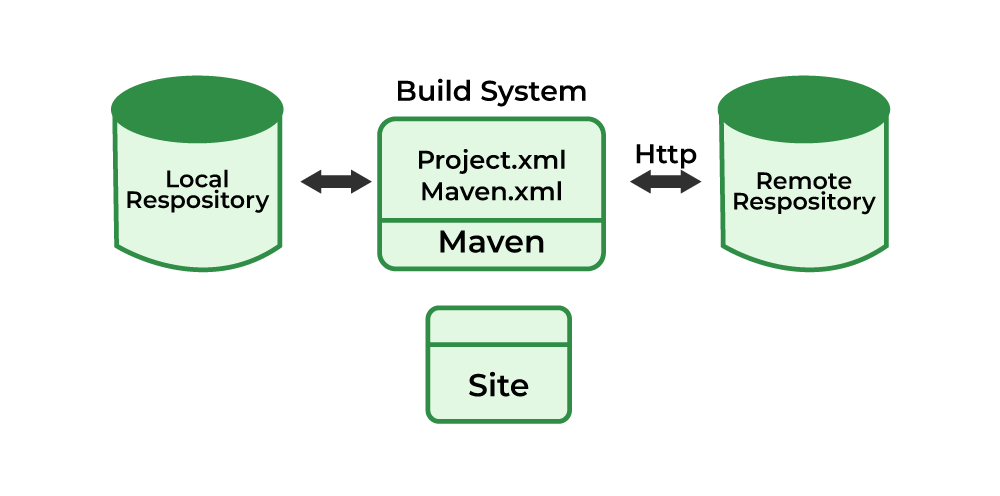
Maven is one of the earliest and most widely adopted build automation tools in the Java ecosystem. Its philosophy centers around convention over configuration, meaning developers follow predefined project structures and naming conventions that Maven understands. This reduces the need for custom setup, making the build process predictable and standardized. Maven uses XML-based files called pom.xml (Project Object Model) to describe project metadata, dependencies, plugins, and build configurations. Dependency management is one of Maven’s strongest features; it handles transitive dependencies automatically, ensuring all required libraries are downloaded from repositories such as Maven Central. Maven’s lifecycle—from validation to compilation, testing, packaging, and deployment—gives developers a clear structure to manage end-to-end builds.
Gradle came into existence as a more modern, flexible, and performance-driven alternative to Maven. While Maven relies on verbose XML configuration, Gradle uses a domain-specific language (DSL) either in Groovy or Kotlin, making the build scripts more concise, expressive, and readable. Gradle introduces incremental builds and task avoidance, meaning it intelligently determines which tasks need to run based on whether inputs have changed. This significantly speeds up the development workflow, especially for large projects. One of Gradle’s biggest strengths is its plugin ecosystem and extensibility. It integrates seamlessly with Java, Kotlin, Android, Scala, and many other JVM languages. In fact, Android Studio uses Gradle as its official build system because of its flexibility and ability to handle complex multi-module projects. Gradle also supports advanced dependency resolution strategies, dynamic versioning, caching, and fine-grained control over tasks—making it ideal for enterprise-scale systems.
npm, which stands for Node Package Manager, serves as both a dependency manager and a build tool in the JavaScript ecosystem. With the rise of Node.js and frontend frameworks like React, Angular, and Vue, npm has become one of the most widely used tools in modern software development. The package.json file at the root of a project defines dependencies, scripts, metadata, and project configuration. npm scripts allow developers to automate tasks such as running development servers, compiling assets, bundling code, linting, testing, and deploying applications. Even though npm is primarily known as a package manager, its scripting capabilities make it function like a build orchestration system. Tools like Webpack, Babel, Vite, and Rollup are often triggered through npm scripts, enabling full automation of modern frontend development pipelines.
A key commonality shared by Maven, Gradle, and npm is dependency management. Modern applications depend on dozens or sometimes hundreds of external libraries. Without automated tools, manually downloading, updating, and organizing these libraries would be overwhelming. Dependency management systems resolve version conflicts, download transitive dependencies, verify integrity, and maintain a reproducible environment. Maven uses a centralized repository model, Gradle offers advanced dependency graphs and caching, and npm maintains the world’s largest open-source package registry. Each tool ensures that developers can easily integrate libraries into their projects without worrying about compatibility or manual installation issues.
Build tools also bring consistency and predictability to development teams. When developers work on a large codebase, differences in environments, versions, or manual steps often cause “works on my machine” problems. With automated scripts defined in Maven’s POM, Gradle’s DSL, or npm’s scripts, every developer and every CI/CD pipeline follows the exact same steps, guaranteeing identical builds across all systems. This reliability is essential for professional software development, especially when releasing production artifacts or collaborating across large teams. The standardized workflows also allow new developers to onboard quickly since they can run a single command to build or test the entire project instead of learning complex manual procedures.
Another major benefit of these tools is their deep integration with Continuous Integration and Continuous Deployment (CI/CD) pipelines. Build automation tools are at the heart of CI workflows, where they compile the code, execute unit tests, analyze code quality, and prepare deployable packages. Maven integrates well with Jenkins, GitLab CI, and Azure DevOps. Gradle provides optimized builds for CI servers with features like remote caching and parallel task execution. npm scripts are widely used in CI to run tests, generate builds, lint code, or deploy static sites. These integrations ensure that teams can automate the entire software delivery pipeline, from code commit to production deployment, maintaining speed and reliability.
Maven, Gradle, and npm also play an important role in modularization and project scalability. Maven encourages a structured, modular approach using multi-module projects, helping developers separate functionality into independent units. Gradle excels at handling large multi-project builds with its configuration-on-demand and parallel execution capabilities. npm supports monorepos using tools like Lerna, Nx, or pnpm, enabling developers to manage hundreds of packages in the same codebase. As systems grow in complexity, these modular approaches prevent code duplication, increase maintainability, and improve team productivity across distributed project components.
In conclusion, build tools like Maven, Gradle, and npm serve as the backbone of modern software engineering. They automate repetitive tasks, manage dependencies efficiently, ensure consistent build environments, support continuous integration, and enable scalable project structures. Maven brings stability and predictability through conventions and structured lifecycles. Gradle offers flexibility, performance, and customizability for complex and large projects. npm powers the vibrant JavaScript ecosystem through scripts, package management, and integrations with frontend build pipelines. Together, these tools enable developers to build high-quality software efficiently, reliably, and at scale. As software systems continue to grow in complexity and teams adopt DevOps and CI/CD practices, mastering these build tools has become essential for any developer aiming to deliver robust, maintainable, and production-ready applications.
Maven is one of the earliest and most widely adopted build automation tools in the Java ecosystem. Its philosophy centers around convention over configuration, meaning developers follow predefined project structures and naming conventions that Maven understands. This reduces the need for custom setup, making the build process predictable and standardized. Maven uses XML-based files called pom.xml (Project Object Model) to describe project metadata, dependencies, plugins, and build configurations. Dependency management is one of Maven’s strongest features; it handles transitive dependencies automatically, ensuring all required libraries are downloaded from repositories such as Maven Central. Maven’s lifecycle—from validation to compilation, testing, packaging, and deployment—gives developers a clear structure to manage end-to-end builds.
Gradle came into existence as a more modern, flexible, and performance-driven alternative to Maven. While Maven relies on verbose XML configuration, Gradle uses a domain-specific language (DSL) either in Groovy or Kotlin, making the build scripts more concise, expressive, and readable. Gradle introduces incremental builds and task avoidance, meaning it intelligently determines which tasks need to run based on whether inputs have changed. This significantly speeds up the development workflow, especially for large projects. One of Gradle’s biggest strengths is its plugin ecosystem and extensibility. It integrates seamlessly with Java, Kotlin, Android, Scala, and many other JVM languages. In fact, Android Studio uses Gradle as its official build system because of its flexibility and ability to handle complex multi-module projects. Gradle also supports advanced dependency resolution strategies, dynamic versioning, caching, and fine-grained control over tasks—making it ideal for enterprise-scale systems.
npm, which stands for Node Package Manager, serves as both a dependency manager and a build tool in the JavaScript ecosystem. With the rise of Node.js and frontend frameworks like React, Angular, and Vue, npm has become one of the most widely used tools in modern software development. The package.json file at the root of a project defines dependencies, scripts, metadata, and project configuration. npm scripts allow developers to automate tasks such as running development servers, compiling assets, bundling code, linting, testing, and deploying applications. Even though npm is primarily known as a package manager, its scripting capabilities make it function like a build orchestration system. Tools like Webpack, Babel, Vite, and Rollup are often triggered through npm scripts, enabling full automation of modern frontend development pipelines.
A key commonality shared by Maven, Gradle, and npm is dependency management. Modern applications depend on dozens or sometimes hundreds of external libraries. Without automated tools, manually downloading, updating, and organizing these libraries would be overwhelming. Dependency management systems resolve version conflicts, download transitive dependencies, verify integrity, and maintain a reproducible environment. Maven uses a centralized repository model, Gradle offers advanced dependency graphs and caching, and npm maintains the world’s largest open-source package registry. Each tool ensures that developers can easily integrate libraries into their projects without worrying about compatibility or manual installation issues.
Build tools also bring consistency and predictability to development teams. When developers work on a large codebase, differences in environments, versions, or manual steps often cause “works on my machine” problems. With automated scripts defined in Maven’s POM, Gradle’s DSL, or npm’s scripts, every developer and every CI/CD pipeline follows the exact same steps, guaranteeing identical builds across all systems. This reliability is essential for professional software development, especially when releasing production artifacts or collaborating across large teams. The standardized workflows also allow new developers to onboard quickly since they can run a single command to build or test the entire project instead of learning complex manual procedures.
Another major benefit of these tools is their deep integration with Continuous Integration and Continuous Deployment (CI/CD) pipelines. Build automation tools are at the heart of CI workflows, where they compile the code, execute unit tests, analyze code quality, and prepare deployable packages. Maven integrates well with Jenkins, GitLab CI, and Azure DevOps. Gradle provides optimized builds for CI servers with features like remote caching and parallel task execution. npm scripts are widely used in CI to run tests, generate builds, lint code, or deploy static sites. These integrations ensure that teams can automate the entire software delivery pipeline, from code commit to production deployment, maintaining speed and reliability.
Maven, Gradle, and npm also play an important role in modularization and project scalability. Maven encourages a structured, modular approach using multi-module projects, helping developers separate functionality into independent units. Gradle excels at handling large multi-project builds with its configuration-on-demand and parallel execution capabilities. npm supports monorepos using tools like Lerna, Nx, or pnpm, enabling developers to manage hundreds of packages in the same codebase. As systems grow in complexity, these modular approaches prevent code duplication, increase maintainability, and improve team productivity across distributed project components.
In conclusion, build tools like Maven, Gradle, and npm serve as the backbone of modern software engineering. They automate repetitive tasks, manage dependencies efficiently, ensure consistent build environments, support continuous integration, and enable scalable project structures. Maven brings stability and predictability through conventions and structured lifecycles. Gradle offers flexibility, performance, and customizability for complex and large projects. npm powers the vibrant JavaScript ecosystem through scripts, package management, and integrations with frontend build pipelines. Together, these tools enable developers to build high-quality software efficiently, reliably, and at scale. As software systems continue to grow in complexity and teams adopt DevOps and CI/CD practices, mastering these build tools has become essential for any developer aiming to deliver robust, maintainable, and production-ready applications.