
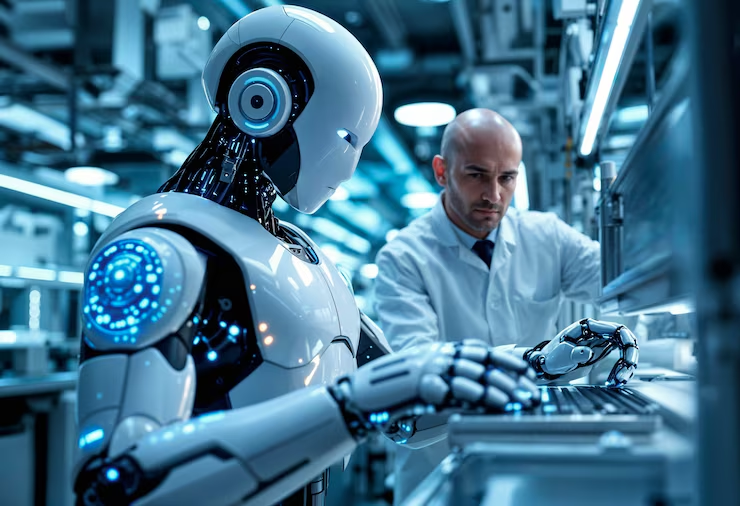
Artificial Intelligence is reshaping industrial automation by increasing efficiency, reducing downtime, and enabling predictive operations. Traditional automation systems rely on predefined rules and control logic, but AI introduces adaptability, learning, and optimization—transforming factories into intelligent production ecosystems.
One of the biggest breakthroughs is predictive maintenance. AI systems analyze sensor data from machinery—vibration, temperature, noise, power usage—to detect early signs of equipment failure. Machine learning algorithms predict breakdowns before they occur, allowing maintenance teams to intervene proactively. This reduces costly downtime and extends machine lifespan.
Automation systems increasingly rely on AI-driven quality inspection. Computer vision models can detect defects in real time, outperforming human inspectors in consistency and speed. From electronics manufacturing to food processing, AI ensures that defects are caught early, minimizing waste and improving product reliability.
In supply chain and logistics, AI optimizes production schedules, inventory levels, and demand forecasting. Reinforcement learning models balance trade-offs between speed, cost, and energy efficiency. Automated warehouses use AI-powered robots to transport goods, organize inventory, and streamline order fulfillment processes.
AI also supports robotic process automation (RPA) for repetitive industrial workflows. RPA combined with ML handles tasks like document processing, scheduling, reporting, and data entry. This frees employees from manual work and reduces operational errors.
Edge computing plays a major role in industrial AI. Processing data locally—near sensors and machines—ensures low latency and reliability. AI systems analyze data even when cloud connectivity is limited, improving resilience in manufacturing environments.
Human-machine collaboration is becoming the norm. Collaborative robots (cobots) use AI to work safely alongside humans. These robots adapt to changing conditions, assist in assembly tasks, and reduce physical strain on workers.
As AI adoption grows, cybersecurity, ethical concerns, and workforce upskilling become crucial. AI systems must be secure, transparent, and interpretable to ensure trust and compliance.
AI-driven automation brings unprecedented speed, accuracy, and flexibility to modern industry, defining the future of smart factories and Industry 4.0.
One of the biggest breakthroughs is predictive maintenance. AI systems analyze sensor data from machinery—vibration, temperature, noise, power usage—to detect early signs of equipment failure. Machine learning algorithms predict breakdowns before they occur, allowing maintenance teams to intervene proactively. This reduces costly downtime and extends machine lifespan.
Automation systems increasingly rely on AI-driven quality inspection. Computer vision models can detect defects in real time, outperforming human inspectors in consistency and speed. From electronics manufacturing to food processing, AI ensures that defects are caught early, minimizing waste and improving product reliability.
In supply chain and logistics, AI optimizes production schedules, inventory levels, and demand forecasting. Reinforcement learning models balance trade-offs between speed, cost, and energy efficiency. Automated warehouses use AI-powered robots to transport goods, organize inventory, and streamline order fulfillment processes.
AI also supports robotic process automation (RPA) for repetitive industrial workflows. RPA combined with ML handles tasks like document processing, scheduling, reporting, and data entry. This frees employees from manual work and reduces operational errors.
Edge computing plays a major role in industrial AI. Processing data locally—near sensors and machines—ensures low latency and reliability. AI systems analyze data even when cloud connectivity is limited, improving resilience in manufacturing environments.
Human-machine collaboration is becoming the norm. Collaborative robots (cobots) use AI to work safely alongside humans. These robots adapt to changing conditions, assist in assembly tasks, and reduce physical strain on workers.
As AI adoption grows, cybersecurity, ethical concerns, and workforce upskilling become crucial. AI systems must be secure, transparent, and interpretable to ensure trust and compliance.
AI-driven automation brings unprecedented speed, accuracy, and flexibility to modern industry, defining the future of smart factories and Industry 4.0.