
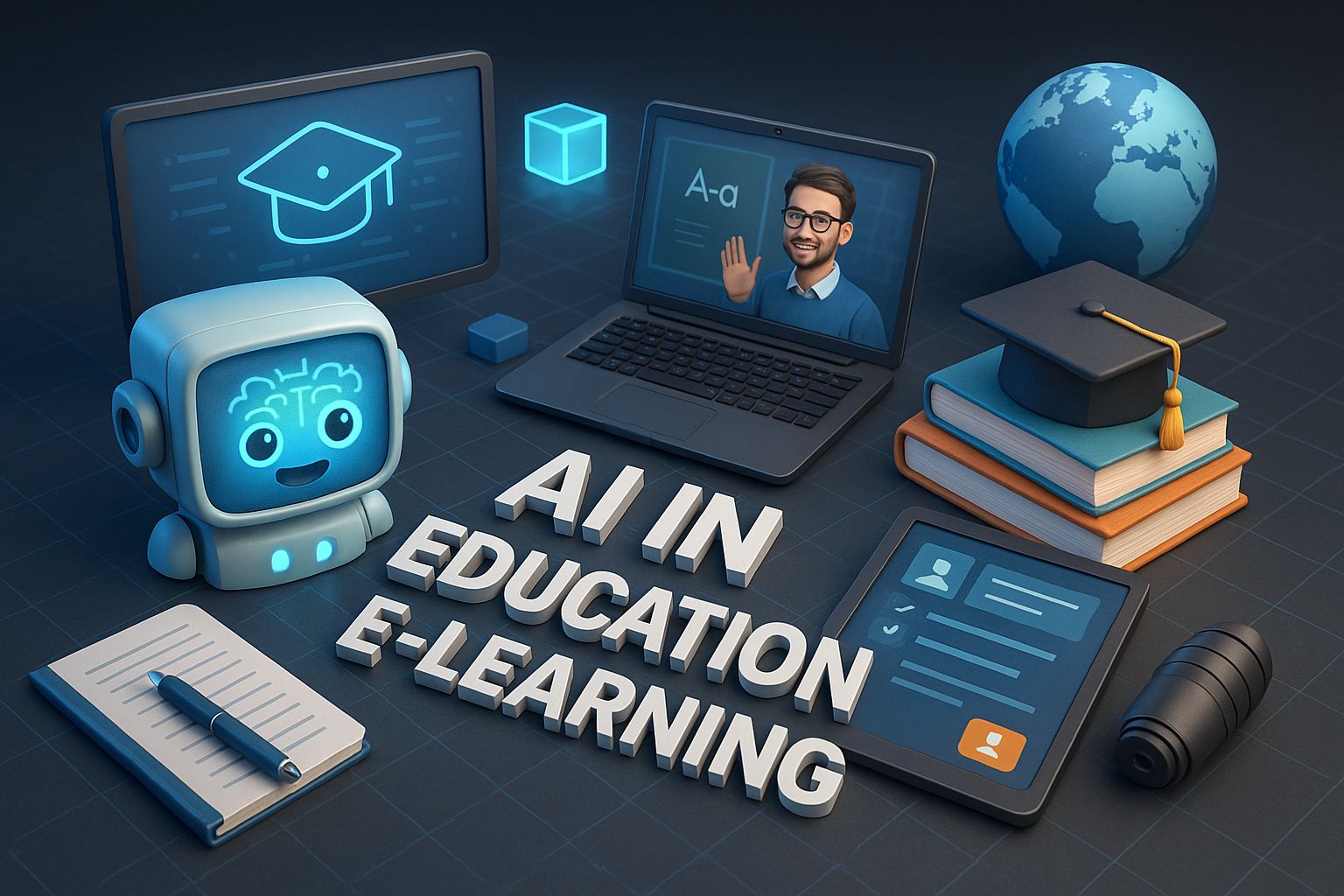
Artificial Intelligence is reshaping the world of education and e-learning, transforming how students learn, how teachers teach, and how institutions deliver knowledge. As digital learning platforms continue to grow, AI is emerging as a powerful tool that enables personalized, flexible, and highly interactive learning experiences. Traditional education often struggles with large class sizes, limited customization, and varying learning speeds among students. AI bridges these gaps by adapting learning content, providing instant feedback, and offering intelligent insights that support both educators and learners. Its influence is creating a new era where education becomes more accessible, efficient, and student-centered.
One of the most significant contributions of AI in education is personalized learning. Unlike one-size-fits-all classroom models, AI-powered systems analyze student behavior, performance, interests, and learning patterns to create tailored learning paths. Adaptive platforms adjust lesson difficulty in real time, recommend additional resources, and identify concepts that a student needs more practice on. This ensures that fast learners can progress quickly, while students needing extra help receive targeted guidance. Personalized learning reduces frustration, boosts engagement, and improves academic performance, making education more inclusive and effective.
AI also enhances the role of teachers by automating administrative tasks and providing smart tools for classroom management. Educators often spend hours grading assignments, preparing materials, or tracking attendance. AI applications can automatically evaluate tests, generate reports, organize schedules, and even detect plagiarism. Intelligent teaching assistants help educators focus more on meaningful interactions with students instead of repetitive tasks. AI-driven analytics give teachers real-time insights into class performance, helping them identify struggling students early and adjust their teaching strategies accordingly.
Virtual tutors and chatbots are becoming increasingly common in e-learning environments. These AI-driven assistants provide 24/7 support, answering student questions, explaining concepts, and offering step-by-step solutions instantly. For learners studying remotely, chatbots create a sense of presence and interaction that reduces isolation. Virtual tutors can guide students through complex topics at their own pace, making learning more accessible to individuals who may not have access to in-person support. With AI-driven explanations, learners can clarify doubts immediately instead of waiting for teacher availability.
AI is also transforming content creation in education. Tools powered by natural language processing and generative AI can create study guides, quizzes, flashcards, summaries, lesson plans, and interactive activities in minutes. E-learning platforms use AI to recommend personalized courses based on student goals and performance. Video lecture platforms can generate subtitles, translate content, and optimize playback based on viewer engagement. AI-generated simulations and virtual labs provide hands-on learning experiences, especially in STEM fields where physical labs may be too expensive or inaccessible. These innovations make learning more dynamic, engaging, and resource-rich.
Another rapidly growing area is AI-powered assessment and exam monitoring. AI tools evaluate not just objective questions but also essays, coding tasks, and problem-solving assignments. They analyze student responses, detect patterns of misunderstanding, and provide detailed feedback. In online exams, AI proctoring systems use facial recognition, eye tracking, and behavior detection to ensure academic integrity. These tools allow students to participate in exams from anywhere while maintaining fairness and security. Although AI proctoring raises debates about privacy, it remains an important solution for remote learning environments.
AI also fosters inclusivity in education by supporting learners with disabilities. Text-to-speech and speech-to-text tools assist students with visual or hearing impairments. AI-driven accessibility tools convert content into multiple formats, simplify complex text, and offer real-time translations. Emotion-recognition systems can detect when students feel confused, bored, or disengaged, allowing platforms to adjust content accordingly. These advancements help create equitable learning environments where every student receives the support they need.
In higher education and professional learning, AI plays a major role in skill development and job preparation. Platforms use AI to track student progress, recommend career paths, and match learners with relevant internships or job opportunities. AI-powered skill assessments measure real-world abilities through simulations and coding challenges. Employers increasingly rely on AI-driven tools to evaluate job applicants, making AI literacy an essential skill for students. As industries integrate automation and digital transformation, AI helps learners build future-ready capabilities.
Overall, AI in education and e-learning is revolutionizing the learning ecosystem. It enhances personalization, improves access, reduces teacher workload, and enables continuous improvement through data-driven insights. While challenges such as data privacy, algorithmic bias, and infrastructure limitations exist, the potential benefits of AI-driven learning are immense. As technology continues to advance, AI will play an even larger role in shaping global education—making learning smarter, faster, more interactive, and more accessible than ever before.
One of the most significant contributions of AI in education is personalized learning. Unlike one-size-fits-all classroom models, AI-powered systems analyze student behavior, performance, interests, and learning patterns to create tailored learning paths. Adaptive platforms adjust lesson difficulty in real time, recommend additional resources, and identify concepts that a student needs more practice on. This ensures that fast learners can progress quickly, while students needing extra help receive targeted guidance. Personalized learning reduces frustration, boosts engagement, and improves academic performance, making education more inclusive and effective.
AI also enhances the role of teachers by automating administrative tasks and providing smart tools for classroom management. Educators often spend hours grading assignments, preparing materials, or tracking attendance. AI applications can automatically evaluate tests, generate reports, organize schedules, and even detect plagiarism. Intelligent teaching assistants help educators focus more on meaningful interactions with students instead of repetitive tasks. AI-driven analytics give teachers real-time insights into class performance, helping them identify struggling students early and adjust their teaching strategies accordingly.
Virtual tutors and chatbots are becoming increasingly common in e-learning environments. These AI-driven assistants provide 24/7 support, answering student questions, explaining concepts, and offering step-by-step solutions instantly. For learners studying remotely, chatbots create a sense of presence and interaction that reduces isolation. Virtual tutors can guide students through complex topics at their own pace, making learning more accessible to individuals who may not have access to in-person support. With AI-driven explanations, learners can clarify doubts immediately instead of waiting for teacher availability.
AI is also transforming content creation in education. Tools powered by natural language processing and generative AI can create study guides, quizzes, flashcards, summaries, lesson plans, and interactive activities in minutes. E-learning platforms use AI to recommend personalized courses based on student goals and performance. Video lecture platforms can generate subtitles, translate content, and optimize playback based on viewer engagement. AI-generated simulations and virtual labs provide hands-on learning experiences, especially in STEM fields where physical labs may be too expensive or inaccessible. These innovations make learning more dynamic, engaging, and resource-rich.
Another rapidly growing area is AI-powered assessment and exam monitoring. AI tools evaluate not just objective questions but also essays, coding tasks, and problem-solving assignments. They analyze student responses, detect patterns of misunderstanding, and provide detailed feedback. In online exams, AI proctoring systems use facial recognition, eye tracking, and behavior detection to ensure academic integrity. These tools allow students to participate in exams from anywhere while maintaining fairness and security. Although AI proctoring raises debates about privacy, it remains an important solution for remote learning environments.
AI also fosters inclusivity in education by supporting learners with disabilities. Text-to-speech and speech-to-text tools assist students with visual or hearing impairments. AI-driven accessibility tools convert content into multiple formats, simplify complex text, and offer real-time translations. Emotion-recognition systems can detect when students feel confused, bored, or disengaged, allowing platforms to adjust content accordingly. These advancements help create equitable learning environments where every student receives the support they need.
In higher education and professional learning, AI plays a major role in skill development and job preparation. Platforms use AI to track student progress, recommend career paths, and match learners with relevant internships or job opportunities. AI-powered skill assessments measure real-world abilities through simulations and coding challenges. Employers increasingly rely on AI-driven tools to evaluate job applicants, making AI literacy an essential skill for students. As industries integrate automation and digital transformation, AI helps learners build future-ready capabilities.
Overall, AI in education and e-learning is revolutionizing the learning ecosystem. It enhances personalization, improves access, reduces teacher workload, and enables continuous improvement through data-driven insights. While challenges such as data privacy, algorithmic bias, and infrastructure limitations exist, the potential benefits of AI-driven learning are immense. As technology continues to advance, AI will play an even larger role in shaping global education—making learning smarter, faster, more interactive, and more accessible than ever before.