
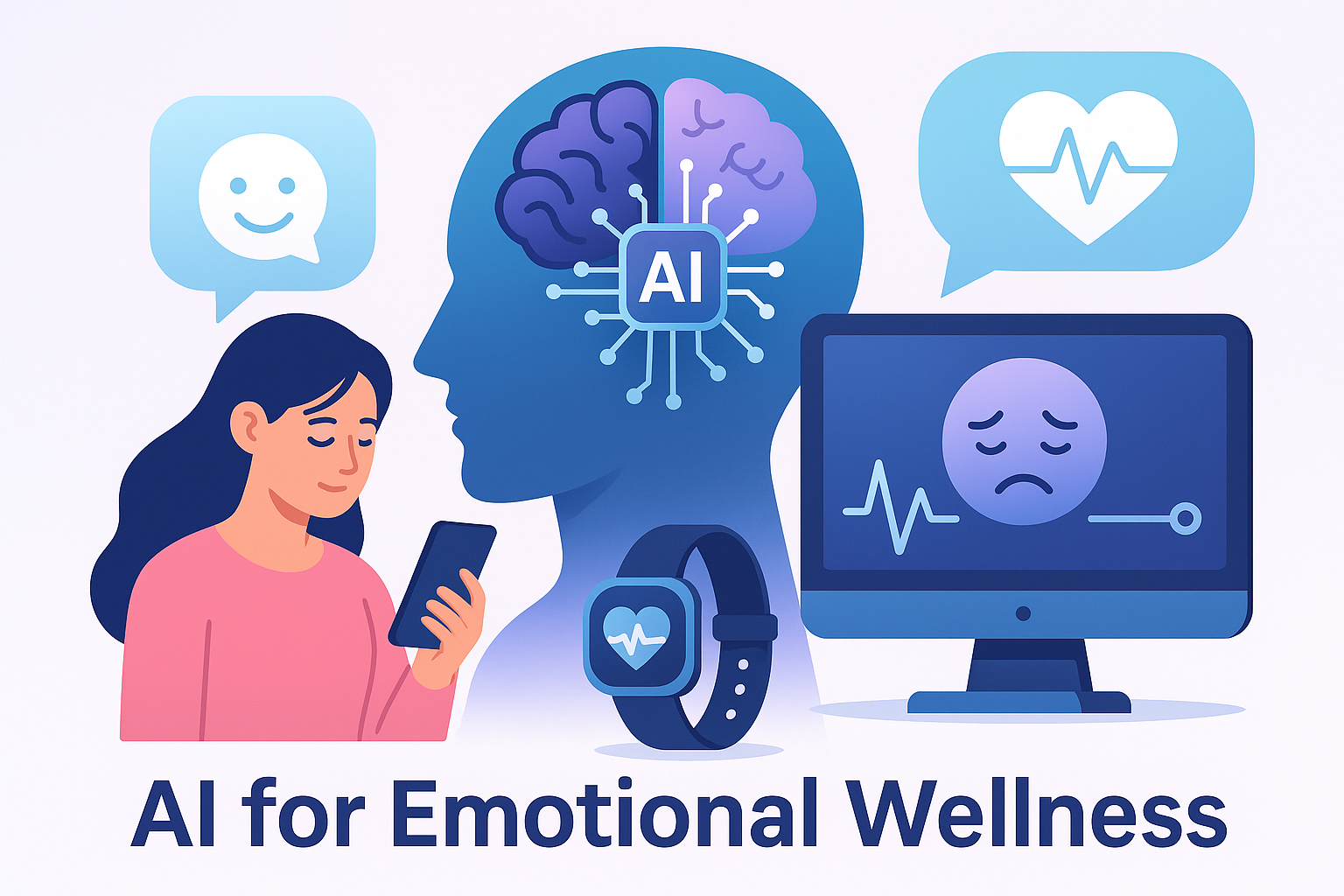
Artificial Intelligence for Mental Health & Emotion Recognition represents one of the most transformative, sensitive, and socially impactful applications of AI. As mental health awareness grows and digital interactions become a normal part of daily life, AI-powered systems are being developed to detect emotional states, monitor behavioral patterns, and provide early intervention support. Unlike traditional mental health tools that rely on scheduled check-ins or physical appointments, AI systems can analyze speech tone, facial expressions, typing patterns, wearable sensor data, sleep cycles, heart rate, and even social media behavior. These signals help identify stress, anxiety, depression, burnout, emotional distress, and changes in well-being. AI cannot replace psychologists, but it can serve as an always-available companion, preventive assistant, and early-warning system. By combining machine learning, affective computing, deep learning, and behavioral analytics, these systems aim to make mental health care more accessible, proactive, and personalized.
Emotion recognition relies on multiple AI modalities that capture and interpret human signals. Computer vision models analyze facial micro-expressions, eye movements, pupil dilation, and subtle shifts in muscle tension. Speech analysis models detect tone changes, hesitations, breathing patterns, and voice fatigue. NLP models evaluate the sentiment, intent, and emotional context of written or spoken language. Wearable sensors measure heart rate variability, cortisol-linked skin response, sleep quality, and physical activity patterns. Multimodal emotion recognition combines vision + audio + text + biological signals to create a more accurate and holistic understanding of a person’s emotional state. AI models used include Convolutional Neural Networks (CNNs) for facial detection, Recurrent Neural Networks (RNNs) and transformers for speech and text analysis, and probabilistic models for predicting emotional trends. The combination of behavioral patterns and physiological signals makes emotion recognition extremely powerful, especially when used consistently over time.
AI systems are especially valuable for tracking long-term behavioral changes that may indicate emerging mental health concerns. Instead of waiting for a crisis moment, AI can detect subtle shifts in daily patterns such as reduced sleep, decreased communication, slower typing response, withdrawal from activities, or increased negative sentiment in messages. Apps powered by AI can alert users or caregivers early, helping them seek professional help before symptoms worsen. AI-driven journals, mood trackers, and conversational chatbots provide daily emotional check-ins, giving users a safe space to express feelings without fear of judgment. These systems can identify patterns linked to depression, anxiety, panic disorders, bipolar episodes, PTSD triggers, and even self-harm risk. For people living in remote areas or those hesitant to seek therapy, AI becomes a bridge between silence and professional support.
AI-based conversational agents like Woebot, Wysa, and Replika use cognitive behavioral therapy (CBT), mindfulness prompts, guided breathing exercises, and empathetic conversation strategies to support users in stressful moments. These AI companions operate 24/7, offering coping techniques, reflective questions, and grounding exercises. Unlike human therapists who are limited by availability, AI companions provide instant support when a user feels anxious at 2 AM or overwhelmed during a workday. Large Language Models (LLMs) trained on psychological frameworks can deliver personalized advice based on the user’s tone, mood, and previous interactions. While they do not replace therapy, they offer emotional companionship, especially for individuals dealing with loneliness, social isolation, or chronic stress.
In professional environments, AI is used as a decision-support tool for psychologists and psychiatrists. Emotion recognition software can analyze patient sessions, detecting patterns such as increased stress markers or emotional suppression. AI-powered transcription tools help professionals focus on the patient instead of notetaking. Predictive modeling can help clinicians estimate relapse risks, treatment adherence challenges, or emotional instability based on historical trends. AI also assists with triage in crisis helplines, routing severe-risk cases to human specialists faster. By automating repetitive tasks such as scheduling, reminders, and progress tracking, AI frees mental health professionals to spend more time in human-to-human therapeutic interactions.
AI makes mental health care accessible, especially for individuals who cannot afford therapy, live far from clinics, or prefer discreet help. It also provides personalization, adapting recommendations based on emotional patterns unique to each user. AI offers early intervention, catching emotional problems before they escalate. Digital tools reduce stigma—many people feel more comfortable opening up to a machine first. AI also scales effectively, enabling organizations, schools, workplaces, and governments to offer mental health tools to millions without requiring thousands of therapists.
With great power comes great responsibility. AI emotion detection is far from perfect and can misinterpret expressions, especially across cultural, gender, or neurological differences. Emotional nuance can be difficult for AI to understand fully. Privacy concerns are major—emotion recognition relies on sensitive personal data, which must be securely protected. AI should never make clinical decisions without human supervision. Another risk is over-reliance—users may depend too heavily on emotional chatbots, replacing real social connection. Ethical frameworks, strict regulation, transparent AI behavior, and human oversight are essential to avoid harm.
The future of AI emotion recognition is deeply integrated into daily life. Smartphones, wearables, smart home devices, and even AR/VR systems will detect emotional states continuously. Imagine your phone suggesting a mindfulness session when your stress levels spike or your smartwatch detecting early burnout patterns. Future AI companions may recognize tone, facial expressions, and context simultaneously—offering deeply human-like emotional understanding. Predictive AI will identify emotional risks days or weeks before they manifest, revolutionizing preventive care. AI may also assist in immersive VR therapy, trauma healing, addiction recovery, and personalized wellness journeys.
AI for Mental Health and Emotion Recognition represents a future where emotional well-being becomes proactive instead of reactive. AI cannot replace human empathy, but it serves as a powerful tool that enhances awareness, accessibility, and support. When designed ethically, transparently, and collaboratively with psychologists, AI becomes a partner that helps millions live emotionally healthier lives. It bridges gaps in care, empowers individuals with insights, and enables earlier intervention—ultimately contributing to a more mentally healthy society.
Emotion recognition relies on multiple AI modalities that capture and interpret human signals. Computer vision models analyze facial micro-expressions, eye movements, pupil dilation, and subtle shifts in muscle tension. Speech analysis models detect tone changes, hesitations, breathing patterns, and voice fatigue. NLP models evaluate the sentiment, intent, and emotional context of written or spoken language. Wearable sensors measure heart rate variability, cortisol-linked skin response, sleep quality, and physical activity patterns. Multimodal emotion recognition combines vision + audio + text + biological signals to create a more accurate and holistic understanding of a person’s emotional state. AI models used include Convolutional Neural Networks (CNNs) for facial detection, Recurrent Neural Networks (RNNs) and transformers for speech and text analysis, and probabilistic models for predicting emotional trends. The combination of behavioral patterns and physiological signals makes emotion recognition extremely powerful, especially when used consistently over time.
AI systems are especially valuable for tracking long-term behavioral changes that may indicate emerging mental health concerns. Instead of waiting for a crisis moment, AI can detect subtle shifts in daily patterns such as reduced sleep, decreased communication, slower typing response, withdrawal from activities, or increased negative sentiment in messages. Apps powered by AI can alert users or caregivers early, helping them seek professional help before symptoms worsen. AI-driven journals, mood trackers, and conversational chatbots provide daily emotional check-ins, giving users a safe space to express feelings without fear of judgment. These systems can identify patterns linked to depression, anxiety, panic disorders, bipolar episodes, PTSD triggers, and even self-harm risk. For people living in remote areas or those hesitant to seek therapy, AI becomes a bridge between silence and professional support.
AI-based conversational agents like Woebot, Wysa, and Replika use cognitive behavioral therapy (CBT), mindfulness prompts, guided breathing exercises, and empathetic conversation strategies to support users in stressful moments. These AI companions operate 24/7, offering coping techniques, reflective questions, and grounding exercises. Unlike human therapists who are limited by availability, AI companions provide instant support when a user feels anxious at 2 AM or overwhelmed during a workday. Large Language Models (LLMs) trained on psychological frameworks can deliver personalized advice based on the user’s tone, mood, and previous interactions. While they do not replace therapy, they offer emotional companionship, especially for individuals dealing with loneliness, social isolation, or chronic stress.
In professional environments, AI is used as a decision-support tool for psychologists and psychiatrists. Emotion recognition software can analyze patient sessions, detecting patterns such as increased stress markers or emotional suppression. AI-powered transcription tools help professionals focus on the patient instead of notetaking. Predictive modeling can help clinicians estimate relapse risks, treatment adherence challenges, or emotional instability based on historical trends. AI also assists with triage in crisis helplines, routing severe-risk cases to human specialists faster. By automating repetitive tasks such as scheduling, reminders, and progress tracking, AI frees mental health professionals to spend more time in human-to-human therapeutic interactions.
AI makes mental health care accessible, especially for individuals who cannot afford therapy, live far from clinics, or prefer discreet help. It also provides personalization, adapting recommendations based on emotional patterns unique to each user. AI offers early intervention, catching emotional problems before they escalate. Digital tools reduce stigma—many people feel more comfortable opening up to a machine first. AI also scales effectively, enabling organizations, schools, workplaces, and governments to offer mental health tools to millions without requiring thousands of therapists.
With great power comes great responsibility. AI emotion detection is far from perfect and can misinterpret expressions, especially across cultural, gender, or neurological differences. Emotional nuance can be difficult for AI to understand fully. Privacy concerns are major—emotion recognition relies on sensitive personal data, which must be securely protected. AI should never make clinical decisions without human supervision. Another risk is over-reliance—users may depend too heavily on emotional chatbots, replacing real social connection. Ethical frameworks, strict regulation, transparent AI behavior, and human oversight are essential to avoid harm.
The future of AI emotion recognition is deeply integrated into daily life. Smartphones, wearables, smart home devices, and even AR/VR systems will detect emotional states continuously. Imagine your phone suggesting a mindfulness session when your stress levels spike or your smartwatch detecting early burnout patterns. Future AI companions may recognize tone, facial expressions, and context simultaneously—offering deeply human-like emotional understanding. Predictive AI will identify emotional risks days or weeks before they manifest, revolutionizing preventive care. AI may also assist in immersive VR therapy, trauma healing, addiction recovery, and personalized wellness journeys.
AI for Mental Health and Emotion Recognition represents a future where emotional well-being becomes proactive instead of reactive. AI cannot replace human empathy, but it serves as a powerful tool that enhances awareness, accessibility, and support. When designed ethically, transparently, and collaboratively with psychologists, AI becomes a partner that helps millions live emotionally healthier lives. It bridges gaps in care, empowers individuals with insights, and enables earlier intervention—ultimately contributing to a more mentally healthy society.